
PART 1 — COMMUNICATION THEORY: FRAMING AS A TOOL FOR MEANING-MAKING
Why Communication Theory Matters in Design & Contemporary Art?
Contemporary art and design operate through interpretation. A work is never perceived in isolation: its meaning depends on context, material, presentation, and the viewer’s prior knowledge. Communication theory helps unravel these mechanisms. It explains how meaning is constructed rather than simply transmitted. Among these theories, framing is especially relevant. It shows how boundaries — physical, conceptual, or institutional — shape the way we understand objects and images. This section reflects on how framing operates across design and contemporary art, influencing both creation and perception.


Em Rooney. Derosia. 2024
What Is Communication and What Is Framing?
Communication is a meaning-making process shaped by interpretation, not a one-way transfer of information. Framing is the mechanism that structures this interpretation. A frame selects what becomes visible, relevant, or valuable, while leaving other aspects out of view. In visual culture, framing is both literal (a physical border) and metaphorical (a cognitive filter). It organizes perception, directs attention, and establishes narrative context. Understanding framing reveals how design and art guide the viewer’s reading of an image or object.

Eli Craven. Soap opera. 2022
Erving Goffman proposed frame analysis as a way to understand how individuals identify «what is happening» in any situation. Frames are cognitive structures through which we classify events, actions, and images. In exhibition environments, Goffman’s idea becomes visibly material: display formats, spatial cues, labels, and even architecture frame how an artwork is interpreted. A change of frame — formal, material, or contextual—alters meaning. This principle is foundational for understanding how contemporary visual practices operate.
Robert Entman expanded framing theory within media studies. For Entman, framing is the act of selecting certain aspects of reality and making them more salient. Through framing, a communicator: — defines the problem, — identifies causes, — makes moral evaluations, — proposes solutions.
Though developed for media, this model applies to visual communication: design choices implicitly guide interpretation. In exhibitions, publications, or branding, framing influences how narratives are constructed and how viewers position themselves toward the work.
Joanna Piotrowska. L’Irrésolue (The Irresolute). 2023
Human perception is selective. We see what the frame makes visible. Framing guides attention, establishes hierarchy, and shapes emotional response. A slight shift in placement, color, scale, or spacing can redefine how an object or image is read. In visual design, framing determines tone and structure. In contemporary art, it can expose or critique the mechanisms of interpretation themselves. Recognizing this selectivity is essential for understanding how meaning emerges through design decisions.
A physical frame marks boundaries, isolates an image, and sets the conditions for viewing. Cognitive framing works in the same way: it structures meaning by providing context, defining relevance, and shaping expectations. In many contemporary practices, these two forms of framing merge. Designers and artists often make the framing system visible — turning the frame, pedestal, border, or interface into part of the conceptual message. This parallel reveals how material presentation becomes inseparable from interpretation.
Joanna Piotrowska and Formafantasma. Sub rosa. 2022
Framing is a fundamental strategy across contemporary art: — Readymade logic: reframing ordinary objects to shift their status (after Duchamp). — Institutional critique: exposing museum systems that construct meaning. — Material experimentation: using recycled, industrial, or fragile materials to question value and authenticity. — Post-production practices: recontextualizing existing images and objects. In these approaches, the frame — conceptual or physical —becomes a site of meaning production. It reveals how context transforms perception.


Noah Dillon. Horses. 2024
Design continuously uses framing to structure information and guide experience. In graphic design, frames create hierarchy, contrast, and rhythm. In photography, they define narrative focus. In exhibition design, they orchestrate spatial attention. In digital interfaces, frames determine usability and navigation. Framing becomes a method for shaping meaning through form, structure, and interaction. It is not a neutral container but an active agent in communication.
Liu Shiyuan. A Shaking We No.3. 2018
Critical communication theory highlights that materials themselves act as signs. A material carries cultural, ecological, and ideological meaning. Designers and artists use material choices to comment on consumption, sustainability, and value systems. When the framing system—its material, texture, or production method—is foregrounded, it becomes part of the work’s message. Thus, framing is not only about what is shown but also about how the showing is constructed.
Framing theory reveals that meaning is not inherent in objects but produced through context. In design and contemporary art, framing is a tool, a method, and a critical strategy. It shapes perception, constructs narratives, and exposes the mechanisms behind visual culture.
Understanding framing allows makers to work with meaning intentionally—using context, material, and presentation not as neutral containers, but as active participants in communication.
PART 2 — BRAND PRESENTATION (GENERAL AUDIENCE)
Meet REFRAME A brand that transforms recycled plastic into modern, minimalist frames and display panels. Designed to make art and everyday spaces more thoughtful, sustainable, and visually clear.
Our mission is to rethink how we frame visual experiences. REFRAME creates simple, durable frames made from recycled plastic, turning waste into something meaningful. We believe that frames are more than decoration — they shape how we see images, memories, and stories. Our goal is to make sustainable design accessible and part of everyday life.
Recycled plastic is a material with unrealized potential. It is strong, lightweight, and naturally expressive — every texture carries traces of its previous life. By using recycled plastic, REFRAME reduces waste and transforms it into something valuable and long-lasting. This material choice also makes each frame unique: no two textures are exactly the same.
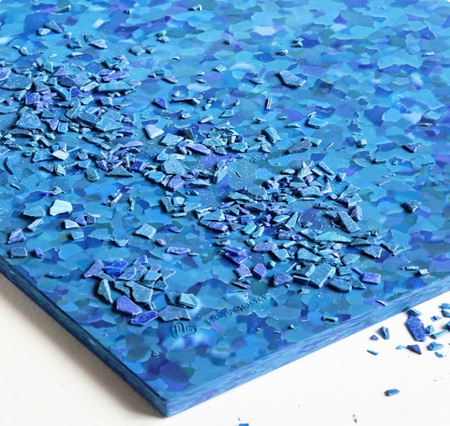

Polygood by The Good Plastic Company
REFRAME designs modern, sustainable frames for prints, photos, posters, and small artworks. They are: — minimalist and timeless, — lightweight and durable, — available in standard and custom sizes, — easy to assemble and reuse.
Our frames fit into any interior — from calm home spaces to creative studios. Sustainability meets clarity, simplicity, and functional design.
Collections: Minimal / Gallery / Statement
Minimal — clean lines, soft textures, calm colors. Designed for everyday spaces.
Gallery — precise geometry, museum-inspired proportions, custom sizing for artworks.
Statement — expressive textures and bold forms made from highly visible recycled plastic fragments, сustom made.
Each collection offers a different way of framing — from subtle to expressive — while keeping the same sustainable core.
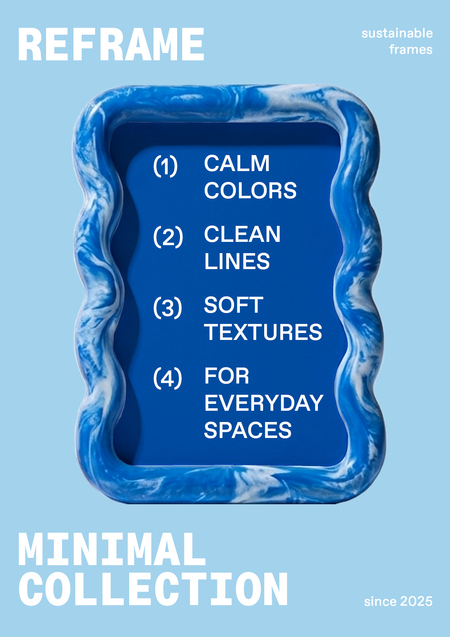
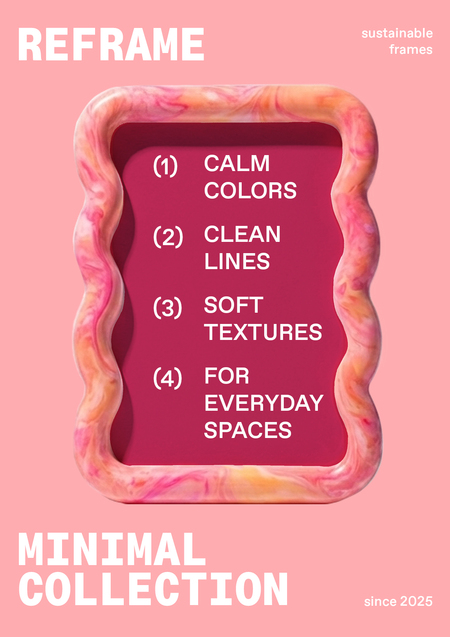
REFRAME fits naturally into modern living spaces. Neutral tones and organic plastic textures blend with wood, textiles, ceramics, and contemporary furniture. Whether it’s a photograph, a poster, or a favorite print, our frames help it find its place in your home.
REFRAME makes sustainable design easy to bring into your everyday life. The frames are affordable, durable, and designed to last. They give your space a clean, contemporary look while supporting responsible material use. A small object can change how a room feels — and how we think about the materials around us.
PART 3 — BRAND PRESENTATION (PROFESSIONAL AUDIENCE)