В настоящем времени с интервью, как правило, ассоциируется множество техник, стратегий и назначений. Хотя по сути интервью само по себе сложно охарактеризовать конкретнее, чем последовательность вопросов и ответов, при заданном контексте эта первоначально простая и схематичная модель немедленно приобретает отчетливую тональность и атмосферу.
В визуальном исследовании рассматривается одно конкретное воплощение интервью: разговор, задокументированный в пространстве печатного издания.
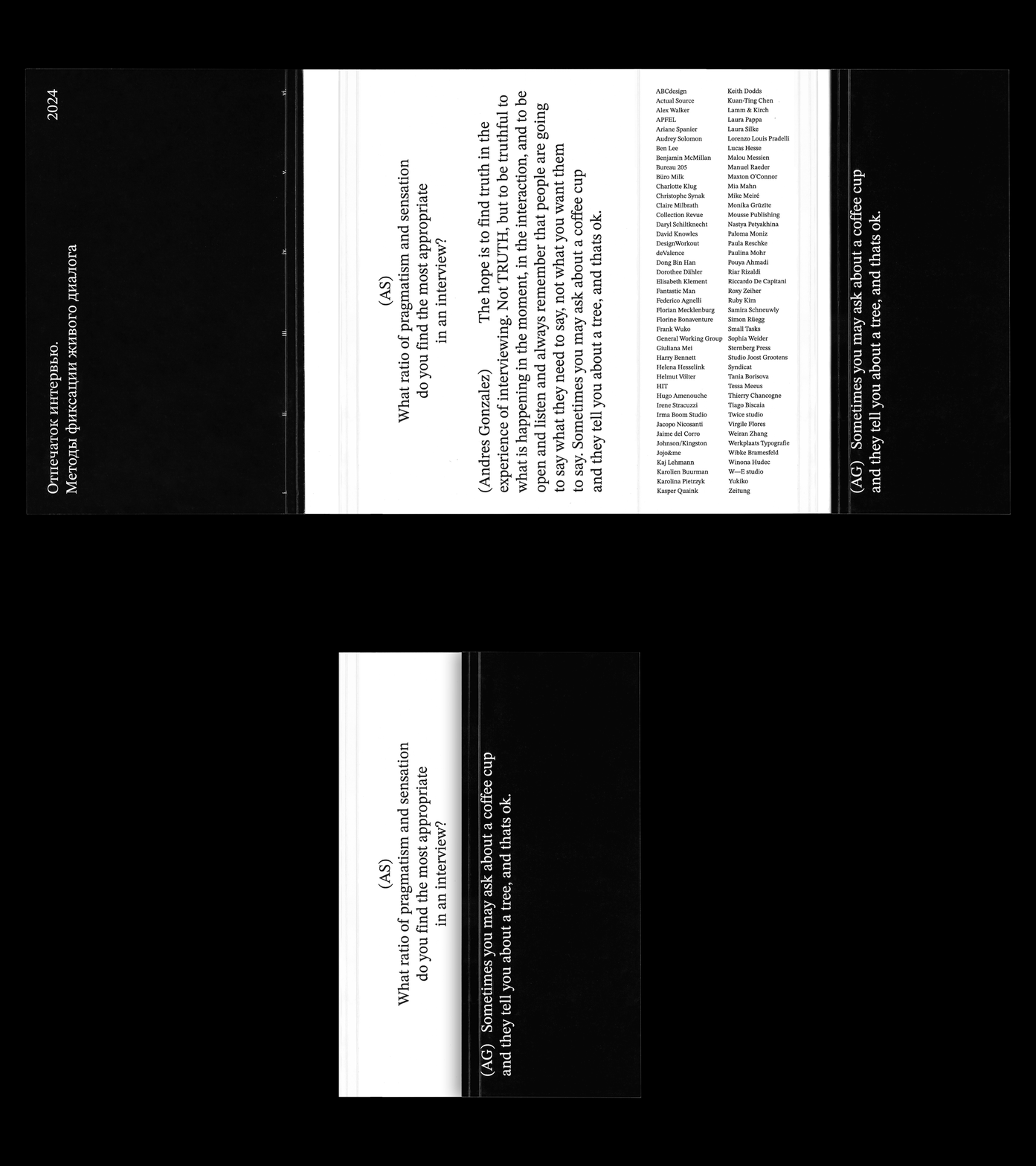
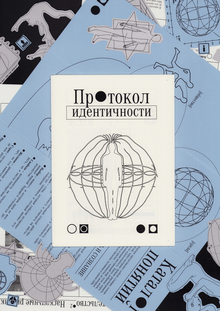
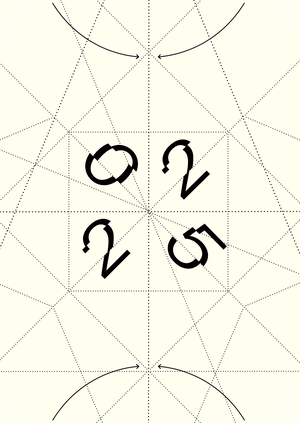
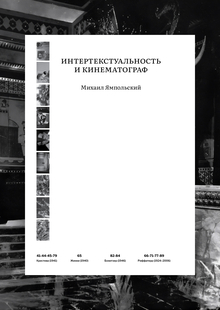
Обложка в развернутом и сложенном виде
Вёрстка интервью в современных периодических и единичных изданиях считывается как конвертированный вербальный диалог. В работе выявляются и классифицируются пластические решения, с помощью которых возможно реализовать тонкости устного интервью в рамках другого медиума — адаптировать особенности пространства и настроения разговора к статичной среде.
В проекте классифицируются и характеризуются прослеженные методы, которыми в современности наиболее часто реализуется оформление диалога — и эти приёмы служат разделами визуального исследования.
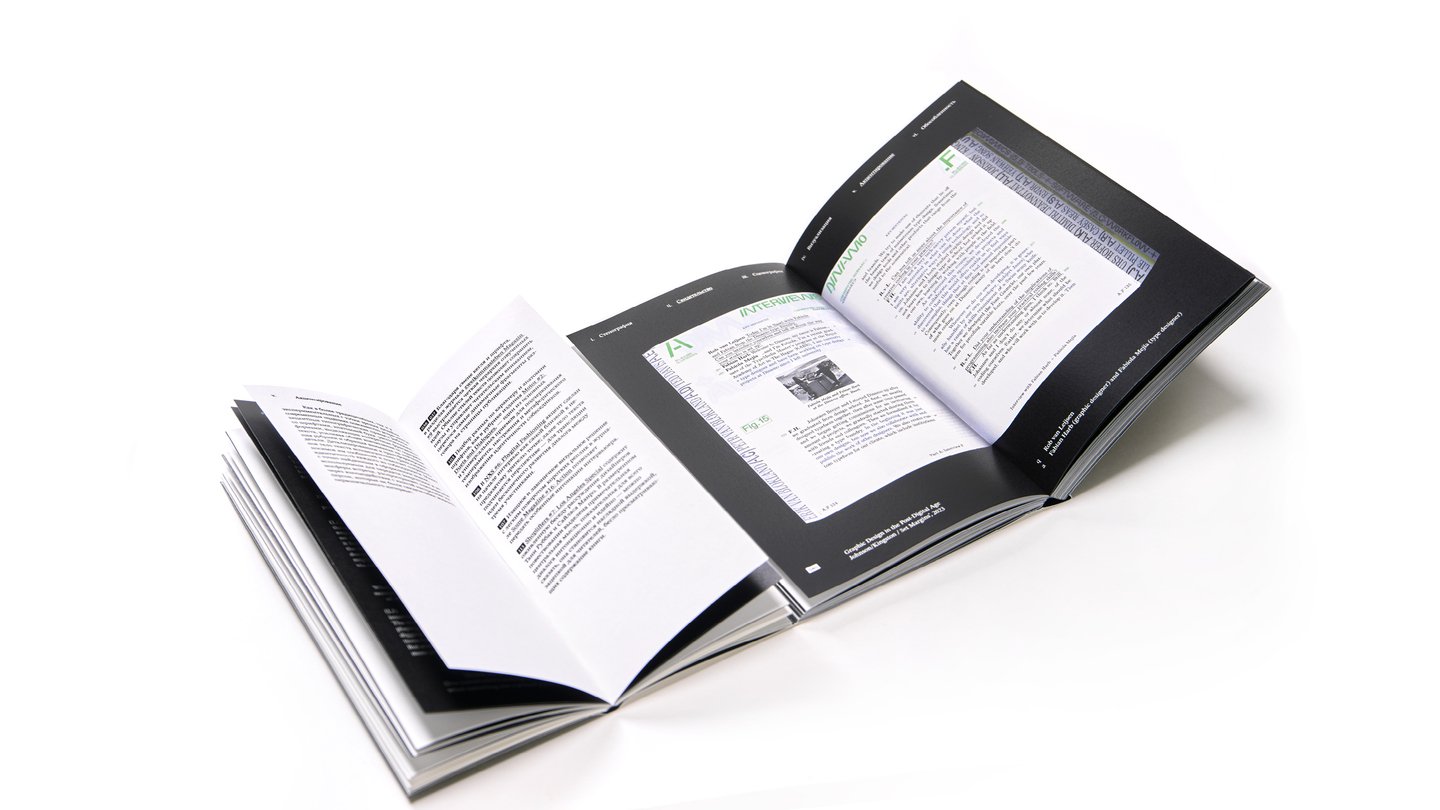
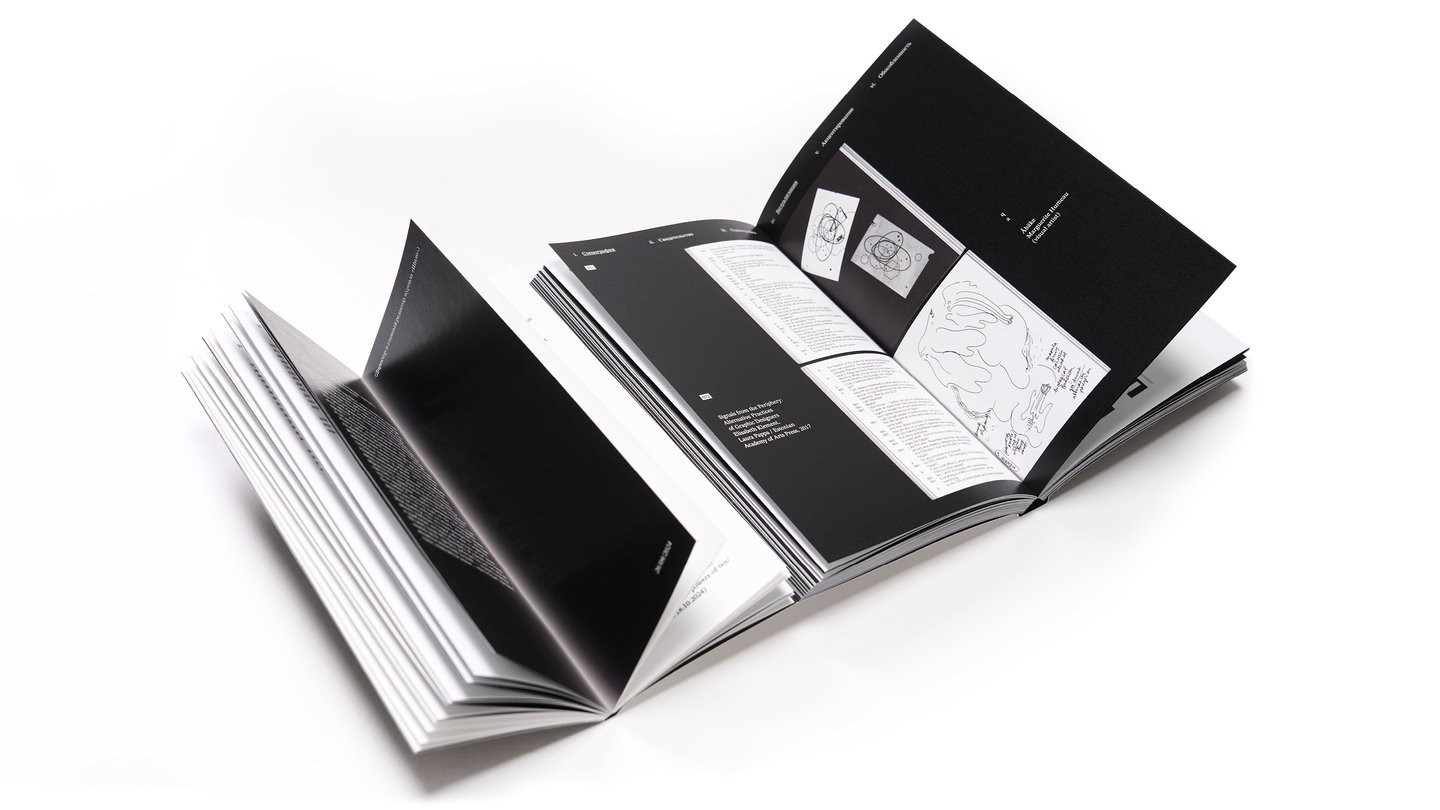
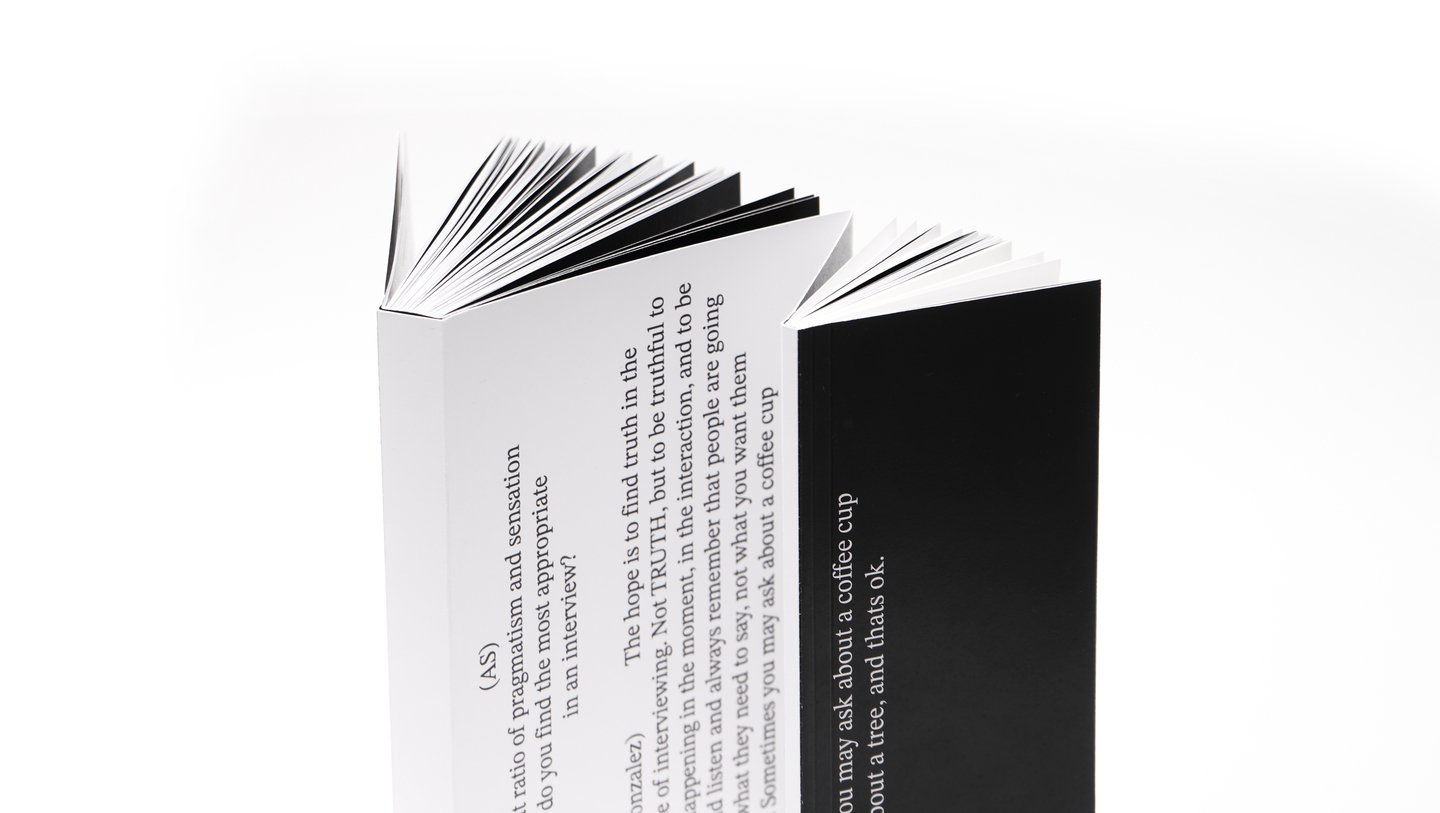
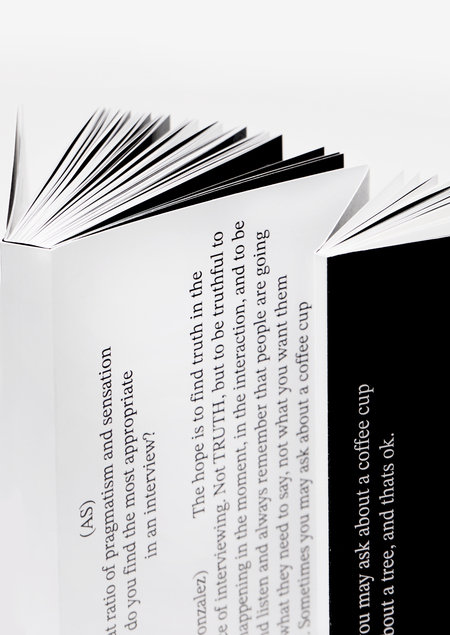
Конструкция диктуется форматом диалога: макет состоит из двух соседствующих блоков, материалы которых находятся в постоянном взаимодействии.
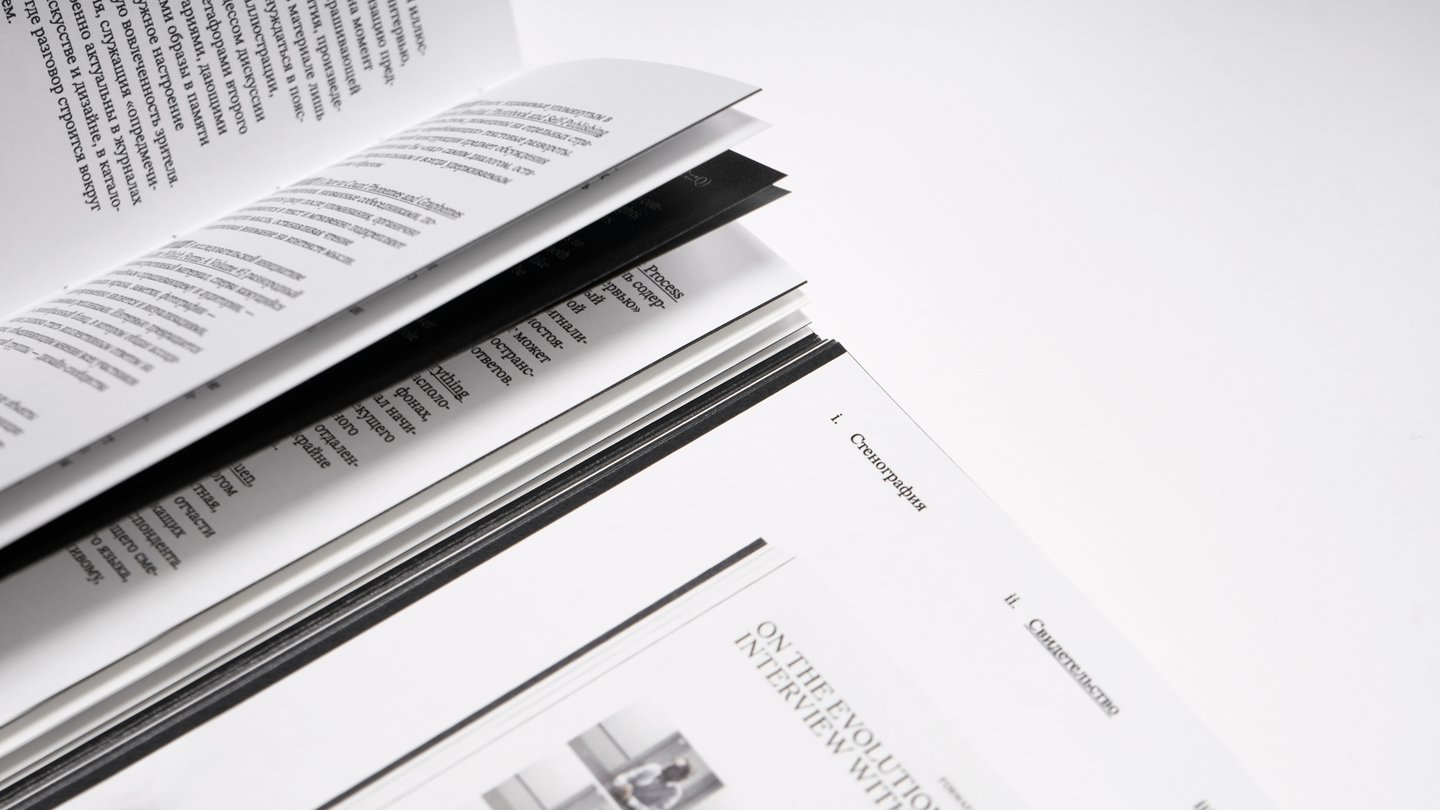
Разделы исследования становятся линией колонэлементов, играя навигационную роль в нелинейном повествовании
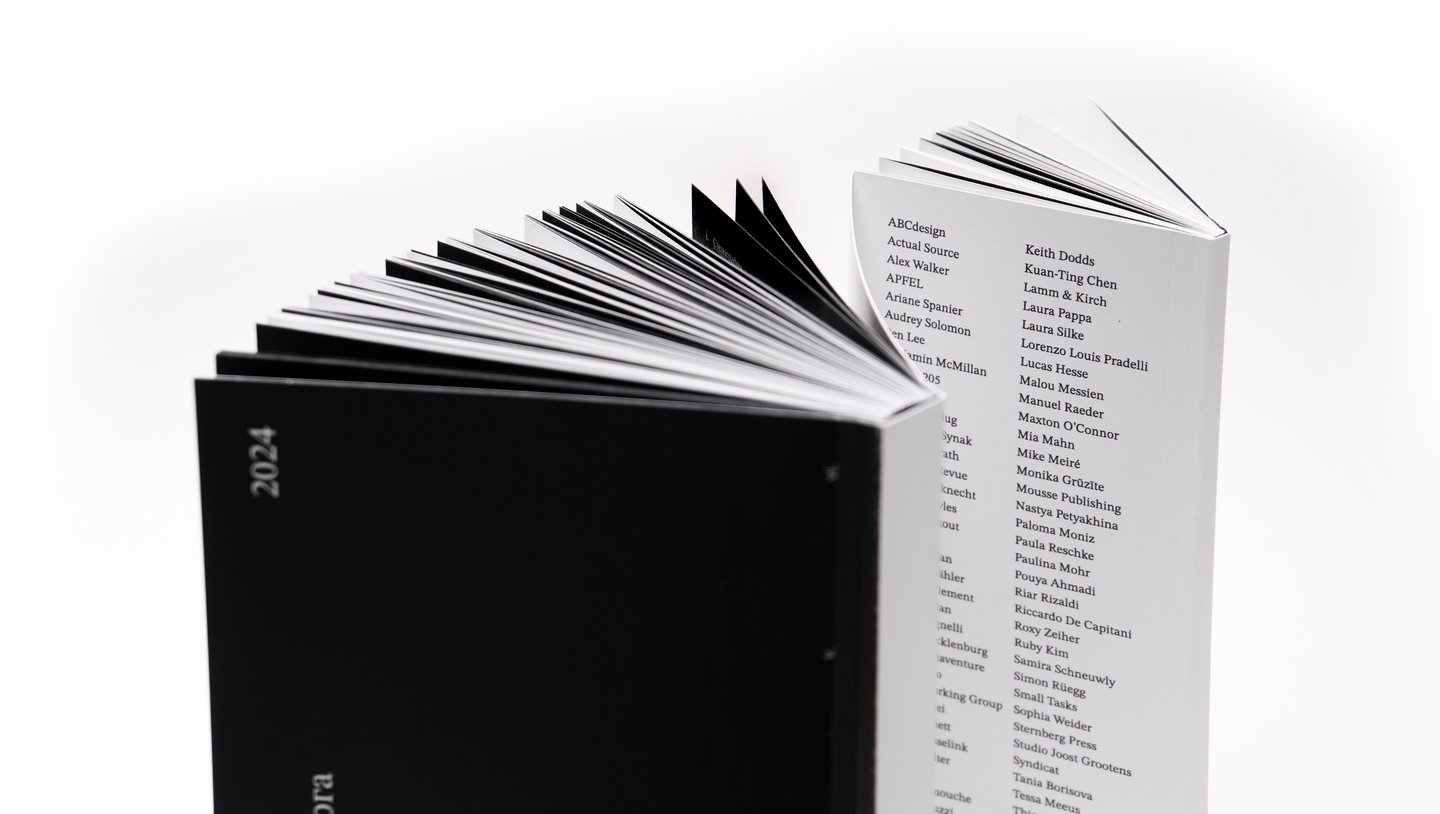
Приложением к исследованию стали интервью, проведённые с рядом художников и дизайнеров, чьи публикации анализируются в основной части книги. 10 авторов ответили на 7 избранных вопросов, возникших во время сбора материала и формулировки гипотезы проекта и связанных с процессами проведения и вёрстки интервью.
Интервью с авторами представленного материала разбивают теоретическую часть, следуя за обсуждаемым кейсом
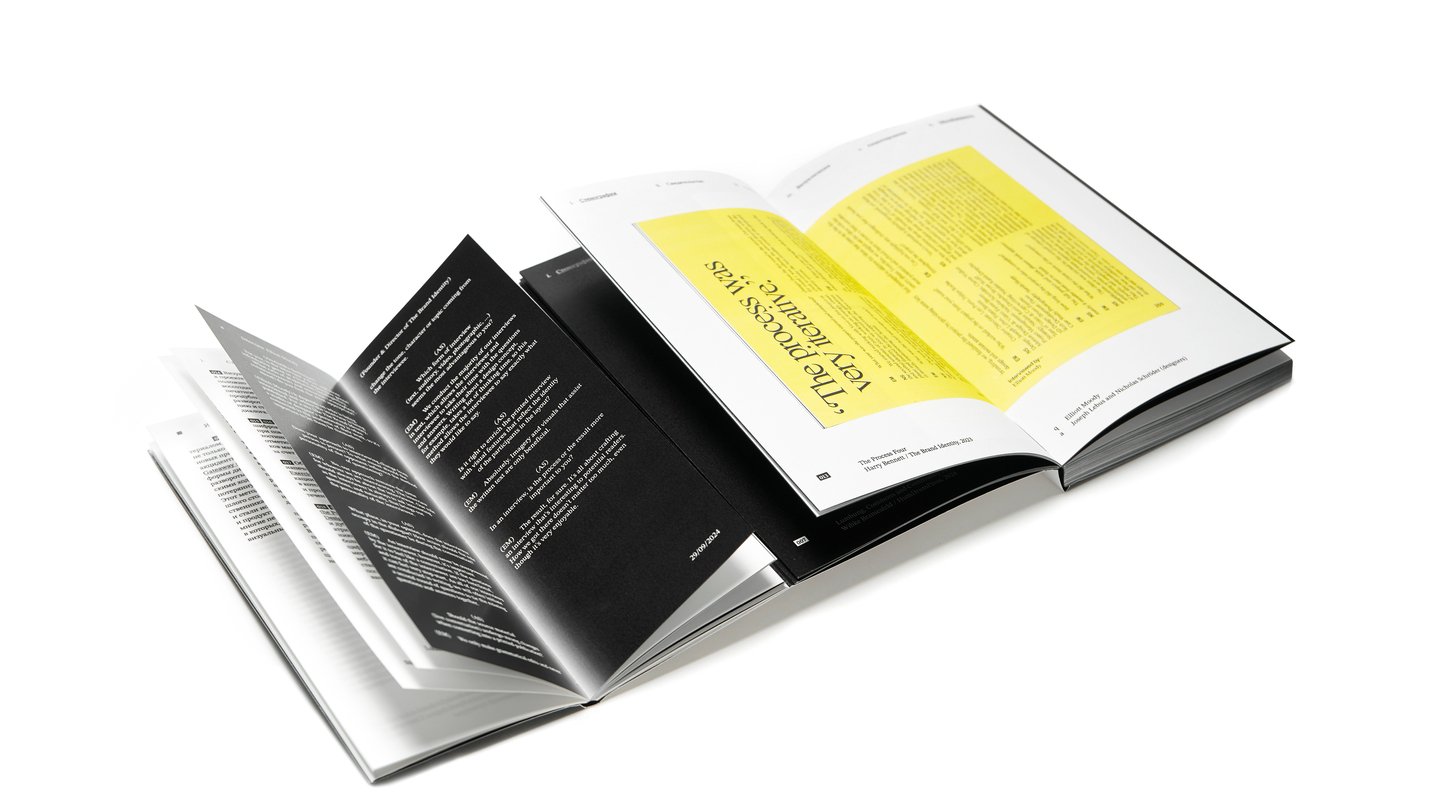
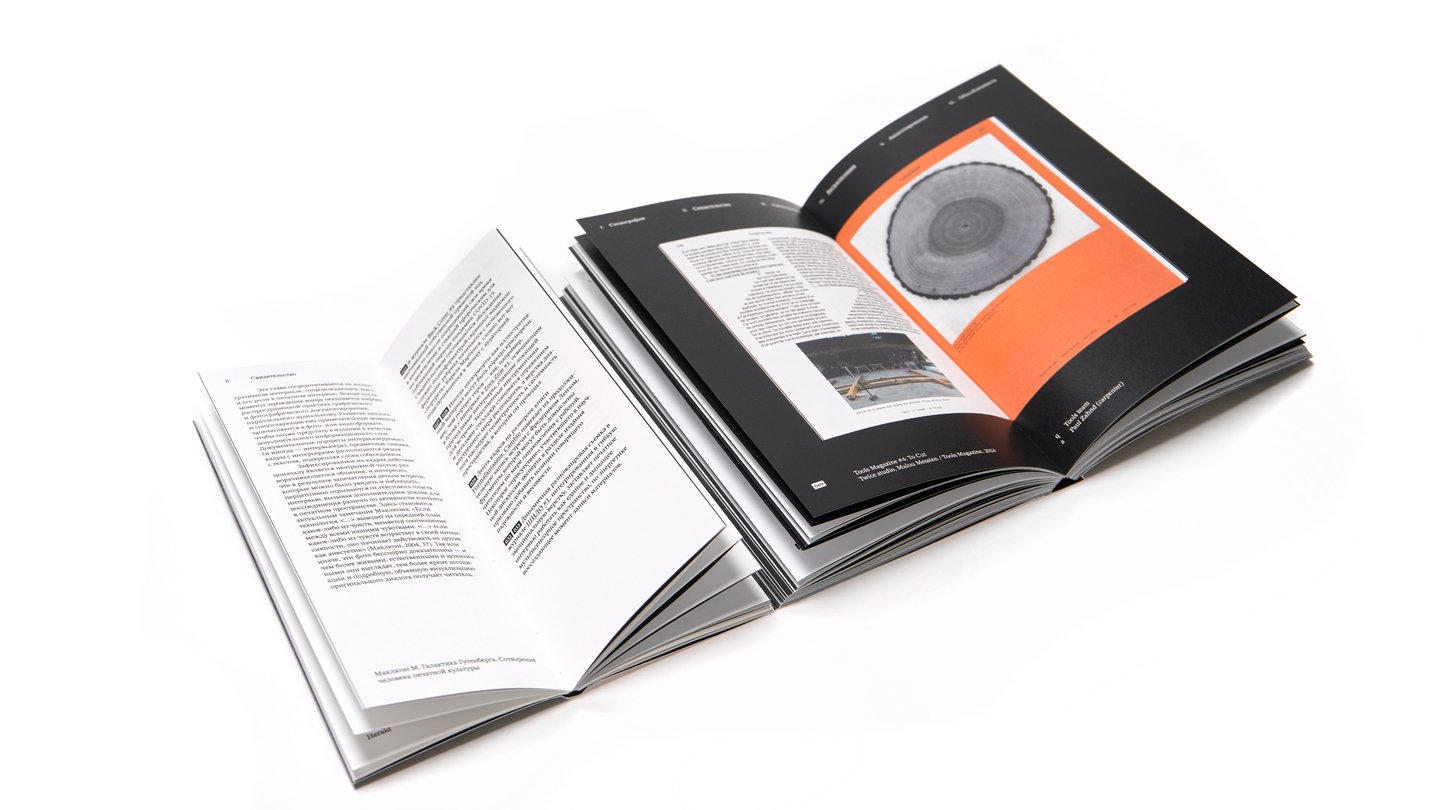
Индексы, выделенные на каждом развороте каталога, заменяют колонцифры
Использованные в проекте примеры позволили подтвердить предположение о том, что избранные типографические приемы и работа с иллюстративным корпусом переносят «ауру» оригинального интервью в макет: так, особенности верстки позволяют «оживить» опыт прочтения материала и дать аудитории прочувствовать настроение и свойства локации, в которой они никогда не были и лучше узнать героев текста, с которыми они не встречались.
Исследование, фокусирующееся на «отпечатке» интервью в физическом носителе, включило 5 исторических артефактов, 77 современных изданий (журналов, альманахов, сложноструктурных книг, каталогов, сборников и брошюр), 6 рубрик и 9 интервью с 10 авторами.