Communication strategy: Atoll — marine cosmetics
Rubrication
1. Design as a process of encoding meaning 2. Brand presentation — For general audience — For professional audience 3. Strategy plan
Design as a process of encoding meaning
Communication is a process of co-creating meaning through the exchange of symbols within a specific context. Throughout the course, we have come to the conclusion that design primarily operates with symbols: forms, colors, textures, typography, and composition. Any visual object becomes a message that is encoded by the designer and decoded by the audience. In order to predict and transform communicative processes, a structured explanation of reality is required. We do not simply rely on intuition or «feel» what makes a design appealing; instead, we draw on theoretical frameworks that allow us to consciously construct and manage brand meaning.
Within communication theory, two major groups of approaches that are directly connected to design can be identified: objective and interpretive theories. Objective theories are oriented toward the identification of regularities and the production of predictions. They provide insight into which design decisions can increase brand recognition and improve the perceived usefulness of a product. Interpretive theories, in contrast, focus on understanding meaning in context, making it possible to work with metaphors and with the necessary associations between a product and the needs of its audience.
The objective group of communication theories assumes the existence of a single objective reality that can be identified through universal laws. Such theories strive for simplicity, structure, and the testability of hypotheses, rely primarily on quantitative research methods, and are oriented toward practical application and the solution of specific communication problems.
Interpretive theories, in turn, assume that understanding reality does not have a single, pre-given structure but is constructed through the ongoing process of communication. Meaning is not transmitted in a finished form; rather, it is created by participants in interaction and depends on context, culture, experience, and values.
The semiotic tradition of communication, as presented in Robert Craig’s classification, belongs to the interpretive group of theories. Within this tradition, communication is understood as a process of creating and sharing meaning through signs and symbols. Meaning does not exist independently and is not expressed directly; instead, it is always mediated through sign systems such as images, visual elements, and symbols. The semiotic tradition emphasizes that the same signs can be interpreted differently depending on cultural context and the personal experience of communication participants. Therefore, it does not guarantee a single, unambiguous understanding of the meaning embedded in symbols.
The Atoll brand operates in a field where meaning cannot be reduced to functional benefits alone. Skincare is closely connected to bodily experience, perception, and cultural associations of nature, purity, and care.
Therefore, an interpretive communication approach was chosen, as it allows meaning to emerge through visual signs rather than being transmitted directly.
From this perspective, communication is understood not as the transmission of information, but as a process of meaning-making.
Brand presentation
According to communication theory, meaning is not transmitted as a finished message but constructed by the audience in the process of interpretation.
This principle defines the visual language of Atoll, where natural processes function as signs and invite interpretation rather than explanation.
For general audience
Atoll — line of Israeli mineral skincare products based on the salt, mud, and water of the Dead Sea. The brand produces a range of products, including mineral soaps, scrubs, mud masks, bath salts and bath bombs, toning creams, serums, exfoliants, and scrub gels.
Living in a climate with intense sunlight and strong winds places constant stress on the skin, leading to dehydration, flaking, pigmentation, and photoaging. These effects are not limited to Israel: cities around the world with hot summers, dry air, and high levels of UV radiation create the same challenges.
The minerals and salt of the Dead Sea are close in composition to human blood plasma, allowing them to penetrate the skin easily, accelerate regeneration, and support the skin’s water–mineral balance. Dead Sea water is hypoallergenic and suitable for different skin types. Atoll transforms this natural resource into an everyday ritual: gentle yet mineral-rich formulas that restore the skin’s elasticity and comfort.
Atoll is a gentle yet effective mineral skincare line that helps the skin rise above the effects of heat, wind, and sun exposure.
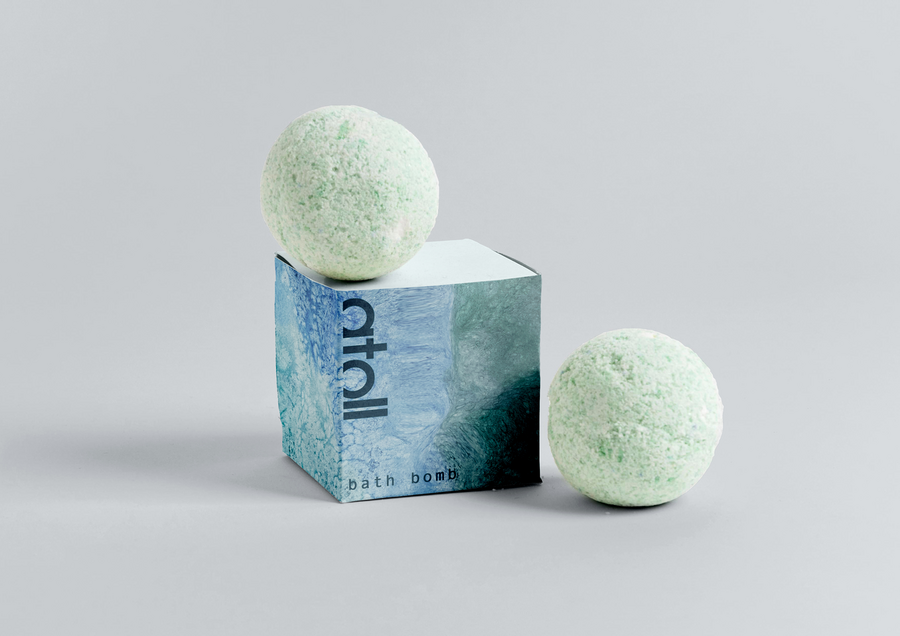
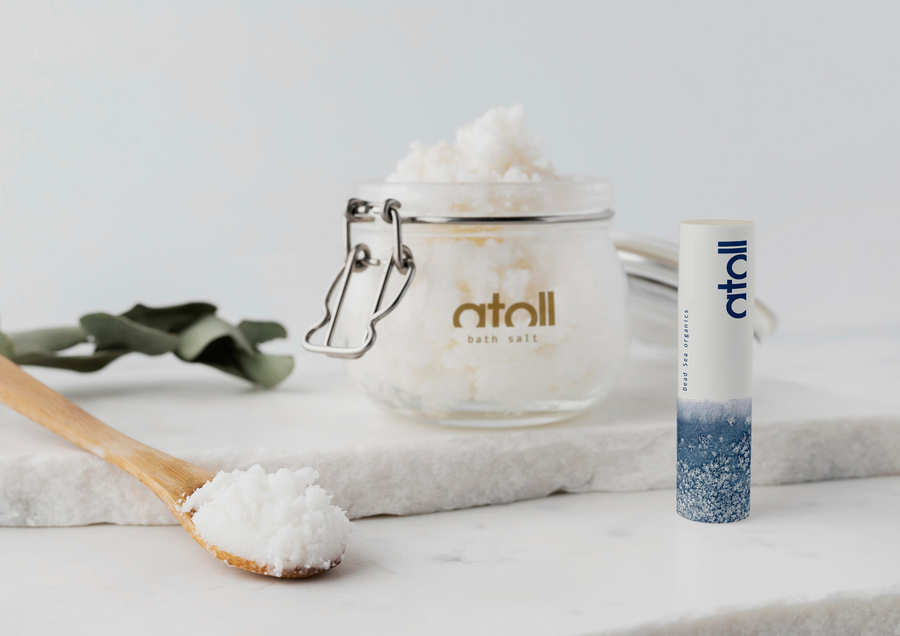
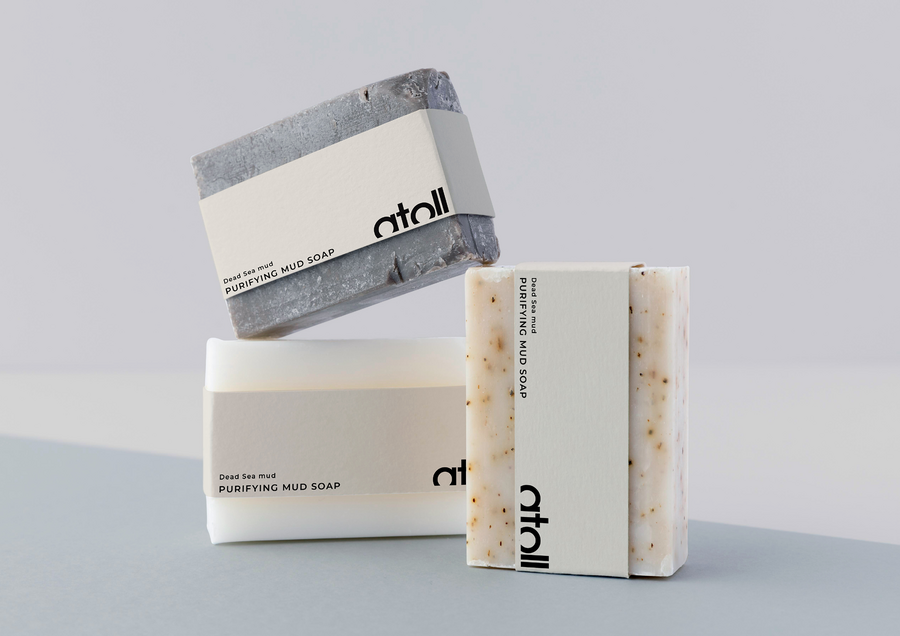
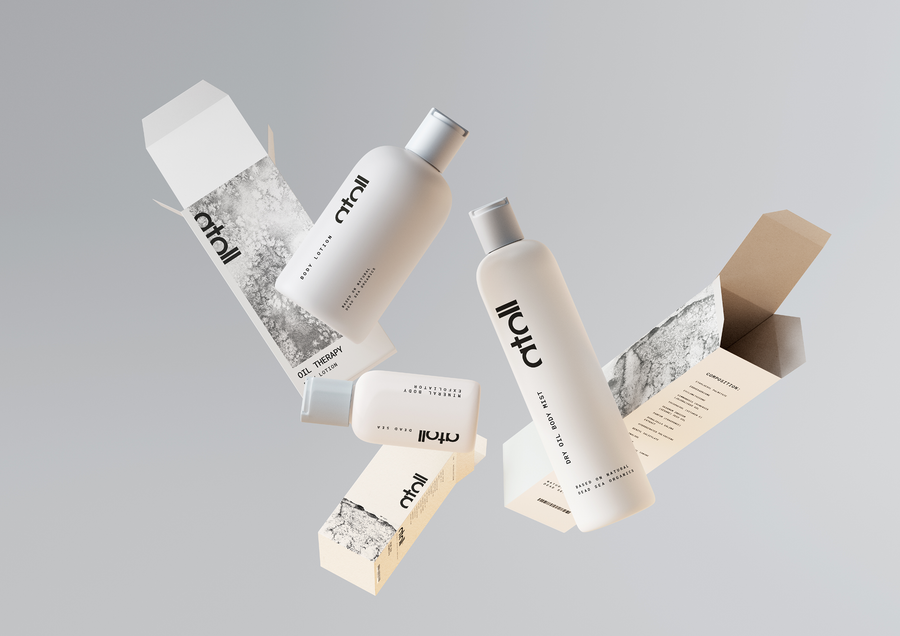
What Atoll communicates?
Atoll communicates care not as an instant result, but as a gradual and natural process.
The brand avoids aggressive promises and instead emphasizes time, transformation, and interaction with natural elements.
For professional audience
Semiotic system of the brand:
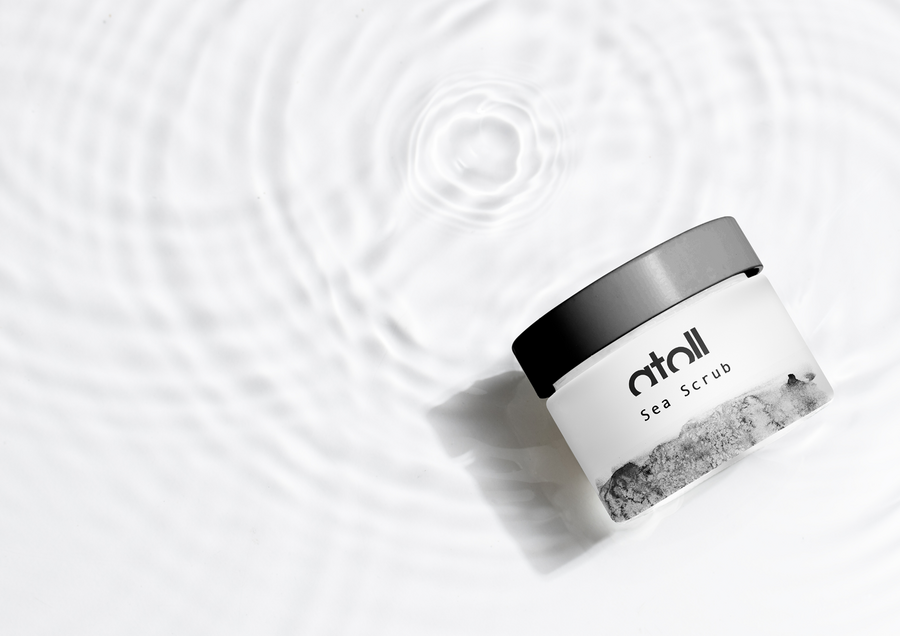
• Salt crystals function as signs of natural transformation and renewal • Stains and textures represent traces of interaction and time • Muted color palette communicates calmness and tactility • Minimal typography reduces verbal dominance in favor of visual meaning


Designer’s role in the communication process
Within this communication model, the designer does not control meaning directly.
Instead, the designer creates conditions in which meaning can emerge through interaction between visual signs and the audience’s experience.
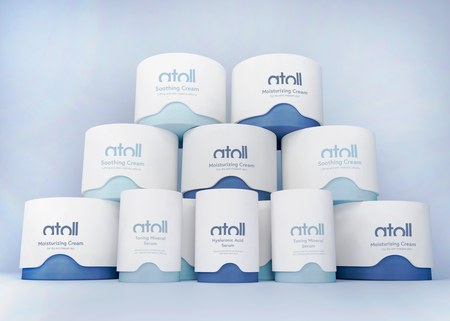
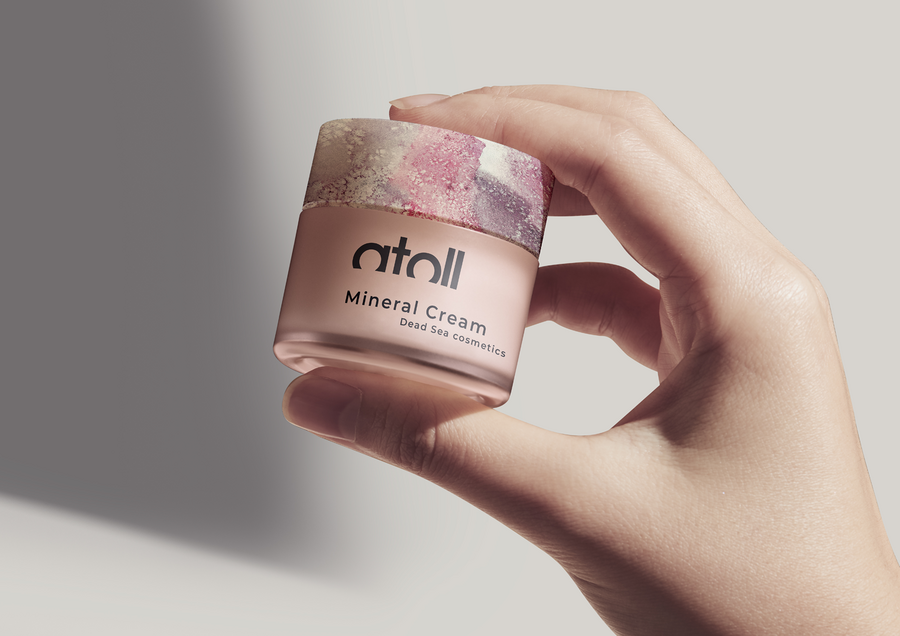
Atoll is a gentle but effective mineral care that helps the skin «float» above the effects of heat, wind and sun. Here comes the metaphor of «floating up» that directly related to the experience of swimming in the Dead Sea (with a lot of salt that pushes your body up) and to the logo, in which the letters seem to emerge from the water.
wet watercolor + salt = salt stains
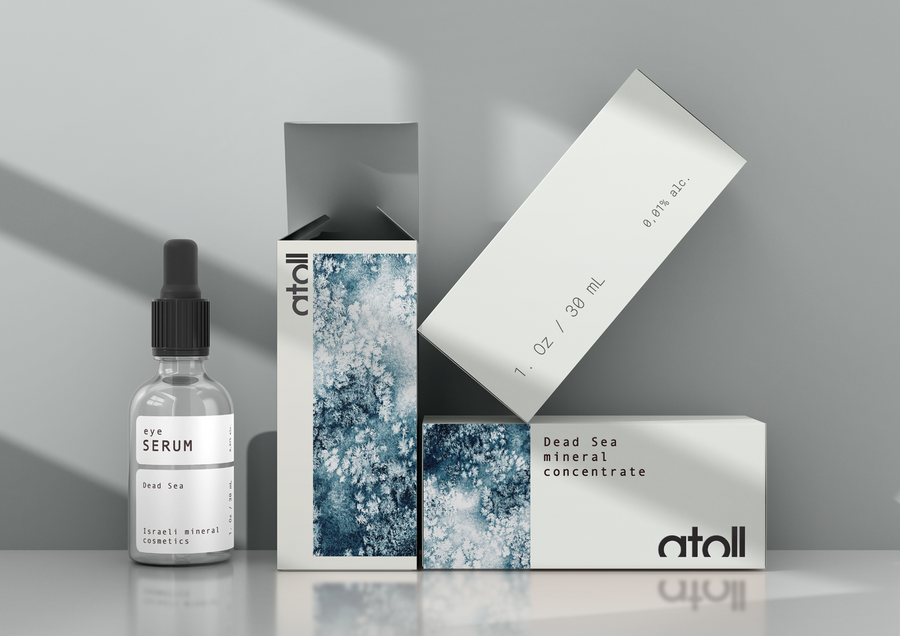
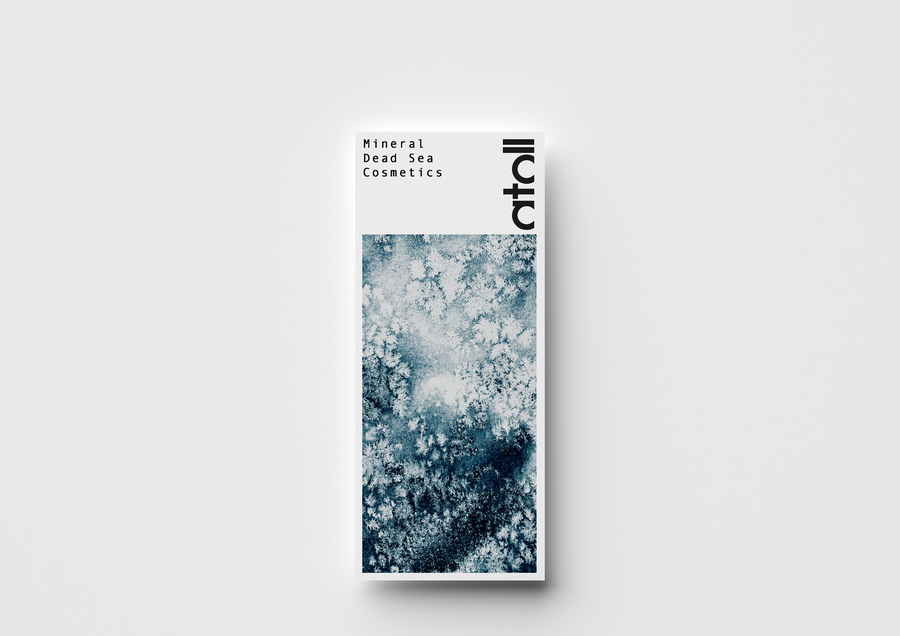
The visual style was based on the idea of crystallization and salt stains on watercolor paper, directly referring to the nature of the product and helping to read the mood of the brand. The result was the interweaving of salt patterns into the visual language of the brand, allowing for the creation of a unique style and pattern that has become rooted in the brand name and has become its recognizable feature.
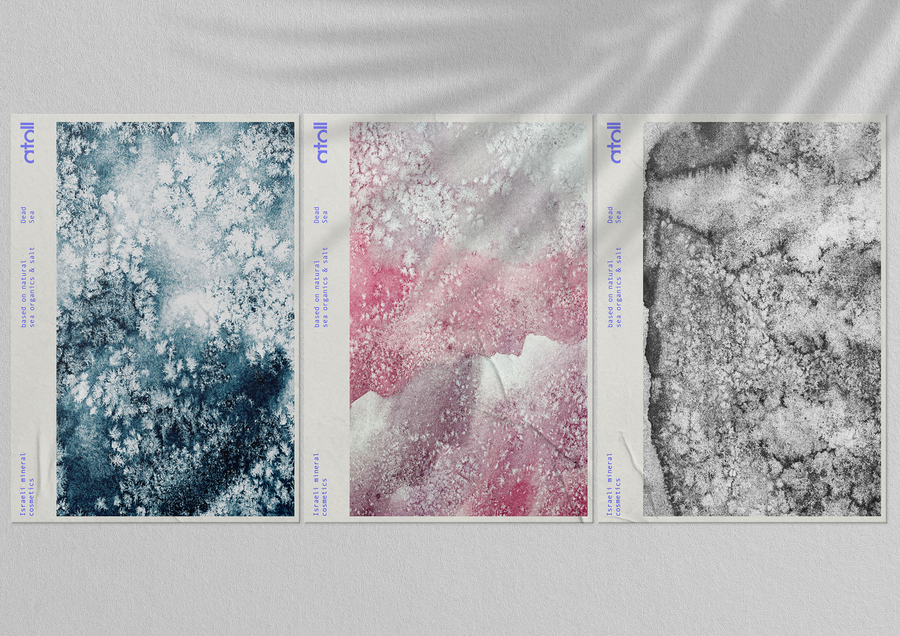
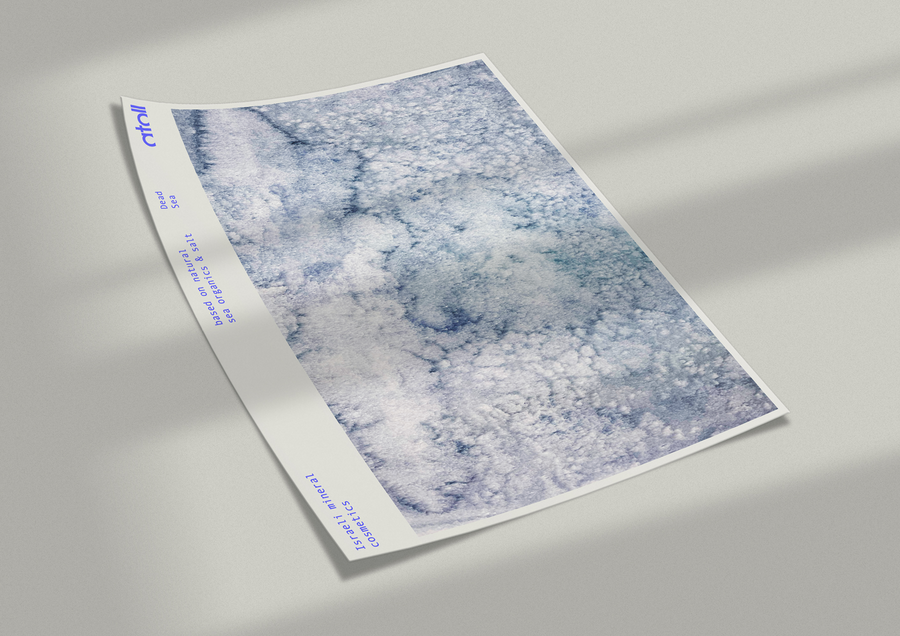
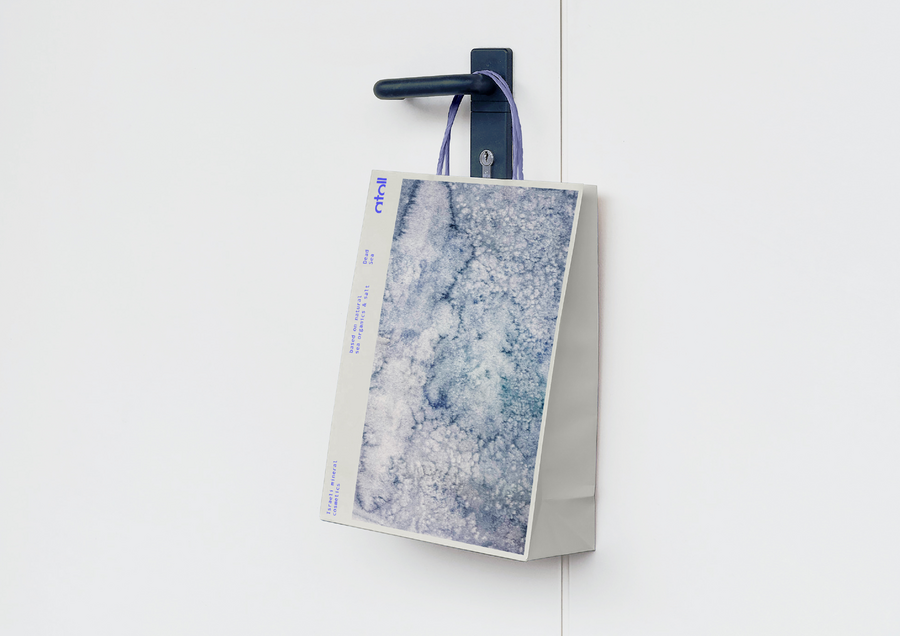
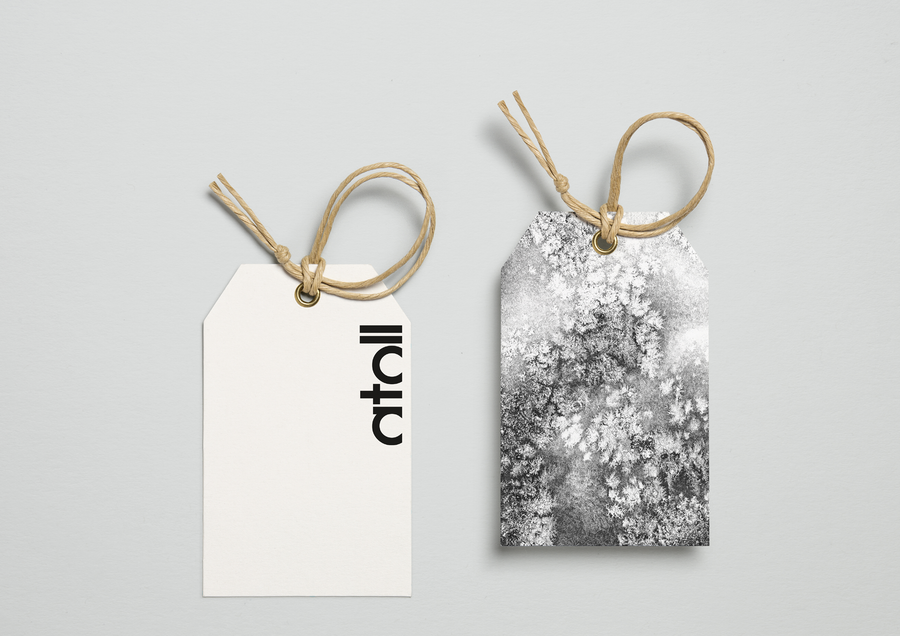
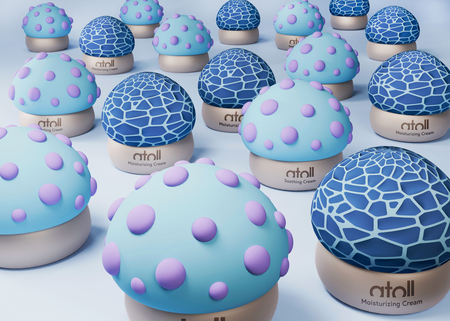
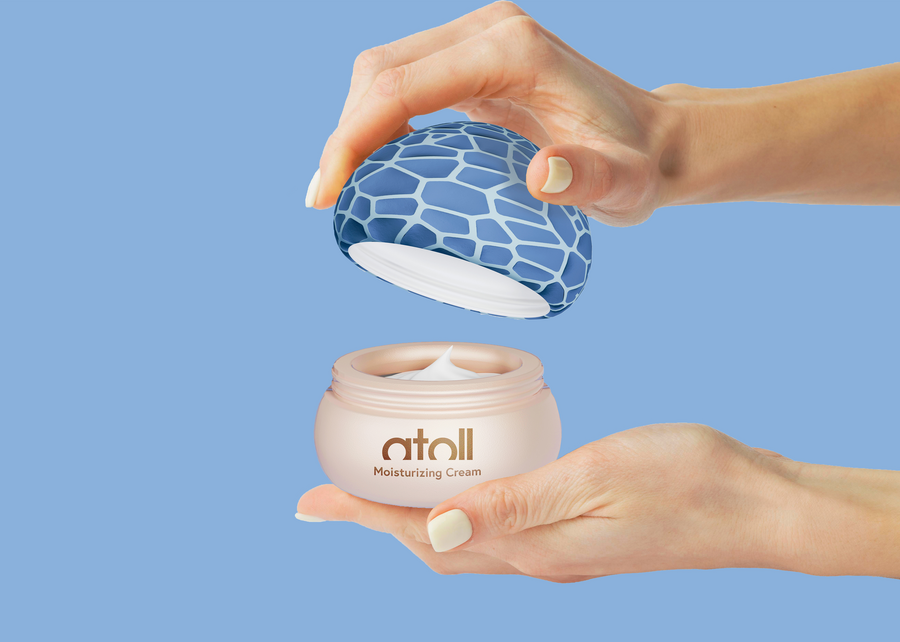
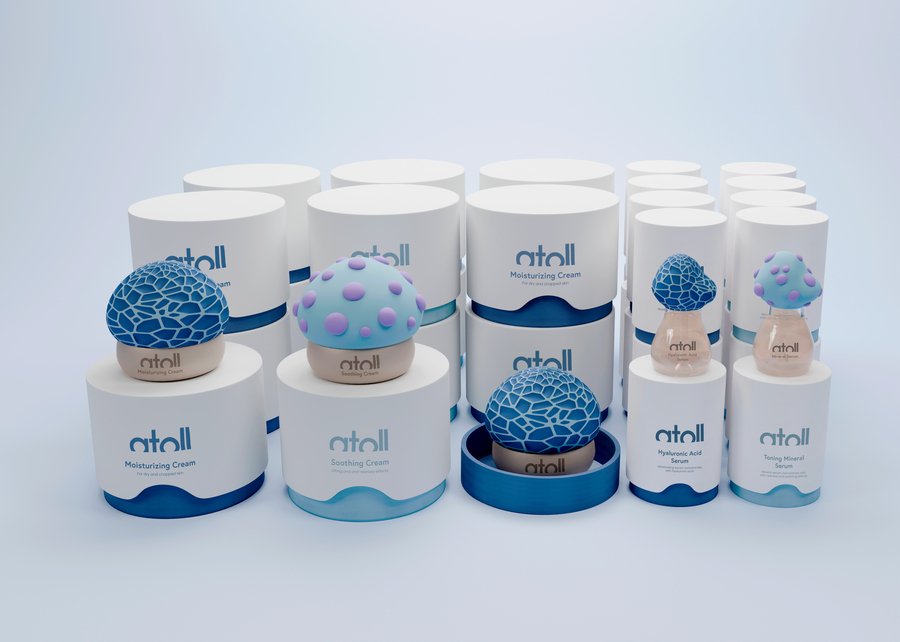
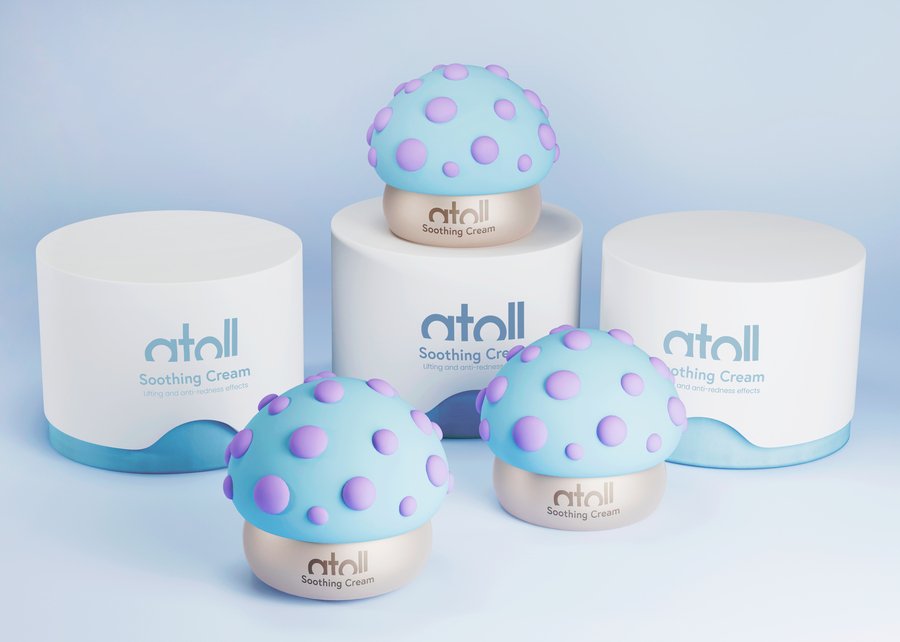
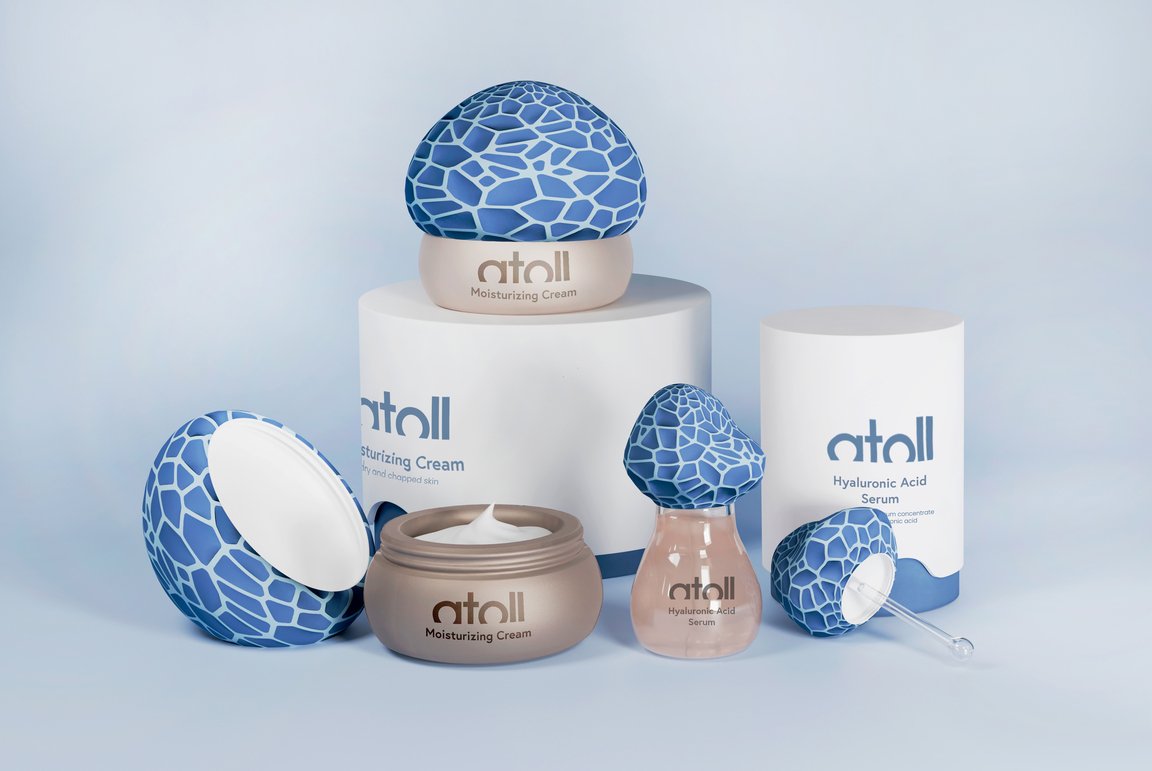
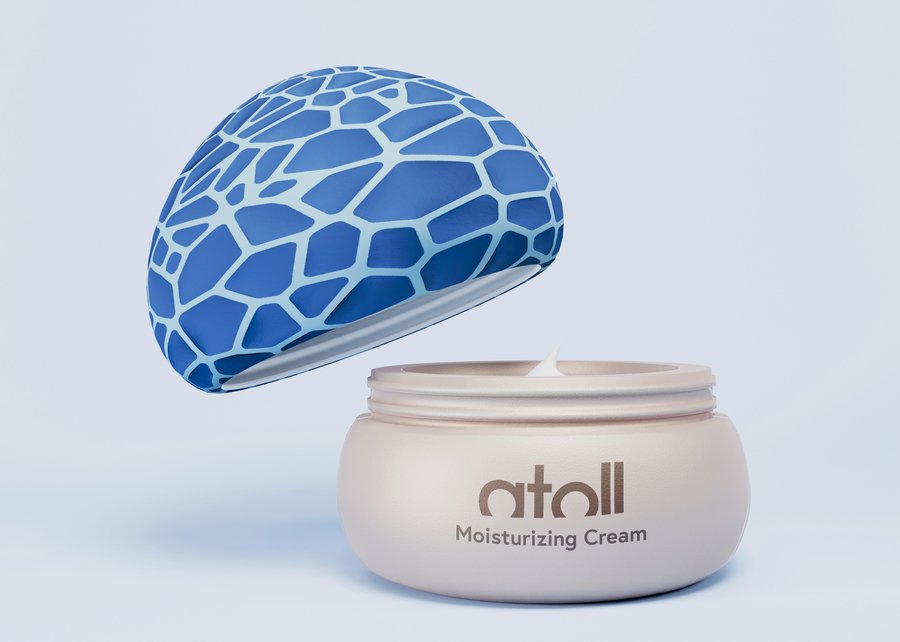
Formation of packaging: «salt mushrooms» as an object language.
salt crystallization process = salt stains





Strategy plan
The communication goal of Atoll is to build a calm and trust-based relationship with the audience through visual communication that emphasizes natural processes rather than direct persuasion.
Key message: Care is a process, not an instant effect.
Role of the audience: The audience is positioned not as a passive receiver of information, but as an active interpreter who constructs meaning based on personal experience and cultural context.
Communication channels: • Packaging — the closest point of bodily interaction • In-store visuals — slow and contemplative perception • Posters — non-intrusive presence in public space • Digital visuals — fragmentary, scroll-based perception
Advertising and branding work through a system of signs that convey meaning without directly stating it. • Crystalline salt stains and «salt mushrooms» on the shores of the Dead Sea provide iconic images: the viewer instantly perceives minerals, crystallinity, and naturalness. • The wet salt watercolor technique transforms this natural process into abstract visual textures that become the brand’s signature pattern. This is pure semiotic work: we process natural forms into a recognizable visual code of the brand.
The original metaphor of floating in the Dead Sea carries over into the logo.
The atoll logo semantically solves two problems: 1. The word «atoll» refers to an island in the sea, a protected area where one can recover. 2. Rounded letters with a slight cut along the bottom, as if hid by water, convey the idea of a floating object — like a body that does not sink in the Dead Sea, but gently floats on the surface.
The communication strategy of Atoll is based on the semiotic tradition of communication, where meaning is created through visual signs within a specific cultural and experiential context.
Material from the Communication Theory course (дата обращения 04.12.2025)