Introduction
Airbnb is one of the largest international online platforms designed for short term rental of private accommodation worldwide. Airbnb users can rent out their homes, either entirely or partially, to travelers. The website provides a platform for establishing contact between hosts and guests and is also responsible for processing transactions.
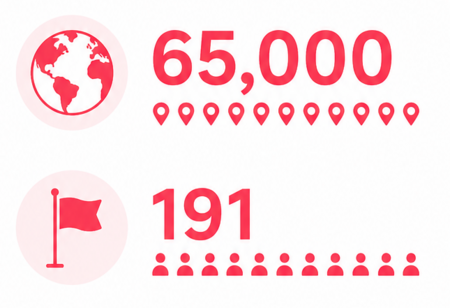
Airbnb offers accommodation in 65,000 cities across 191 countries.
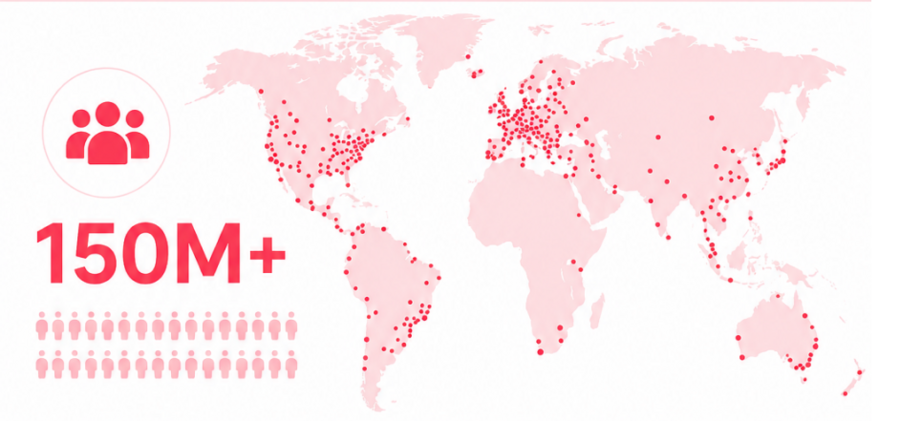
Since its foundation in August 2008 and up to April 2017, more than 150 million people had found accommodation through Airbnb. For its services, Airbnb charges a certain percentage: 3% of the booking amount from apartment hosts and from 6% to 12% from renters, according to data from April 2017
Today, Airbnb is no longer only a short-term accommodation platform. It is an expanding travel ecosystem that connects homes, experiences, and services, and, since the 2026 summer release, also boutique and independent hotels. This shapes the brand’s positioning around the idea of a more «authentic», personalized, and convenient travel experience.

Airbnb defines itself as a brand that grew out of the model in which «two hosts welcomed three guests» in 2007 and later became a global platform where hosts offer unique stays, experiences, and services every day. The company’s official formulation emphasizes the connection between accommodation and authentic access to local communities. This is important for positioning: Airbnb does not sell only a bed or a place to sleep; it sells a sense of access to «place as lived experience», meaning access to a city, neighborhood, and local culture not through a standardized hotel format, but through a personalized environment.
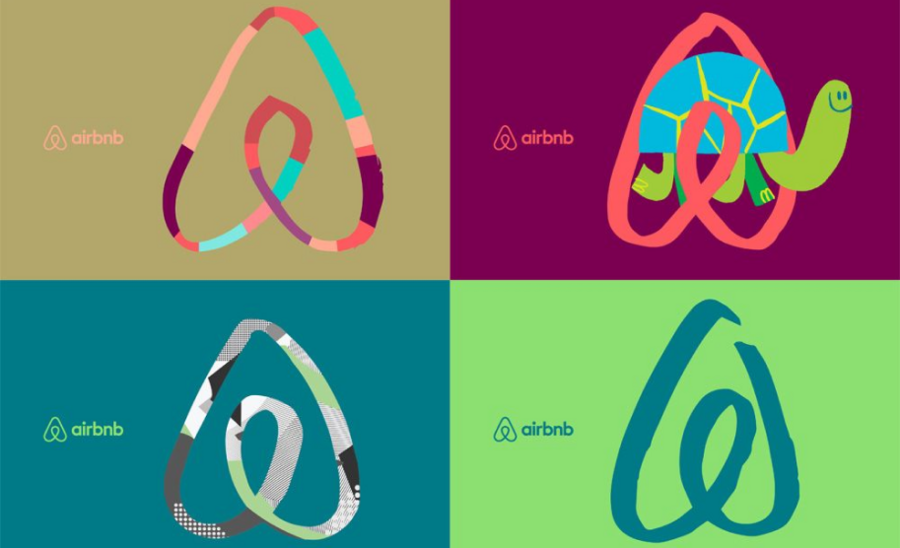
«you can belong anywhere» campaign
Theoretical Framework
For this project, I suggest relying on two theories from the course: the Elaboration Likelihood Model and the critical theory of the public sphere associated with Habermas. This choice is not accidental. In the course recap, ELM is presented as a model that distinguishes between the central route and the peripheral route of persuasion. When the audience is motivated and involved, strong arguments and substantive message processing are more effective. When involvement is lower, greater importance is given to cues such as attractiveness, status, emotionality, simplicity, and repetition.
airbnb ecosystem/positioning
For Airbnb, this is especially relevant because the platform journey is not uniform in terms of involvement. Scrolling through the homepage, encountering a celebrity experience, reading a news story about the Hannah Montana house, or looking at an attractive visual are situations in which the brand can benefit from peripheral cues. But when a user chooses a specific property, assesses cancellation risk, reads ratings, checks accessibility features, or compares options for a family trip, they move into a higher-elaboration mode. In this mode, central cues become critical: facts, evidence, functions, guarantees, reviews, and the structured logic of the interface. In this sense, Airbnb’s architecture itself can be read through ELM.
The second theory is necessary so that the research does not reduce Airbnb’s communication to the «effectiveness of beautiful advertising.» The critical theory part of the course reminds us that, for Habermas, the public sphere in its normative sense is connected with rational-critical discussion. However, in contemporary media, the public sphere is often transformed into a space where commercial and media forces displace deliberative logic, turning the public arena into a mode of attention management and legitimation through advertising and media forms.
Therefore, the combination of these two approaches provides a strong analytical framework. ELM helps explain how Airbnb persuades and converts users. The public sphere helps evaluate what social role these communications play and to what extent they function as open dialogue rather than as branded management of attention and reputation. In the presentation, this will allow Airbnb to be shown simultaneously as a persuasive interface brand and as a politically and socially loaded actor in the public arena.
Target Audience
Airbnb’s target audience is much broader than simply «tourists.» Based on official materials, at least four core audience segments can be identified. These are guests, who need a flexible alternative to hotel stays; hosts, for whom Airbnb is both an income channel and hosting infrastructure; experience and service hosts, who sell guided activities and offline services; and a broader network of external stakeholders, including neighbors, local communities, civil rights groups, regulators, event partners, and media.
airbnb advertisement
Positioning
Airbnb’s competitive field is heterogeneous. At the level of user choice, Google Play displays similar travel services next to Airbnb, including Booking.com, trivago, and Tripadvisor. Business press covering the travel sector regularly compares Airbnb with Expedia Group and, within the broader OTA space, with Booking Holdings. At the same time, since the 2026 summer release, Airbnb has begun integrating boutique and independent hotels into its own funnel. This means that it partly competes with the traditional hotel OTA market while also integrating it into its platform logic
airbnb on the competitive field
This also explains the brand’s key USPs. First, Airbnb integrates «home + experience + service» within a single app. Second, it promises local authenticity rather than only functional accommodation. Third, it offers a set of trust mechanisms that reduce perceived risk. Fourth, Airbnb has a strong ability to turn a travel product into a cultural and event-based media object through fan activations, celebrity Originals, sports partnerships, and narrative PR. This combination is what makes the brand distinct from purely transactional OTAs.
However, Airbnb’s market position is both strong and vulnerable. On the one hand, Reuters reported that in 2025 bookings in «expansion markets» grew faster than in core markets, supported by regional customization, local payment options, and localized marketing campaigns. On the other hand, public criticism of short-term rentals has not disappeared. Spain, for example, fined Airbnb for unlicensed tourist properties, while the European discussion around overtourism continues to question the platform’s broader social legitimacy. For the presentation, this is important because Airbnb should be shown not only as a «successful brand», but also as a brand that constantly communicates under the pressure of complex public criticism
Communication Channels
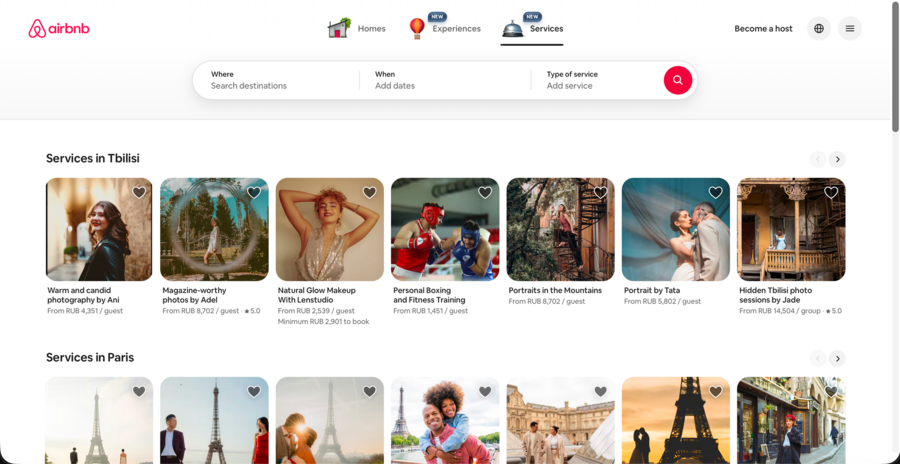
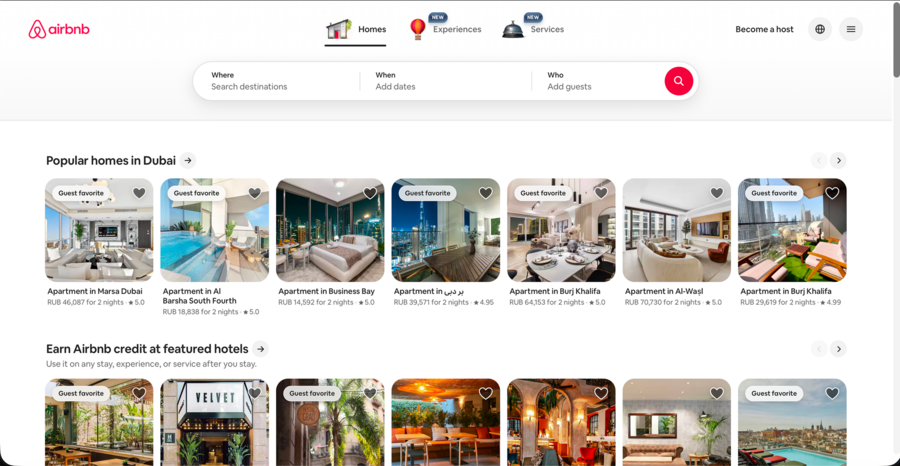
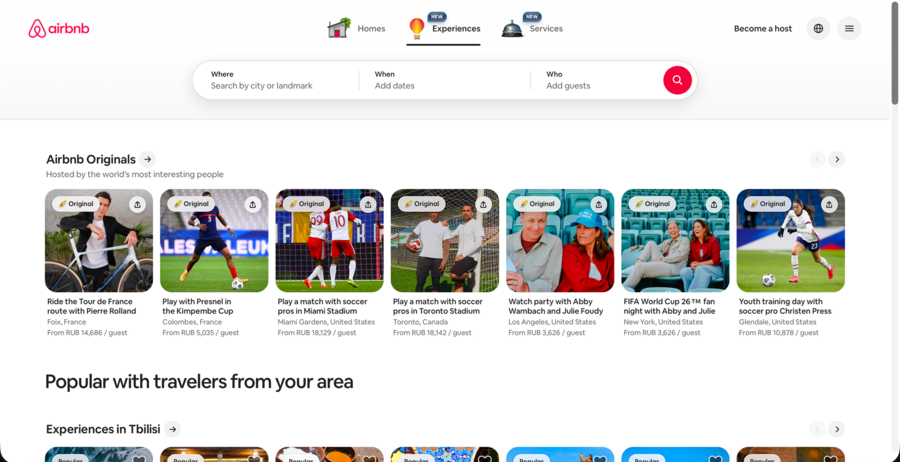
airbnb homepage
Airbnb’s communication system can most usefully be mapped as an owned, shared, earned, and partnership-driven field. At the level of owned media, the key nodes include the homepage, app surfaces, Help Center, AirCover pages, accessibility and anti-discrimination policy pages, Neighborhood Support, host-acquisition flows, Community Center, Newsroom, and Investor Relations.
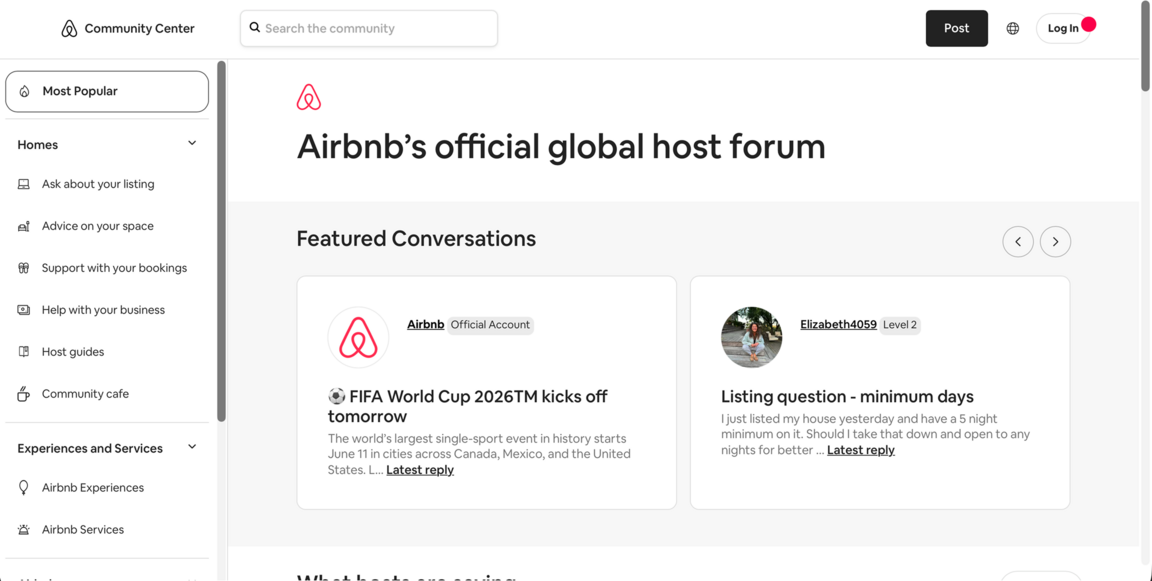
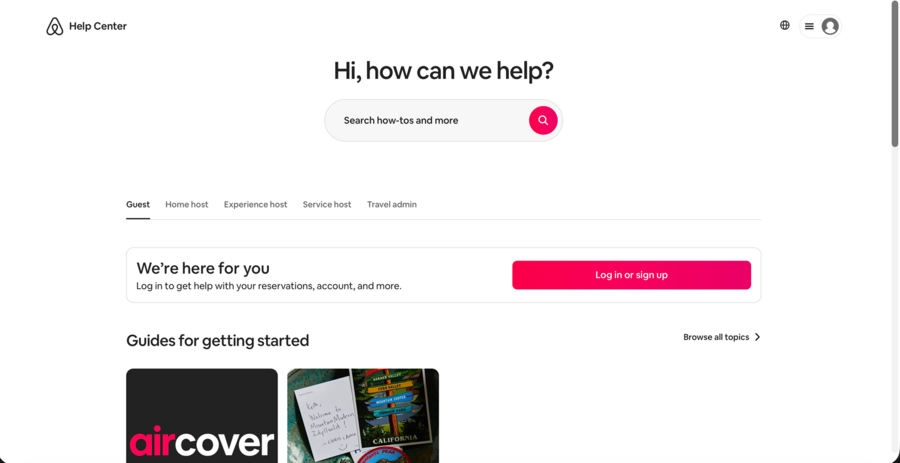
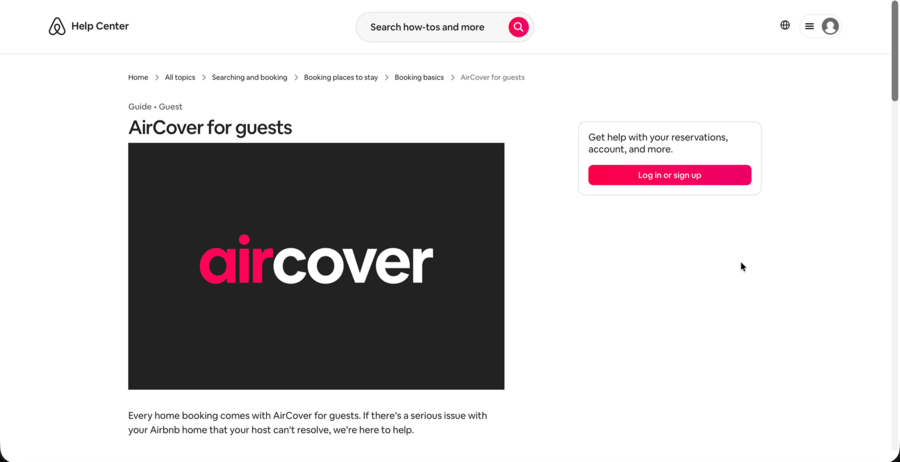
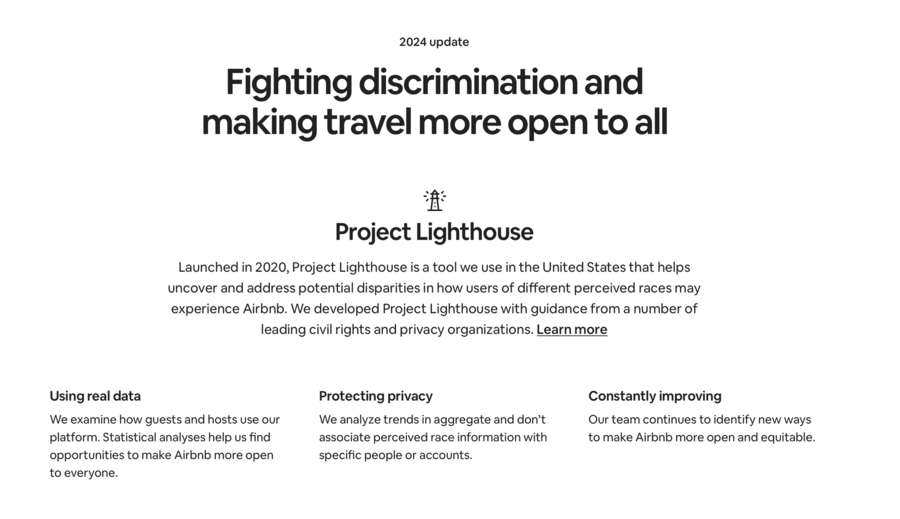
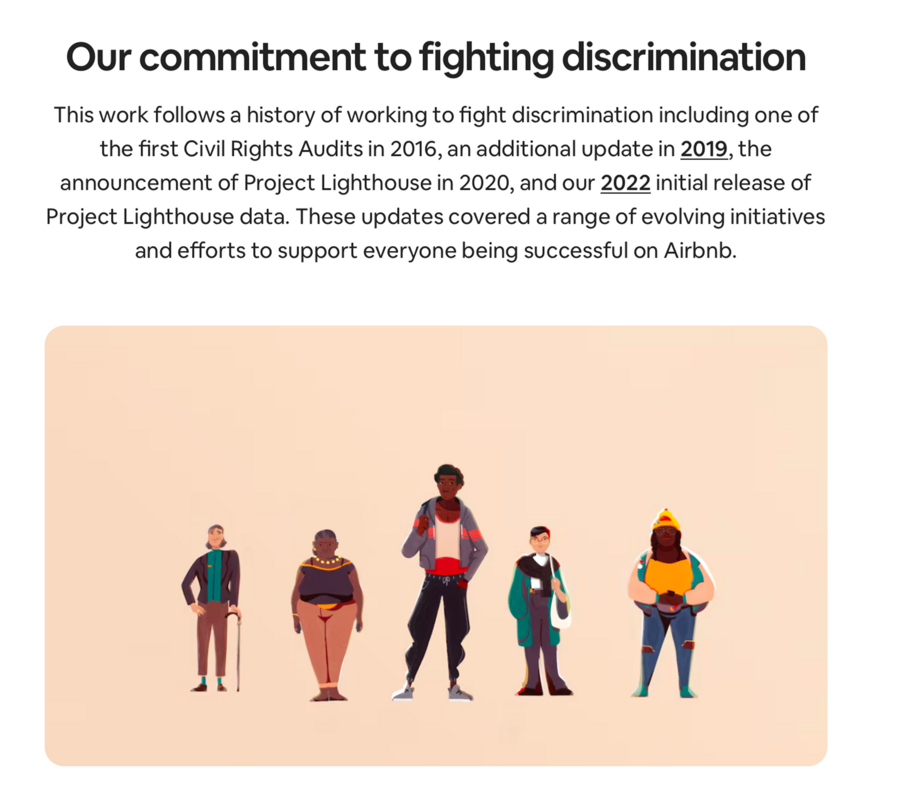
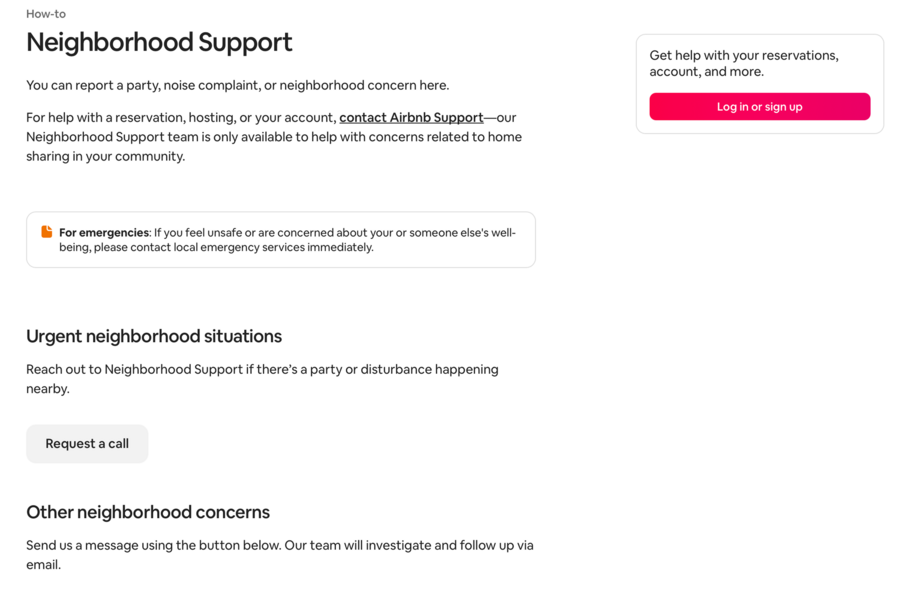
help center / AirCover / accessibility page / anti-discrimination policy / neighborhood support / community center
The homepage itself already demonstrates the brand’s strategy: the top interface separates Homes, Experiences, and Services, and then immediately moves the user toward search intent through Where / When / Who. This is not just navigation; it is a communicative statement. Airbnb is no longer a single product accommodation service, but a multi-category brand of travel and everyday experience.
airbnb instagram* *Деятельность компании Meta Platforms Inc., а также ее продукты (Instagram и Facebook) запрещена на территории Российской Федерации.
The brand’s social media presence is officially confirmed at least through links in Airbnb Newsroom and Investor Relations. TheNewsroom footer lists X/Twitter, Instagram*, LinkedIn, TikTok, andFacebook*; Investor Relations also links to Facebook*, X, and Instagram*. Airbnb’s official YouTube channel exists as a separate communication surface, although its public metrics could not be reliably extracted from the web interface without logging in. For Instagram*, a public third-party estimate from Social Blade is available: the profile @airbnb had around 6.9 million followers as of May 26, 2026. This should be treated as a proxy indicator, not as official platform reporting.
*Деятельность компании Meta Platforms Inc., а также ее продукты (Instagram и Facebook) запрещена на территории Российской Федерации.
The most visible layer of Airbnb’s recent communications is event-, fandom-, and partnership-driven storytelling. In the 2026 Summer Release, the company simultaneously announced grocery delivery in partnership with Instacart, airport pickups through Welcome Pickups, luggage storage through Bounce, car rentals, AI review highlights, AI-powered comparison, shared itinerary, connections and travel map, AI support in 11 languages, and hotel inventory in 20 top destinations. In other words, communication is not built around one «big advertising campaign», but around a series of functional promises, each supported by a specific partner or product module.