
Analysis of Aviasales Brand Communication Strategy from the Perspective of Communication Theory.
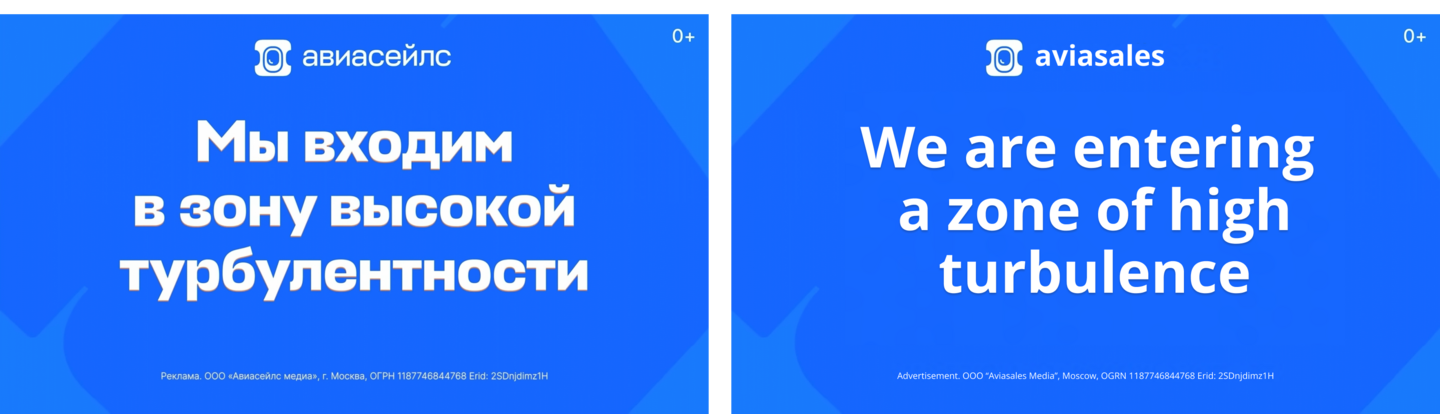
Aviasales’s advertising insert in a reality show, 2024
Structure
Brand Overview Brand Communication Channels Theoretical Framework Analysis of Aviasales Brand Communication Conclusion and Recommendations
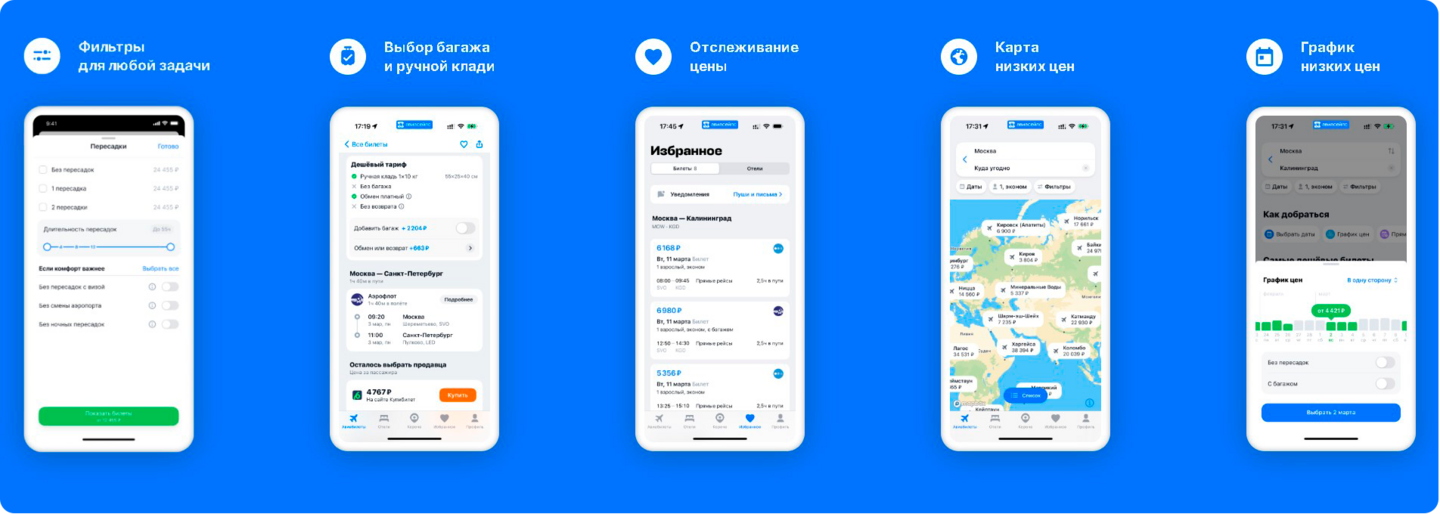
Aviasales website section about the company
Brand Overview
Aviasales is a prominent independent travel metasearch service that specializes in comparing airline tickets and hotel prices across hundreds of suppliers. Founded in 2007 by Konstantin Kalinov, the company has grown into one of the world’s largest independent travel tech entities, serving over 18 million users across Eastern Europe and Central Asia.

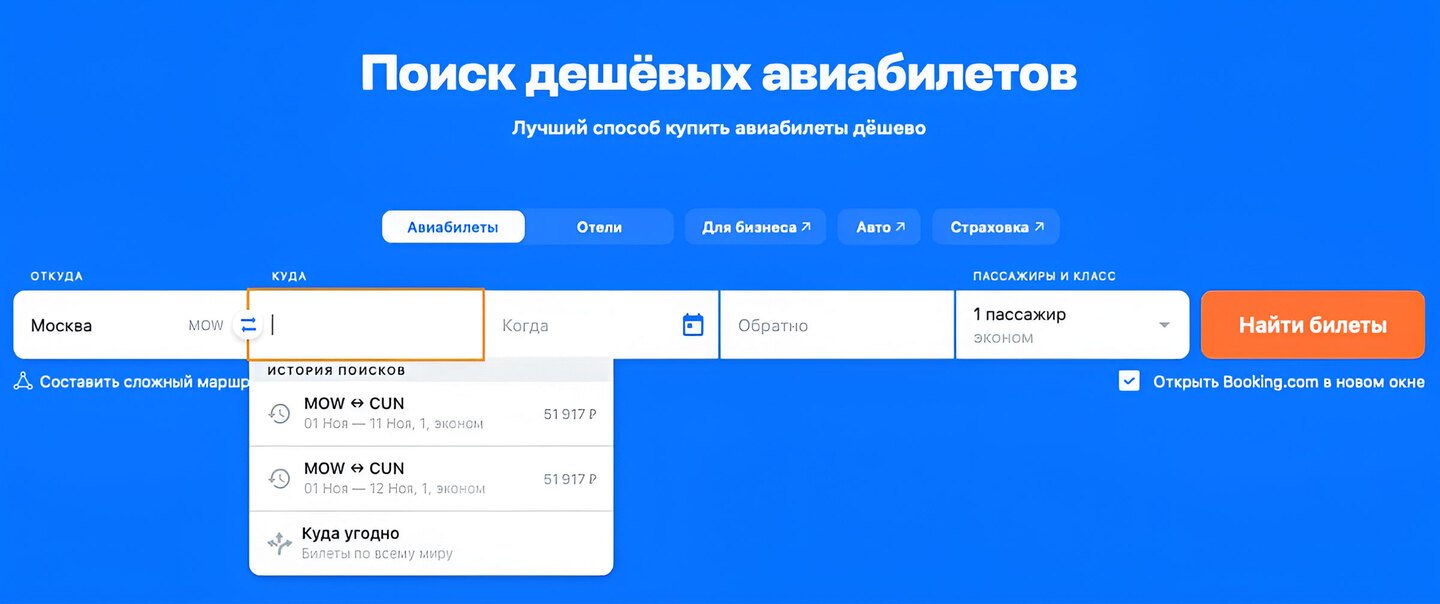
1 — Aviasales website interface 2 — Aviasales advertising campaign, 2026
Core Positioning
The core of Aviasales' positioning is the image of a «buddy» or an «ironic friend» who knows everything about travel, is free from corporate snobbery, and speaks the same language as the user. The brand promotes the ideas of accessibility, ease, and freedom of movement using humor, real-time marketing, and self-deprecation.Target Audience (TA)
Demographics: Predominantly Millennials and Gen Z (18–35 years old) living in major cities. Psychographics: Active internet users, digital natives who value mobility, independence, and new experiences. They exhibit high resistance to traditional advertising (banner blindness), and deeply appreciate authenticity and a good sense of humor.Brand Social Media Feed on Instagram*
The focus of this study is Aviasales’ communication in the public digital sphere. Of particular interest is how the brand uses visual channels, popular humorous imagery, and trends to shape its identity and engage with its audience.
A preliminary analysis of the brand’s official website, social media platforms, and communication materials revealed that Aviasales can be viewed not only as a service for purchasing airline tickets, but also as an independent communication entity that engages with its audience through relatable imagery, popular jokes, and absurd integrations. As part of this study, the brand will be examined in terms of its communication strategies, the associative images it creates, and its methods of interacting with the audience.
Mailing offers from Aviasales
Brand Communication Channels
The brand’s communication strategy is a rather unique blend that relies primarily on digital channels, specifically social media platforms and the brand’s official website. Content posted on social media typically does not advertise the product itself, but rather builds a strong association with the brand in the consumer’s mind through familiar imagery, popular trends, and relatable life situations.
The main objective is not only to shape a specific image but also to constantly remind consumers of the brand’s existence so that when the time comes to buy tickets, they will remember the brand.
Aviasales’s advertising insert in a reality show, 2024
- Social Media Channels (Telegram, X/Twitter*, Instagram*, Youtube and Tiktok): These are the brand’s primary tools for daily engagement. On Telegram and X*, Aviasales focuses heavily on real-time marketing, internet memes, and quick reactions to pop culture trends. The language here is informal and highly humorous. On VK, the communication is slightly more traditional, focusing on useful travel guides, beautiful photos, and interactive contests.
- Influencer Marketing and Product Placement: Aviasales actively collaborates with a wide variety of digital creators, from lifestyle bloggers to popular YouTube show hosts. Instead of forcing these influencers to read a strict, boring script, Aviasales allows them to integrate the brand using their own unique style and humor. This breaks «banner blindness» and makes the advertising feel like a native recommendation from a friend.
- Special Projects and the Official Website: While the official website serves a practical purpose for searching tickets, it also hosts creative lifestyle products like «PSGR» official online travel magazine. These digital tools allow the brand to smoothly transition from standard ticket advertising into a broader lifestyle space, integrating themselves into many different areas of the consumer’s daily life.
Theoretical Framework
Two complementary theories from the communication course were selected to analyze Aviasales' communication.
Elaboration Likelihood Model (ELM) by R. Petty and J. Cacioppo
Explains how individuals process persuasive messages. The theory distinguishes two processing routes: the central route (deep analysis of facts) and the peripheral route (reliance on surface-level cues like humor, authority, or emotions).Politeness Theory by P. Brown and S. Levinson
Politeness Theory explains how communicators protect each other’s self-image («face») and build trust using different strategies.Analysis of Aviasales Brand Communication
Application of the Elaboration Likelihood Model (ELM)
Most advertisements in the tourism sector utilize the central route of cognitive processing: they display exact prices, schedules, and financial benefits. Aviasales breaks this pattern by shifting the audience to the peripheral route, using humor and emotional associations as cognitive shortcuts.When the user actually needs a ticket later on (activating the central route due to high motivation), they already have a high level of trust established with the brand due to the accumulated positive peripheral experience.
Aviasales collaborations with other brands
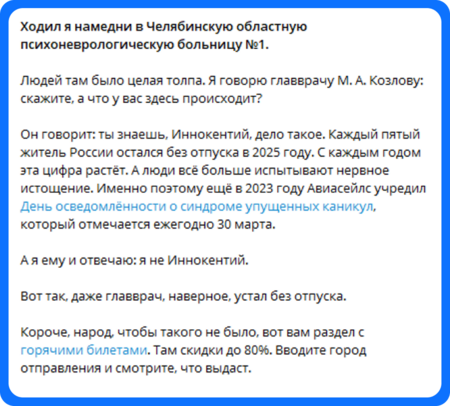
Posts on social media
«The other day I went to the Chelyabinsk Regional Psychoneurological Hospital No. 1.
I said to the chief physician M.A. Kozlov: 'Tell me, what is going on here? ' He replied: 'You know, Innokenty… Every fifth resident of Russia was left without a vacation in 2025… That is exactly why back in 2023 Aviasales established the Missed Vacation Syndrome Awareness Day…' And I answered him: 'I am not Innokenty. ' Well, it seems even the chief physician is exhausted without a vacation. Anyway, folks, to keep this from happening to you, here is a section with hot tickets. There are discounts up to 80%…»
This case perfectly illustrates how the brand manages the consumer’s cognitive load under conditions of low initial motivation (low elaboration):
Peripheral Route Activation
The post begins as an absurd, joke-style anecdote. The exhausted social media user, who is not actively looking to buy anything, is hooked by peripheral cues — absurd humor, irony, and narrative storytelling. The humor lowers cognitive resistance, defusing the user’s natural defense mechanism against advertising and generating a positive affect.
Injecting the Central Route Right into the center of the comedic narrative, the brand embeds rational arguments. The reference to a real-life problem («every fifth person was left without a vacation») and their actual corporate project («Missed Vacation Syndrome Awareness Day») appeals to logic. The consumer recognizes themselves in these statistics (triggering the pain point of «nervous exhaustion»), which sharply increases their personal motivation.
Final Value Proposition (Call to Action): once the user is emotionally warmed up by the joke and has rationally acknowledged their own fatigue, the brand delivers a direct solution through the central route — the «hot tickets» section.
Posts on the Aviasales Telegram channel
The brand frequently publishes engaging, non-commercial trivia, historical anecdotes, or unusual cultural facts about various countries around the world (e.g., historical landmarks, local traditions, or unique regional phenomena), often ending with an informal twist or an interactive question to the audience.
Instead of pushing a hard sale, the brand utilizes the peripheral route by employing «edutainment» (educational entertainment) as a peripheral cue.
By presenting fascinating, low-stakes cultural content, Aviasales triggers intellectual curiosity and aesthetic pleasure. According to Petty and Cacioppo’s Elaboration Likelihood Model, this positive affect is unconsciously transferred to the brand itself. Rather than being perceived as a persistent advertiser, Aviasales builds a stable, long-term attitude in the consumer’s mind. When a real travel need eventually arises, this accumulated positive peripheral experience transitions into the central route, making Aviasales the automatic, highly trusted choice for the consumer.
Posts on the Aviasales Telegram channel
Liking shortcut
In collaborations with bloggers and comedians, such as YouTube stand-up shows or comedy sketches, Aviasales perfectly exploits the liking shortcut. When people watch a comedy video, they want to relax and laugh, not analyze commercials. Aviasales capitalizes on this by allowing comedians to skip boring corporate scripts and instead turn the ad into a funny story. As the audience laughs, the positive emotions they feel toward the comedian are instantly transferred to the Aviasales brand.
This shortcut becomes even more powerful because comedians often use self-irony, openly joking about the fact that they are doing a paid integration.