Communication Theory: VDNH
1. COMMUNICATION THEORY IN THE FIELD OF DESIGN
After reviewing the theoretical online course, the specifics of communication that designers can apply to their projects became clear.
At first, communication seemed simply about transmitting information, but the course materials made it clear: it’s about creating a story and meaning. A designer doesn’t simply transmit data they construct a world — through verbal and visual symbols that the recipient interprets in their own context.
Communication theory serves as a foundational framework that transforms design from a purely aesthetic or functional discipline into a strategic practice focused on creating meaningful relationships between designers and users. Rather than viewing design as a creative act in isolation from context, communication theory demonstrates that effective design is fundamentally a communication process that must be carefully considered and continually refined.
Design as Strategic Communication Process «Public Relations Society of America defines public relations as a strategic communication process that builds mutually beneficial relationships between organization and their publics». [6] Communication theory defines design practice through the lens of strategic communication. Designers must research their audiences, understand user needs and constraints, and craft solutions that serve mutual benefit rather than imposing predetermined outcomes.
Two-Way Communication: From Transmission to Dialogue Communication theory’s emphasis on two-way processes rather than one-way transmission proves revolutionary for design practice. Traditionally, design operated within a sender-receiver model: designers created solutions and users consumed them. Communication theory suggests a fundamentally different relationship. Design succeeds when both designer and user mutually influence each other.
Situational Theory Application «The key idea is that the more one commits to problem resolution, the more one becomes acquisitive of information pertaining to the problem, selective in dealing with information and transmissive in giving it to others». [6]
The Situational Theory of Problem-Solving (STOPS) helps designers understand that different users require different design approaches based on their relationship to the problem the design addresses. The theory identifies five types of publics, each requiring fundamentally different communication strategies that design must accommodate.
The Relationship Management Theory fundamentally shifts how design is evaluated. Rather than assessing design through functional or aesthetic metrics, designers should evaluate whether their work builds positive relationships. «Good relationships are characterized. Control mutuality, trust, commitment, satisfaction, exchange relationship, communal relationship». [6] These become measurable outcomes for design: control mutuality, trust, commitment, satisfaction, exchange relationships, and communal relationships. The theory suggests that developing communal relationships with key constituencies matters more than exchange relationships.
In conclusion, the online course on communication theory helps designers understand that communication design goes beyond simple visual solutions; it must establish meaningful connections and meanings between consumers and brands. The theories described in the course provide a structured approach to understanding how people perceive information and what tools can be used to influence their beliefs, behaviors, and emotions to ultimately create powerful communications for their projects.
2. PRESENTATION FOR A GENERAL AUDIENCE
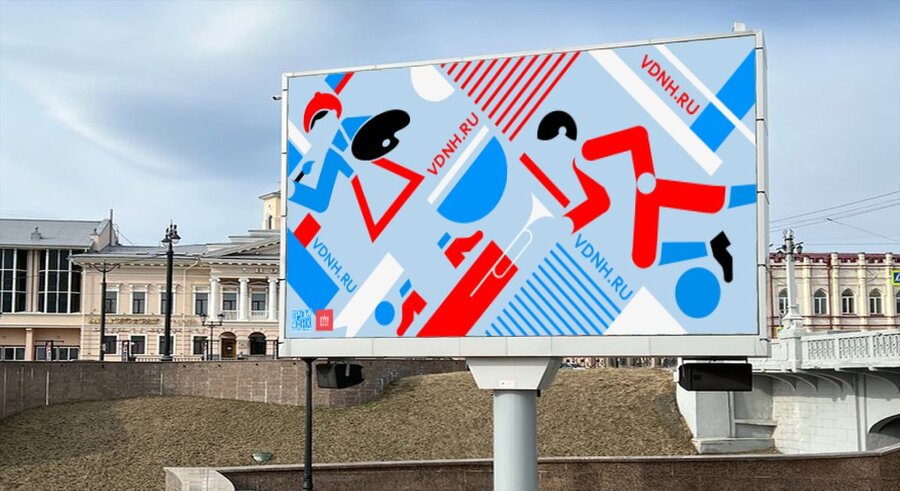
The identity for the VDNH Friends loyalty program is a fresh take on historical heritage, with a visual style that reimagines the era of constructivism and the Soviet avant-garde.
Program essence This is a system of discounts and bonuses for visitors who value active, organized leisure time with their families. The program encourages exploration of the entire VDNH territory: from museums and exhibitions to cafes, master classes, and amusement parks. The more events a person attends, the more benefits they receive
Identity for the VDNH Friends loyalty program
Identity for the VDNH Friends loyalty program
Design concept The identity is based on the strict principles of constructivism: clarity, functionality, and conciseness. The design speaks to the audience in the language of clear forms and thoughtful composition, which is ideal for people who value order and meaningful leisure.
Identity for the VDNH Friends loyalty program
Identity for the VDNH Friends loyalty program
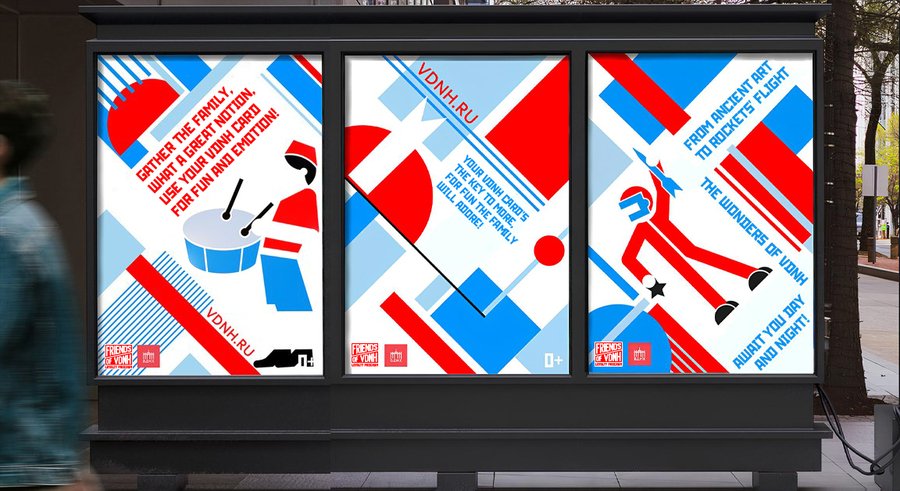
Advertising posters in the style of propaganda graphic design from the 1920s and 1930s. These are not just informational leaflets, but emotional «anchors» for the brand.
These posters serve as the main visual «scenario» and backdrop, instantly immersing the viewer in the desired atmosphere. They do not so much inform about a specific concert as create a general mood of active, collective, festive leisure at VDNH, referring to its large-scale and optimistic history.
A series of badges for participants in various activities within VDNH.
Identity for the VDNH Friends loyalty program
Identity for the VDNH Friends loyalty program
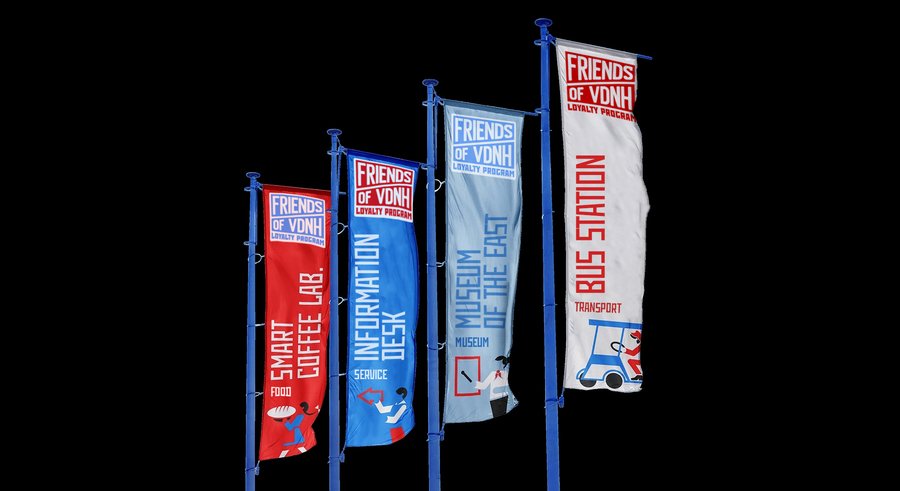
Identity for the VDNH Friends loyalty program
Participant questionnaire and leaflets — physical forms available at VDNH information desks and from partners. Application: entry point to the program.
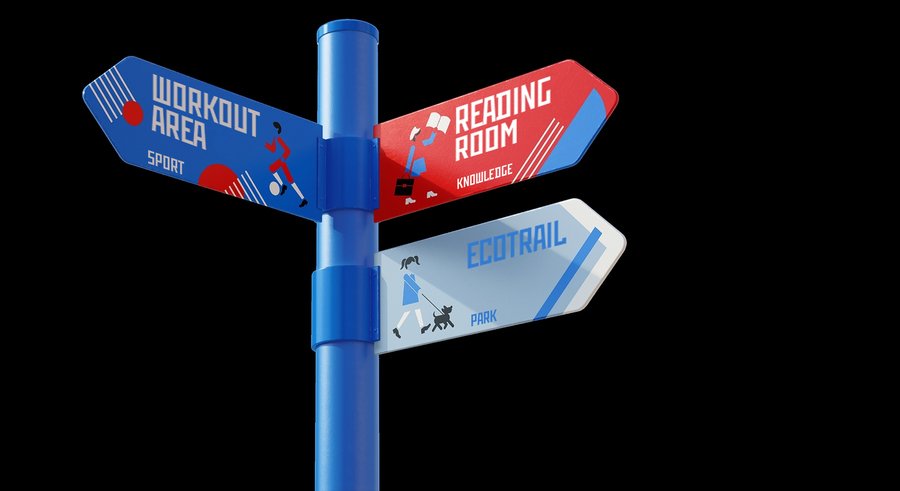
Navigation allows visitors to easily orient themselves across the vast VDNH territory. The implementation features distinct color coding and intuitive iconography, ensuring effortless wayfinding. This functional clarity is particularly beneficial for families, providing immediate and accessible orientation for children as they explore the grounds.
3. PRESENTATION FOR A PROFESSIONAL AUDIENCE
Target audience Key principle: the audience is defined not only by age and income, but also through the prism of their relationship with leisure, history, and communication. Aidentica speaks to them in their language, solving their cognitive and social «problems».
1. Demographic and psychographic profile
Who: Families with children (from preschool to teenage age), as well as active adult couples (25-45 years old) who value spending leisure time together.
Location: Mainly residents of Moscow and the Moscow region, as well as experienced tourists interested in cultural heritage.
Lifestyle: «Planners» and «explorers.» Their vacations are rarely spontaneous. They value structure, a variety of activities in one place, educational components for children, and aesthetic pleasure for themselves.
Pain point (Problem Recognition according to STOPS): «How can I effectively and without unnecessary stress plan a high-quality, eventful, and interesting day off for the whole family that will satisfy both children and adults?» Finding such a solution requires time and mental effort.
2. Value portrait and attitude toward heritage
Family and shared experiences: Leisure as a tool for strengthening family ties and creating shared memories.
Order and clarity: Preference for understandable systems, navigation, predictability.
Meaningfulness and development: The desire for leisure that enriches knowledge (museums, space) and is not just entertaining.
Historical continuity: Not just nostalgia for the USSR, but also respect for the scale, ambitions, and aesthetics of that era as part of personal/family or national history.
Type of relationship with the brand (Relationship Management Theory): They seek communal relationships. What is important to them is not just a «visit-discount» deal (exchange relationship), but a sense of belonging, community, and dialogue with the place. The name «Friends of VDNH» perfectly captures this need.
Identity for the VDNH Friends loyalty program
Visual identity system Red & Blue — dominant, powerful colors, direct references to the Soviet era palette and the famous VDNH pavilions.
Light blue & White — background and accent colors for balance and readability.
Deep black — for accents and typography.
Identity for the VDNH Friends loyalty program
Font: Rodchenko A geometric sans serif font based on the work of Alexander Rodchenko, an icon of Russian constructivism.
Only capital letters and capitals are used, emphasizing monumentality and conciseness.
Clear straight lines and open forms reflect the aesthetics of the avant-garde of the 1920s and 1930s.
Identity for the VDNH Friends loyalty program
Modular pictogram system A unified set of icons has been developed covering all areas of VDNH:
SERVICES, KNOWLEDGE, SPORTS, FOOD, COSMONAUTICS, MUSEUM, PARK, ENTERTAINMENT, EXPO, TRANSPORT
The icons are made in the same geometric, constructivist style, which ensures instant recognition and integrity of the system.
LOGO VDNH Friends loyalty program
Identity for the VDNH Friends loyalty program
Layout and composition Active use of grids, blocks, and red accents to highlight information.
Dynamic but strictly organized layout of elements, as in avant-garde posters (for example, «Gather the family, what a great notion, use your VDNH card for fun and emotion!»).
The principle of integration is key to adapting the logo and elements to different media: from tickets and cards to large banners.
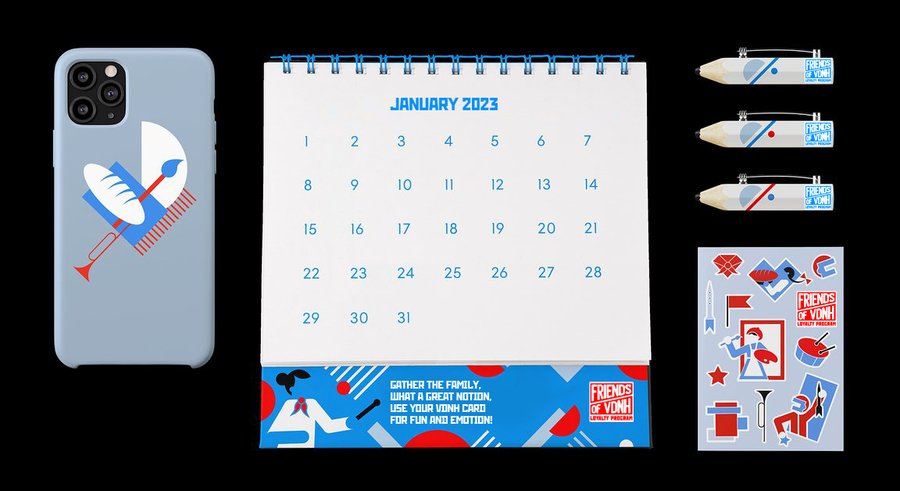

Identity for the VDNH Friends loyalty program
Brand Positioning: the VDNH loyalty program reimagined Moscow’s architectural icon through the lens of Constructivism — the revolutionary Russian design movement of the 1920s that championed functional geometry, bold structural clarity, and social utility.
Our positioning transforms the program from a simple reward into a visual manifesto evoking the park’s Soviet grandeur, while simultaneously engaging modern families interested in the country’s past.
Key promise: loyalty as a collective performance — VDNH provides the stage, families create the narrative.
Expected Professional Outcome:
Increase in visitor numbers: +15% increase in visits by family groups who value cultural heritage and a structured visual language.
Increase in revenue: +10% increase in additional expenses (merchandise, such as «Avoska» sets)
Dramatic increase in program popularity and engagement: thanks to interactive notifications («Your feedback determines the next quest in the pavilion»).
Social outcomes: engaging young people in cultural heritage; transforming passive visitors into «dynasty builders» preserving the VDNH heritage.
Identity for the VDNH Friends loyalty program
Identity for the VDNH Friends loyalty program
4. COMMUNICATION THEORY AS THE BASIS
Channel strategy Core Principle: the channel strategy extends the Constructivist visual identity into a multi-layered communication ecosystem. Each channel is selected and designed not just for message distribution, but to operationalize core communication theories — Impression Management, Dialogic Theory, and STOPS (Situational Theory of Problem-Solving) — by facilitating specific types of relationships and reducing audience constraints.
Official Website & Mobile App — the Central Hub for Ritualistic Interaction and Constraint Reduction. Serves as the primary setting for impression management, where the full brand identity is displayed. Functionally, it acts as the main tool to drastically lower constraint recognition (STOPS) by providing a clear, structured interface for program rules, point tracking, and activity planning. The app enables the dialogic loop through built-in feedback forms and personalized notifications, transforming passive information seeking into an interactive ritual.
Social Media (VKontakte) — The Dialogic Public Sphere for Community Narratives.
This platform function as the primary stage for dialogic communication and communal relationship building. Content strategy moves beyond promotion to facilitate user-generated storytelling (e.g., hashtag campaigns like #MydayatVDNH). This creates a continuous feedback loop, fosters attitudinal similarity among members, and provides props for users' own impression management. Nostalgic reels, historical facts, and family activity highlights enhance involvement recognition, framing VDNH as integral to their lifestyle.
The «Friends of VDNH» loyalty project utilizes a Constructivist visual identity — characterized by rigor, geometry, and laconic forms — to appeal to a target audience that values clear routine and active family leisure. The strategy is grounded in three core communication theories: Impression Management, Dialogic Theory, and the Situational Theory of Problem-Solving.
1. Impression Management / Dramaturgy
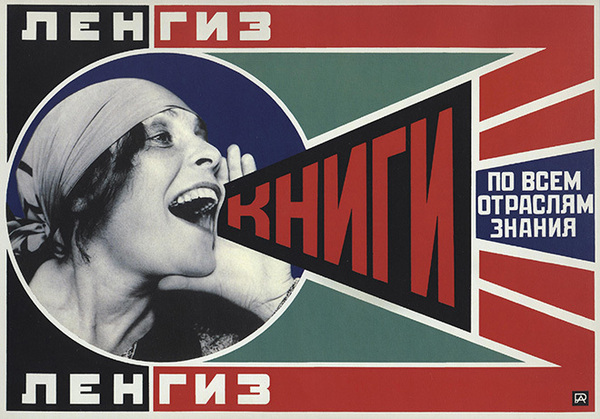
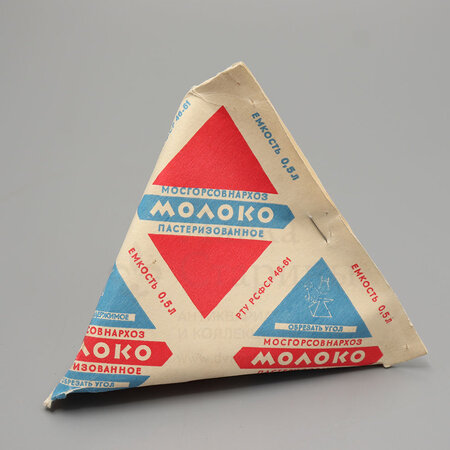
Alexander Rodchenko. Lengiz: books on all branches of knowledge. 1925 | Triangular package, packaging «pasteurized milk», 0.5 liters, paper, Ministry of Agriculture, USSR, 1960s
Theoretical Basis: according to Erving Goffman’s dramaturgical theory, social interaction functions as a theatrical performance in which individuals (as actors) present themselves to an audience to manage the impressions they convey. This process involves the strategic use of «settings», «props» and «scripts» to create, maintain, and defend specific social identities. The ultimate objective is to align the audience’s perception with the actor’s intended reality (Goffman, 1959).
The Setting (Visual Semiotics): the visual identity of the project serves as the «setting» for this performance. It employs a rigorous Constructivist style, incorporating geometric forms inspired by avant-garde compositions and a color palette derived from Soviet-era milk packaging. The logo draws direct inspiration from historical propaganda materials, such as the «Lengiz: books on all branches of knowledge» poster. This setting transcends mere aesthetics; it constructs a specific social context that evokes nostalgia for the USSR and conveys a sense of order and rigor. It appeals explicitly to an audience that values cultural heritage and structured visual language.
Props (Merchandise): physical products — such as the reinterpreted Soviet mesh bag and flags — function as «props». These items enable consumers to perform and publicly affirm their connection to Soviet cultural heritage. Through their use, individuals engage in a narrative that recalls personal and collective memories, thereby reinforcing a shared identity and sense of belonging.
The Script (Slogans): brand slogans, such as «With your VDNH card, the family’s day is set, for concerts, food, and fun — you bet!» operate as a «script». Their rhyming, motivational tone mimics the style of Soviet-era posters, providing a clear behavioral scenario for the audience. This reframes leisure as a deliberate, planned activity, resonating with individuals who appreciate structure and routine. In doing so, the brand supports the audience in maintaining a social identity centered on organization and cultural appreciation.
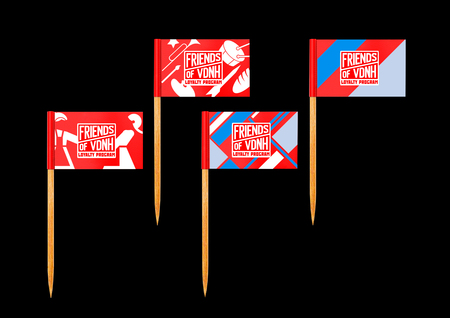
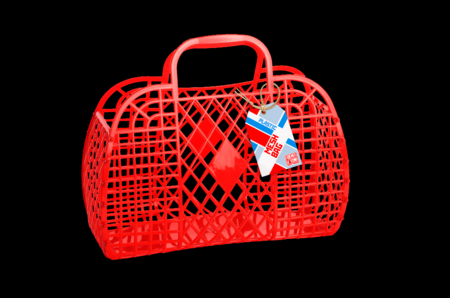
Identity for the VDNH Friends loyalty program
The effectiveness of this nostalgic approach can be elucidated through several theoretical lenses:
The Frankfurt School concept of the Culture Industry (Adorno & Horkheimer, 1947) suggests that standardized, familiar cultural products facilitate passive consumption by reducing cognitive effort. The reuse of established aesthetic forms appeals to consumers by offering easily digestible, emotionally reassuring experiences, thereby avoiding critical engagement.
Walter Benjamin’s notion of the Aura (1936) posits that mechanical reproduction diminishes the uniqueness and authenticity of artworks. The nostalgic aesthetic taps into a longing for this lost aura, evoking a perception of authenticity and emotional depth that contemporary reproductions lack.
Social Identity Theory (Tajfel & Turner, 1979) explains nostalgia as a mechanism for strengthening group cohesion. By invoking shared cultural codes, the brand fosters a sense of belonging and collective identity, allowing consumers to balance assimilation («we are alike») with distinctiveness («our unique heritage»).
Through the strategic application of Goffman’s impression management framework, complemented by critical and social theories of nostalgia, the project’s design constructs a coherent and engaging identity. It leverages visual, material, and rhetorical elements to evoke emotional resonance, reinforce social identities, and promote deeper audience connection.
2. Dialogic Theory
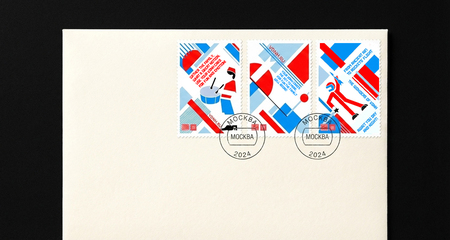
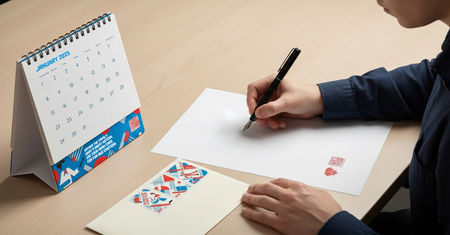
This images were created using the artificial intelligence of Google Gemini
Theoretical Basis: dialogic Theory posits that organizations should engage with publics through honest and ethical communication to foster high-quality relationships. This theory emphasizes the «dialogic loop» which enables ongoing interaction by allowing publics to pose questions and receive responses, thereby creating a continuous feedback cycle. Key principles include reciprocity, empathy, and risk (Kent & Taylor, 1998)
The loyalty program’s name, «Friends of VDNH» inherently conveys a sense of trust and mutual communication, aligning with the core tenets of Dialogic Theory. The following elements operationalize this framework:
Social Media Engagement: social platforms are leveraged as channels for genuine dialogue, moving beyond one-way promotion. For instance, a social media campaign encouraging visitors to share their VDNH experiences — coupled with the opportunity to send physical letters to the editorial office and receive replies with special loyalty program stamps — fosters nostalgia and active participation. This approach not only facilitates feedback collection but also promotes organic online dissemination due to its authenticity and emotional appeal.
Questionnaires for Dialogic Feedback: the inclusion of questionnaires — for both internal and external communication — exemplifies the dialogic loop. Unlike traditional propaganda, which is unilateral, these tools solicit visitor opinions and suggestions, demonstrating a commitment to understanding public context and evolving needs. For example, post-visit questionnaires at exhibitions enable reciprocal communication, affirming that the organization values and responds to public input.
Risk and Empathy: by openly requesting feedback — whether via questionnaires or social media — the brand embraces vulnerability to criticism. This willingness to risk negative input underscores empathy and a genuine commitment to ethical relationship-building, key components of Dialogic Theory.
The integration of dialogic principles — through nomenclature, interactive campaigns, and empathetic engagement — transforms the loyalty program into a dynamic, relationship-oriented initiative. It aligns with VDNH’s broader strategy of fostering a collaborative community around its historical and contemporary offerings.
3. Situational Theory of Problem-Solving
Theoretical Basis: the Situational Theory of Problem-Solving, developed by Grunig and Kim, explains the conditions under which individuals become active in communicative behavior. It posits that three perceptual factors drive communication engagement:
Problem recognition: the perception that something is missing or problematic. Involvement recognition: the feeling of personal connection to the problem. Constraint recognition: the perception of obstacles that may hinder action.
To motivate publics to seek information and take action, organizations must heighten problem and involvement recognition while minimizing perceived constraints (Kim & Grunig, 2011).
Identity for the VDNH Friends loyalty program
Problem Recognition: the target audience — families seeking meaningful leisure — faces a cognitive problem: «How can we efficiently plan quality time that satisfies both children and adults?» This reflects a gap between desired familial engagement and available solutions. The project addresses this by visually and verbally communicating VDNH as a comprehensive solution. The constructivist-inspired design — clear, geometric, and structured — signals simplicity and decisiveness, reducing cognitive effort. By presenting VDNH as a versatile destination, the design implicitly resolves the problem of choice overload.
Reducing Constraint Recognition: the slogan, «From ancient art to rockets' flight, the wonders of VDNH await you day and night!» directly targets constraint recognition. It emphasizes variety and accessibility, negating perceived limitations such as limited options or logistical hurdles. By positioning VDNH as an all-in-one destination, the message assures families that their diverse needs — educational engagement for children, nostalgic experiences for adults, and dining for all — are met in one place. This reduces the perceived effort of planning and increases the likelihood of adoption of the loyalty program.
Enhancing Involvement Recognition: visual and verbal cues reinforce personal relevance. The use of bright, saturated colors and dynamic compositions evokes energy and inclusivity, suggesting that VDNH is tailored for family participation. Slogans like «Gather the family, what a great notion, use your VDNH card for fun and emotion!» invite personal connection, framing the experience as both novel and familiar. This heightens the sense of involvement, persuading families that their specific desires for shared, enjoyable leisure are acknowledged and catered to.
By applying STOPS, the project strategically amplifies problem and involvement recognition while dismantling perceived constraints. The design and messaging present VDNH not merely as a venue, but as a tailored solution to familial leisure challenges, thereby motivating active engagement with the loyalty program.
The online course provided more than a taxonomy of theories; it supplied a strategic lens through which every design decision could be evaluated for its communicative efficacy. By applying principles of Impression Management, Dialogic Theory, and STOPS, the project transcended conventional branding. The resulting presentations demonstrate how design functions as a strategic communication process that builds mutually beneficial relationships, negotiates meaning, and provides tailored solutions — ultimately ensuring the work resonates deeply and effectively with its intended publics.
Adorno, T. W., & Horkheimer, M. (1947). Dialectic of Enlightenment.
Benjamin, W. (1936). The Work of Art in the Age of Mechanical Reproduction.
Goffman, E. (1959). The Presentation of Self in Everyday Life.
Kent, M. L., & Taylor, M. (1998). Building dialogic relationships through the World Wide Web. Public Relations Review,.
Kim, J.-N., & Grunig, J. E. (2011). Problem solving and communicative action: A situational theory of problem solving. Journal of Communication.
Materials from the Communication Theory course
Tajfel, H., & Turner, J. C. (1979). An Integrative Theory of Intergroup Conflict.
Pictures are from team project https://lms.hsedesign.ru/project/eaaa63d6a4ff4885bdd89a7948e3e270
Generated by Google Gemini (https://gemini.google.com/)