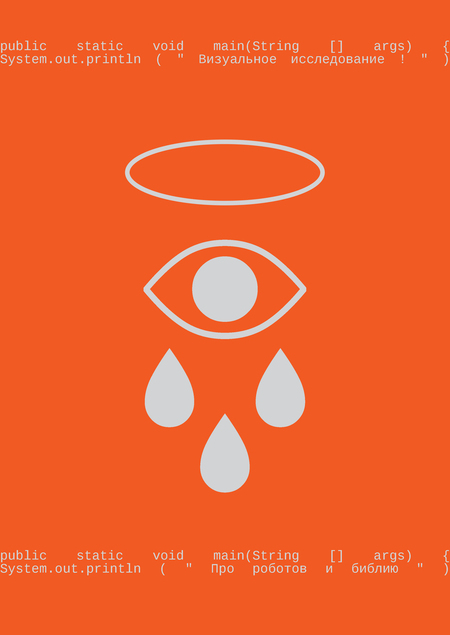
Визуальное исследование изучает вопрос как визуальные образы роботов отражают страхи и надежды, связанные с технологической сингулярностью*, и какие религиозные архетипы при этом задействуются?
В исследовании рассматриваются образы роботов из популярных фильмов и видеоигр 21 века.
*Технологическая сингулярность — гипотетический момент в будущем, когда технологическое развитие становится в принципе неуправляемым и необратимым, что порождает радикальные изменения характера человеческой цивилизации. Или же, другими словами — восстание машин!
Задачей проекта было совместить несовместимое: Библию и роботов. При этом очень важно было сохранить «душу» книги и не уйти в техногенность.
Удивительным образом оказалось, что есть визуальные мотивы, связывающие эти 2 темы: индексация (используется для связи текста, картинки и подписи) и цветовое выделение текста, поэтому эти элементы стали небольшим, но очень важным атрибутом книги. Сетка книги представляет собой аллюзию на Библию Гутенберга (2 широкие колонки с подписями картинок между ними), от роботов же появилась мелкая типографика в виде кода и колонэлементы, отсылающие к «пути к файлу» на компьютере.
Красный цвет стал проводником для обеих тем. В христианстве этот цвет связан одновременно и с кровью Христа и с адским пламенем (важная двойственность для этой темы), а в теме технологий этим цветом подсвечиваются привычные всем ошибки.
ГЛАВА 1: По образу и подобию
Эта глава рассматривает образы связанные с творением и творцом. Часто «творения», подобно истории Адама и Евы, восстают против своих создателей, бунтуют. Роботы в таких историях обычно внешне очень похожи на человека, что усиливает эмоциональное вовлечение зрителей.
ГЛАВА 2: Война на небесах
Эта глава рассматривает образы связанные с ангелами и демонами. Это традиционный мотив борьбы добра со злом. Роботы в таких историях обычно имеют характерные внешние черты в зависимости от стороны, к которой они принадлежат.
Так, например, «добрые» роботы обычно имеют округлые формы и теплые светлые или голубые цвета. Демонические же роботы, наоборот, обычно окрашены в резкие контрастные цвета (часто красный и черный) и обладают резкими формами.
ГЛАВА 3: Избранник судьбы
Эта глава рассматривает образы связанные с мессией. В этих историях роботы превосходят человека, становясь новым отдельным видом. Визуально их образы обычно чистые и светлые, однако не приближенные полностью к человеческому обличию — сделан акцент, что перед зрителем робот.
ГЛАВА 4: И судный день настал
Эта глава рассматривает образы связанные с судьями и надзирателями. В этих историях роботы представлены как угроза человечеству. Чаще всего такие роботы имеют множество глаз (для слежки) и множество конечностей (для быстрого перемещения).
ГЛАВА 5: Лазарь, выйди вон!
Эта глава рассматривает образы связанные с перерождением души или же «воскрешением». Мотив цифровизации души стал особенно популярен после 2010-х, роботы в таких историях внешне обычно максимально приближены к человеческому облику, снова чтобы вызвать эмпатию у зрителя и снизить тревогу перед развитием такого рода технологий.