Время в искусстве. Форма произведения
Курс-лаборатория
How to use time as an artistic medium and structure a work with it.
Time is present in every work of art. However, an artist can learn to work with it as consciously as with form, space, color, or material. By altering the sequence of events, speed, the rhythm of the work’s elements, or the timing of information delivery, one can organize a piece in various ways and express different meanings.
In this course, students will explore different methods of working with time in art and the foundational concepts of time in philosophy. They will learn how time and narrative are connected, and they will master basic temporal operations such as altering duration, stopping, overlaying, repeating, and joining multiple timelines. All theoretical ideas are examined through the analysis of artworks and small practical experiments.
The culmination of the course will be an individual artistic project where temporal organization is consciously employed as a means to construct the piece and express its content.
Who is this for?
This course is designed for practicing artists, curators, and students in contemporary art and media art who wish to expand the expressive potential of their practice and learn to manage the temporal structure of their work. The course assumes that participants already possess experience in independent artistic practice and basic skills in creating works across one or more mediums. Throughout the program, students will experiment with the structure, sequence, duration, and rhythm of their own projects.
онлайн
8 classes ‣ 16 academic hours
Prerequisites
The student must:
— know the core concepts and practices of contemporary art and have an understanding of working with artistic mediums;
— be able to independently develop an idea and create a piece of art in one or more mediums, articulate the concept, and present their own project;
— have their own artistic practice or experience working on artistic projects, along with the necessary tools and software.
Specific skills in working with time-based media are not required.
What attendees will learn
Throughout the course, students will learn to:
— analyze the role of time in artistic works across various mediums;
— identify the primary methods of temporal organization in a work: sequence, duration, pace, rhythm, cycles, pauses, and temporal gaps;
— compare different temporal structures and determine how they influence the perception and meaning of a work;
— apply various temporal operations to solve artistic problems;
— design the temporal structure of an artistic work according to its concept;
— experiment with the temporal organization of their own work and evaluate the results;
— create an artistic project where time is used as a fundamental means of constructing form and expressing content.
Assignments
During the course of study, students will complete:
— an analysis of the temporal structure of an artwork, noting the temporal techniques employed and their impact on perception;
— a comparative analysis of two works structured around different methods of organizing time;
— an exercise in altering the temporal structure of an existing work;
— a series of laboratory experiments exploring various ways of working with time within their chosen artistic medium;
— a concept for an original project that articulates the artistic objective and the chosen approach to temporal manipulation;
— a temporal score for a work—a schema describing its sequence, duration, rhythm, changes, and the interaction of its temporal elements;
— a final artistic project where time is utilized as a means of constructing form and expressing content.
Thematic Plan
1. Time as an Artistic Medium What it means to work with time in art; the time of the artwork versus the time of the viewer; fundamental ways of understanding time.
2. Time and the Work’s Structure Sequence, duration, beginning, and end; how temporal organization influences structure and meaning.
3. Time and Narrative Linearity and nonlinearity, montage, retrospection, anticipation, and temporal loops.
4. Duration, Speed, and Attention Slowing down, speeding up, pause, anticipation; how the work’s duration manages the viewer’s attention.
5. Rhythm, Repetition, and Cycle Repetition, rhythm, cyclical structures, and their expressive potential.
6. The Artwork as a Process Change, growth, decay, accumulation, aging; a work that evolves over time.
7. Multiple Times within a Single Work Synchronization, desynchronization, layering, and the conflict of temporal lines and modes.
8. Designing Temporal Form Assembling your own project: choosing the temporal structure, duration, rhythm, and developmental scenario for the work.
Project Example
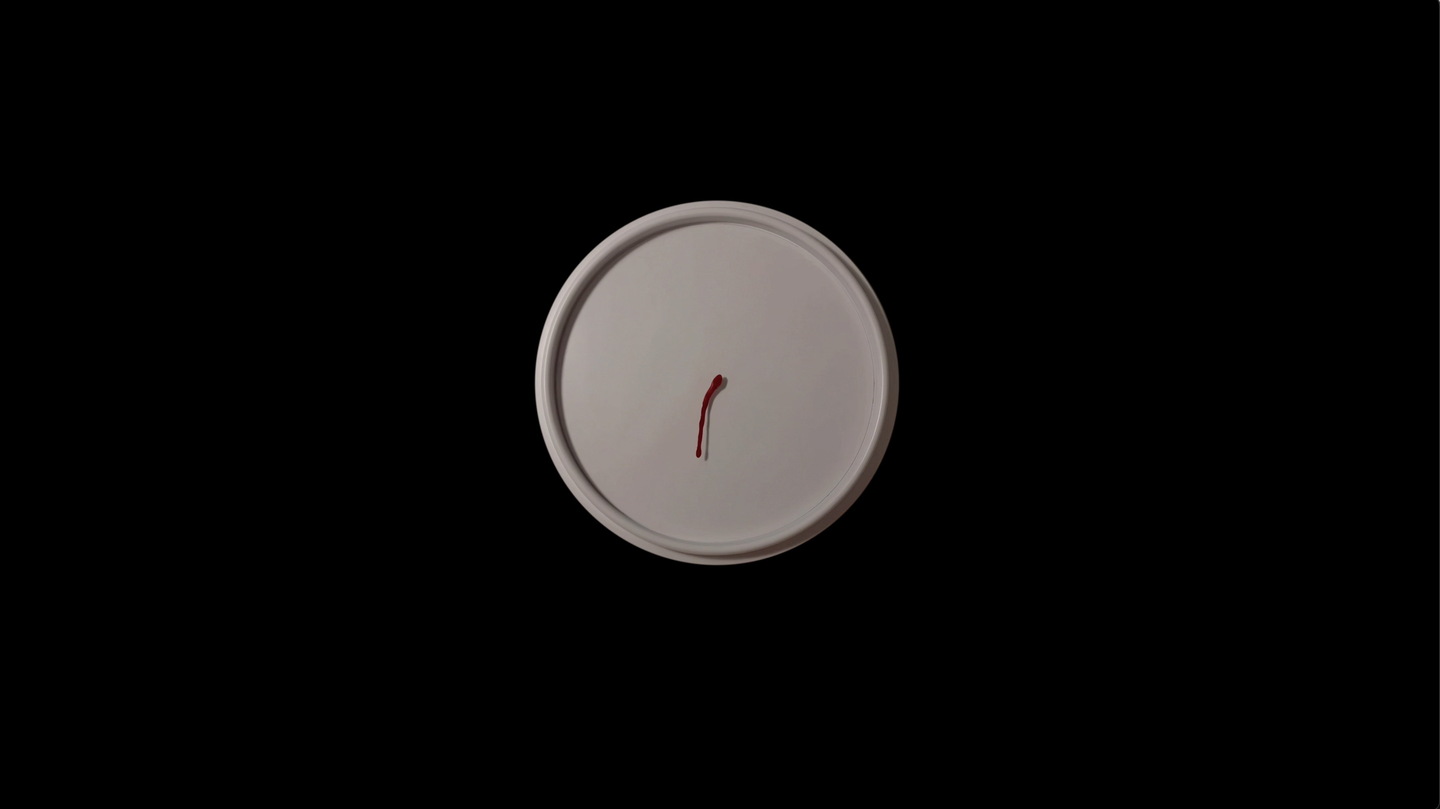
[Выставка #НУЖНО ВРЕМЯ. Часть 1]