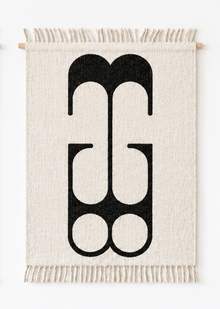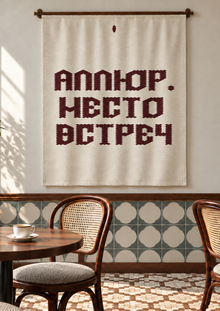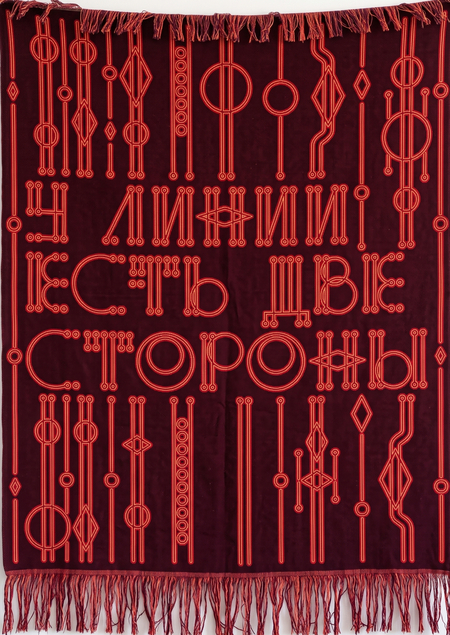
Two Sides of the Line — a tapestry based on a modular identity project for the Radio House—an interdisciplinary cultural institution that connects the technical history of radio with contemporary art. The main element of the identity was a geometric pattern derived from the interior detailing of old subway cars—a bas-relief ornament on yellow linoleum. Research into its history and Soviet radio electronics from the 1960s–1980s defined the project’s graphic language: circles, branching elements, and lines formed the basis of the ornament and the custom typeface, Radio Display. In the fabric, they reimagine Soviet retrofuturism—a warm, optimistic vision of the future shaped by the culture of technological progress.
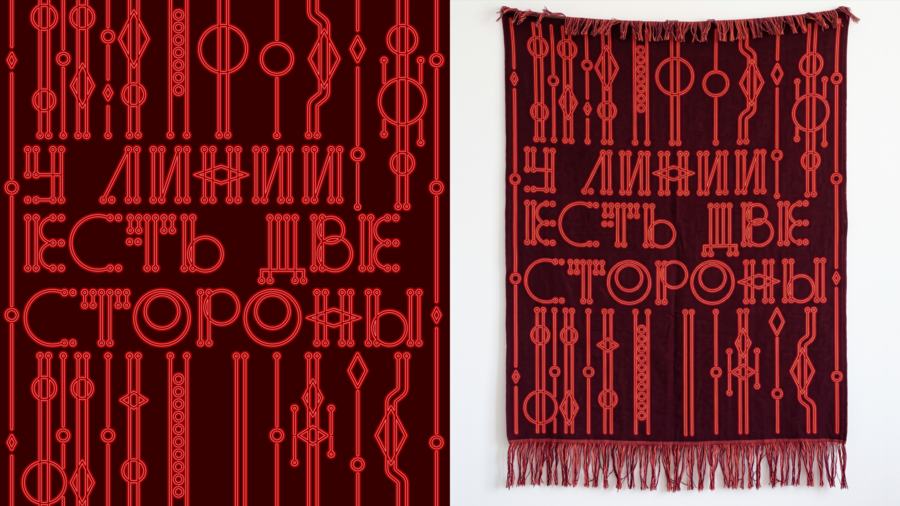
The composition incorporates the phrase «A line has two sides» from the Oblique Strategies creative prompt card deck, created by musician Brian Eno and artist Peter Schmidt. The cards offer unexpected ways to solve creative challenges, linking musical practice with art and design.
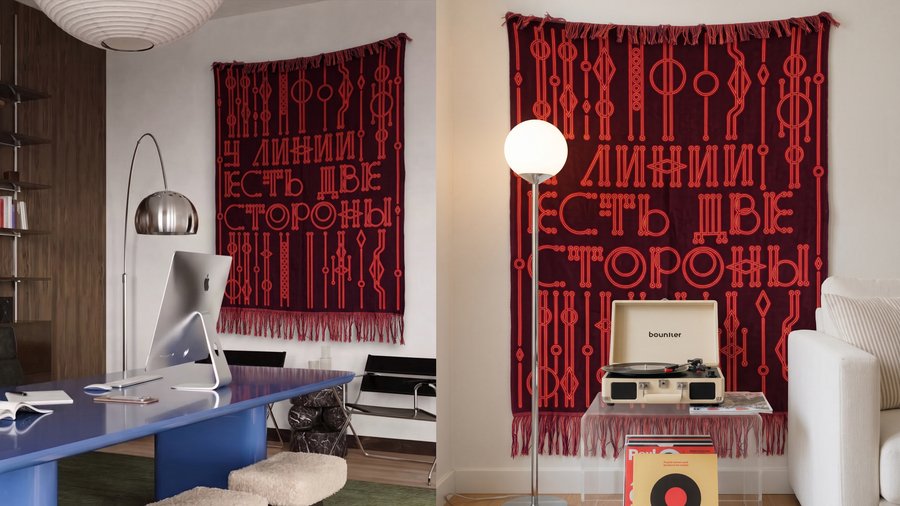
In the tapestry, the phrase unfolds through the interaction of text and ornament: the lines of the letters intersect with the pattern, causing the inscription to be read gradually. A single line simultaneously becomes part of the letter and the motif, suggesting a shift between reading and contemplation. The tapestry brings this interplay into the domestic space, becoming a standalone object for the university shop.
Tapestry Dimensions: 123 × 142 cm
Production Method: jacquard weaving using cotton thread.