
ABOUT ME Daria Gribkova • Moscow • 21 y.o. Student at the HSE Art and Design School ('27), Environmental DesignPROFESSIONAL ASPIRATIONS My interests lie at the intersection of landscape architecture, public space design, and environmental research. I aim to develop in these fields by strengthening my analytical skills and broadening my methodological and toolset range.SKILLS & SOFTWARE • AutoCAD • Revit • SketchUp • 3Ds MAX • Photoshop • Illustrator • InDesign • AI
CONTACTS
email • dagribkova@edu.hse.ru
TG • @lapshaKk
Motivation Letter
The workshop’s approach strongly resonates with me. I am interested in working with recognizable places where an existing problem has already become part of a public discussion. Rather than treating such sites as blank canvases, I believe it is important to study their history, context, and current challenges in order to develop a thoughtful and relevant design response.
What motivates me most is the opportunity to gain unique professional experience under the guidance of the Bureau’s founder, whose work I have been following for a long time, and its Chief Project Architect. I am also eager to enrich my portfolio with a project focused specifically on landscape architecture and research, as I feel the need to develop work in this direction. This experience would allow me to deepen my analytical and design skills while contributing to a meaningful project on the future of public spaces.
Projects
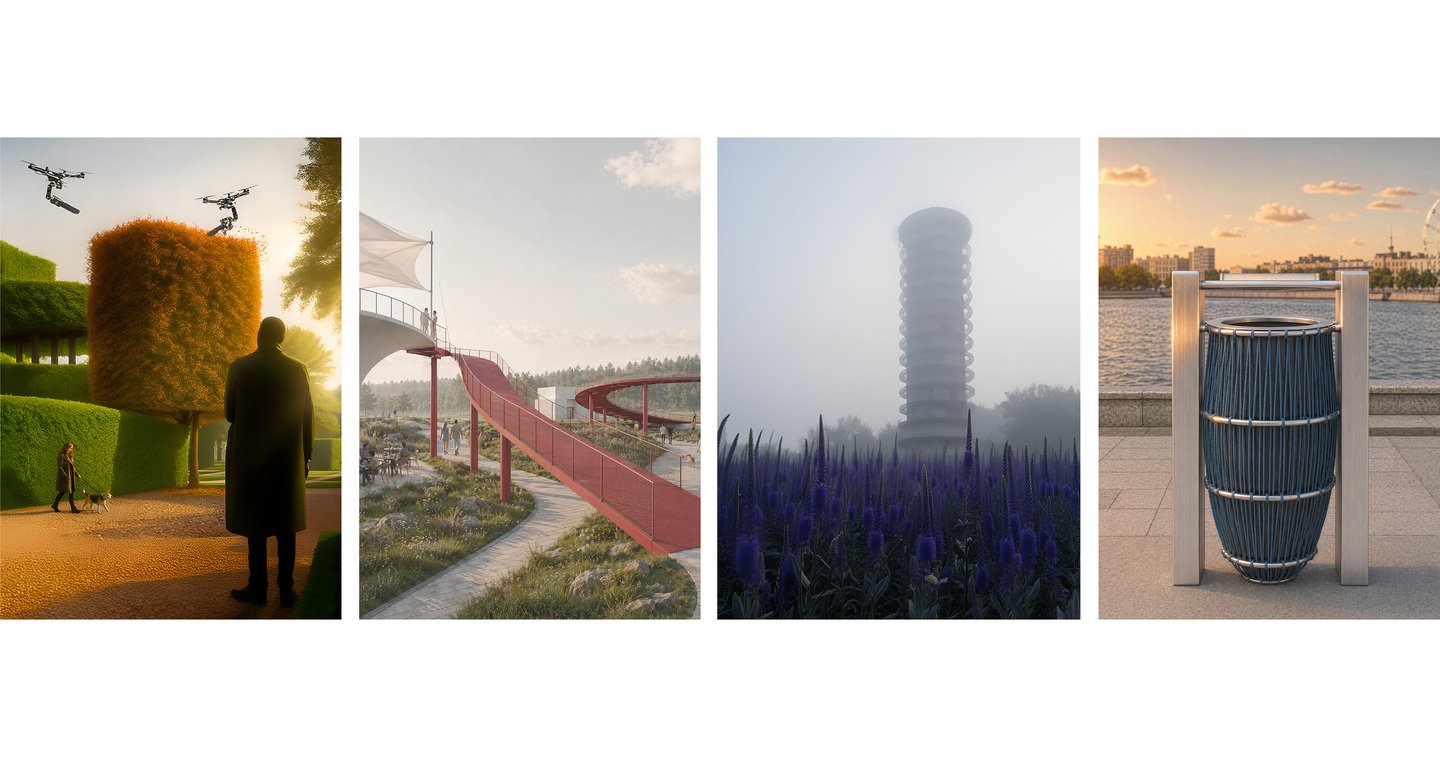
In my work on landscape and public-space projects, I follow this framework:
Pre-design analysis → Identifying the «spirit of the place» → Defining meaning and metaphor → Design concept
Park in a Gorki Leninskie urban township
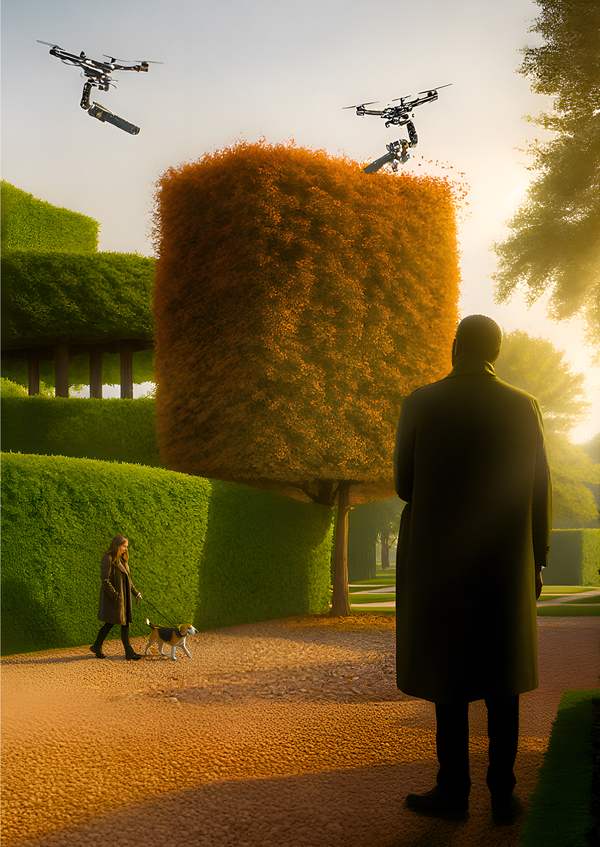
The project is based on the idea of adapting modern agricultural technologies to the field of design. The park layout is derived from one of Kazimir Malevich’s «Compositions, ” while drones are used for the topiary shaping of trees.
Experimental Base: Gorki Leninskie
Before the Revolution, Gorki Leninskie belonged to the Moscow city governor A. A. Reinbot. After 1917, the site became a state farm and later an experimental base for the Institute of Genetics. Throughout the twentieth century, it remained associated with agricultural research and technological experimentation.
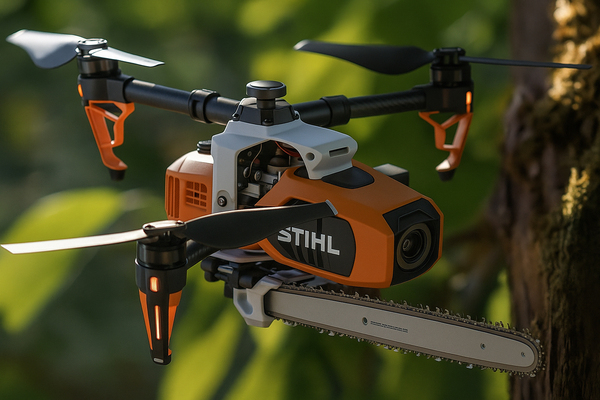
This history inspired the concept of a park based on the symbiosis of technology and landscape design. The project explores how modern agricultural technologies can be adapted for public-space design. In particular, drones are used for the precise shaping and maintenance of trees, transforming an agricultural tool into an instrument of landscape architecture.The park therefore continues the experimental identity of the site while proposing a contemporary interpretation of its scientific and technological legacy.
Concept—modern technologies plus figurative plant cutting
and a touch of Malevich
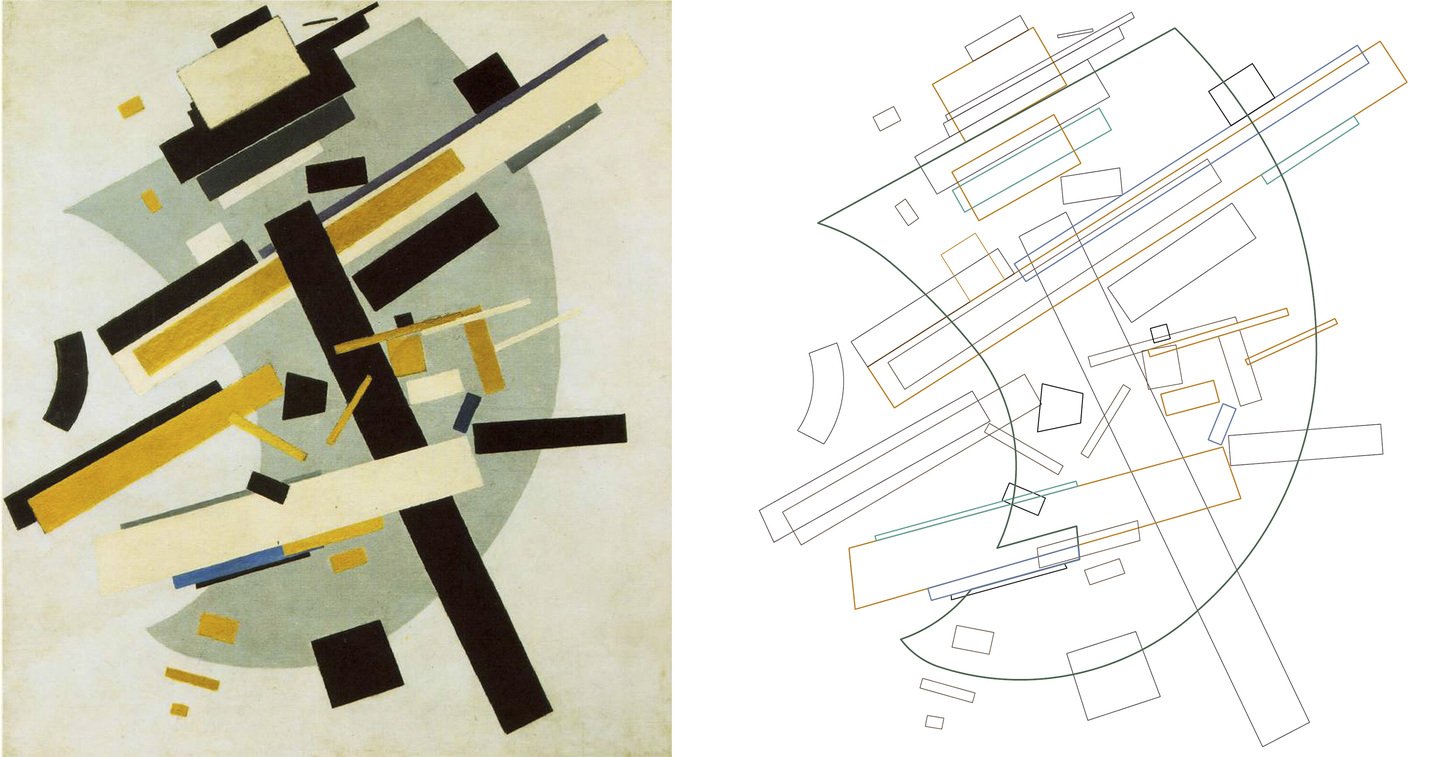
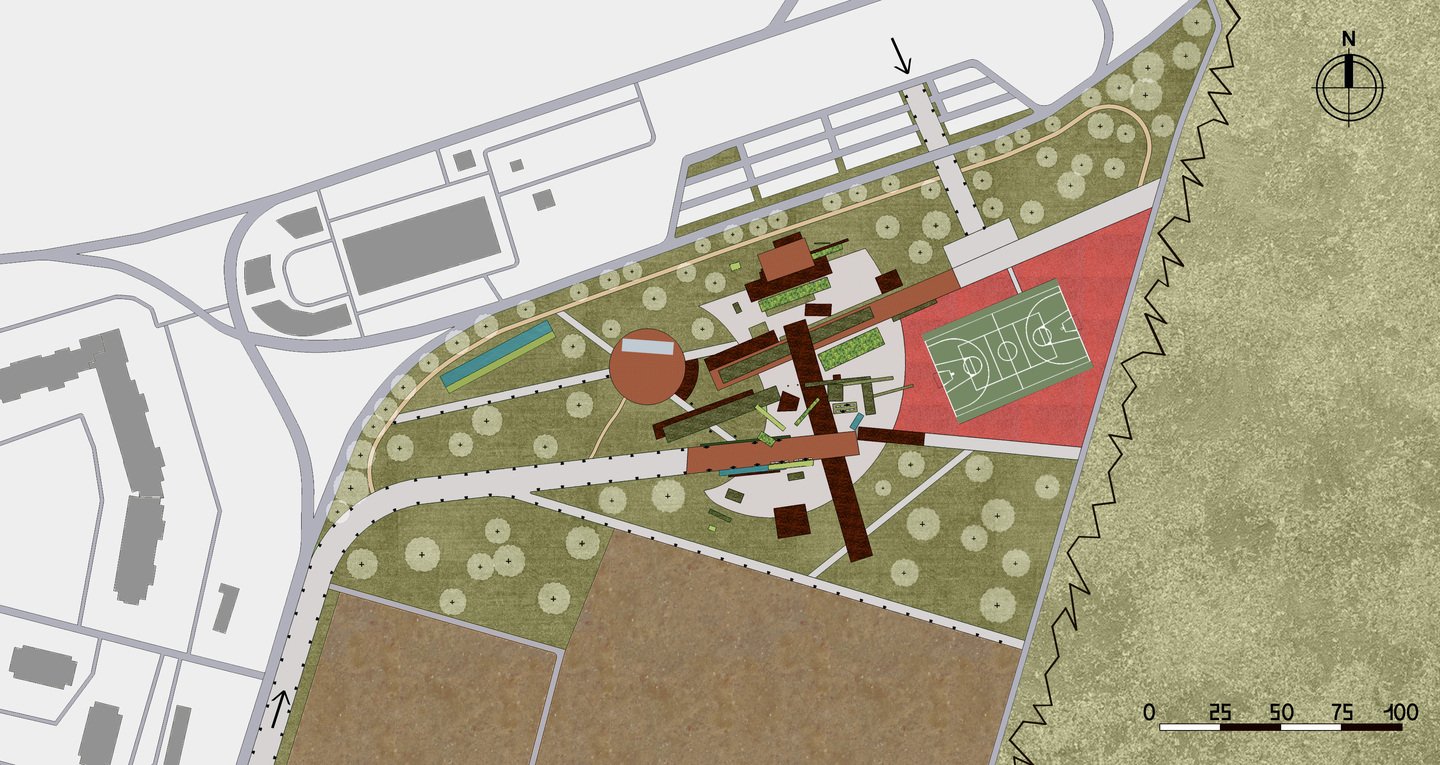
Master plan of the project site // «Composition,» K. Malevich
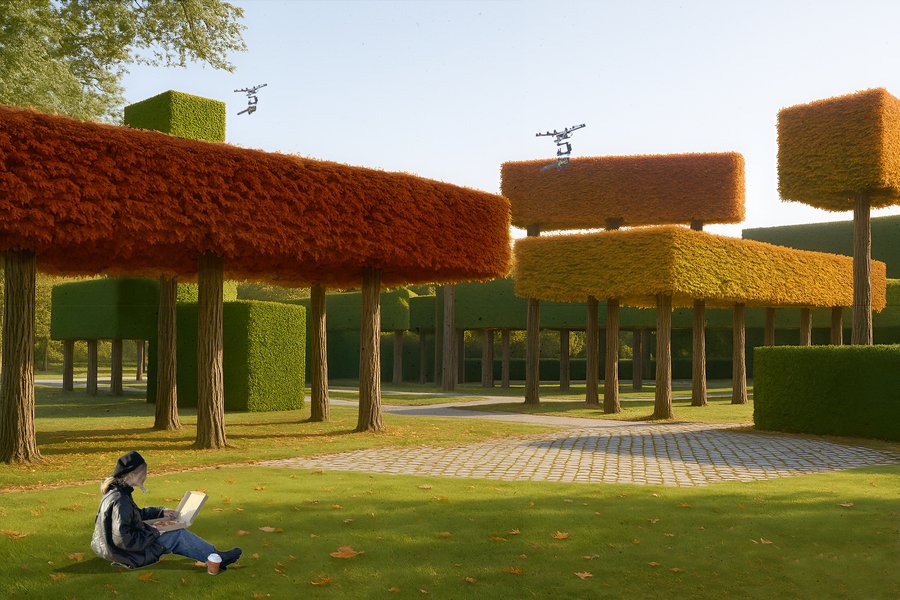
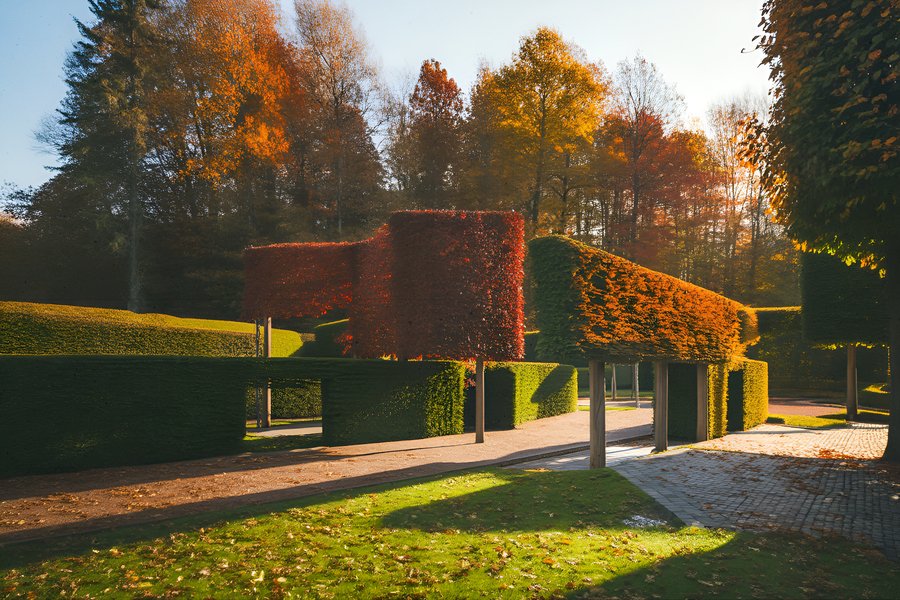
Visualization
The scientists' settlement
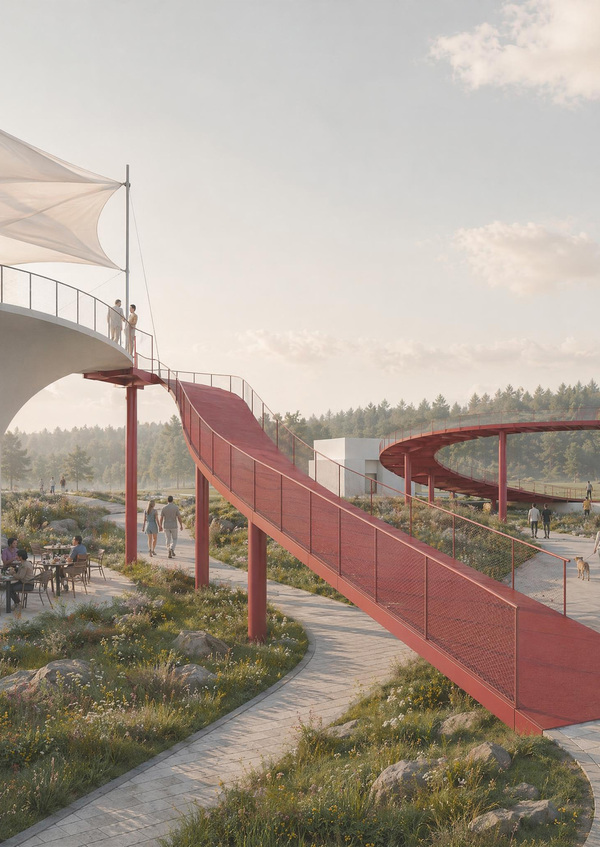
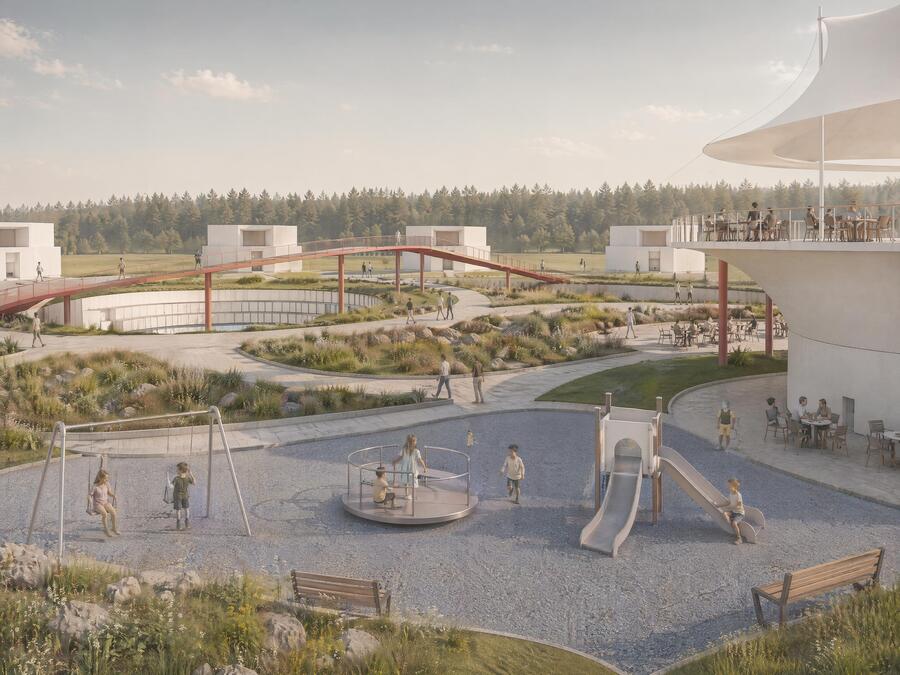
The project explores the future through the lens of shifting values and behavioral patterns. Society is gradually moving from survival-oriented practices toward self-expression, and as people gain more free time, this directly influences their lifestyles and living environments.In this context, the ability to work remotely is becoming especially valuable.
The project explores how evolving values and behavioral patterns might shape the homes of the future. As society gradually transitions from survival-oriented practices toward self-expression, people gain greater freedom and time, which directly influences their lifestyles and living environments.
This shift creates demand for a new type of residential setting: a private countryside home that supports both personal life and remote work. The housing is designed to accommodate dedicated workspaces and specialized equipment, while also providing opportunities for leisure, gardening, social interaction, and a closer relationship with nature.
The project therefore proposes not just an individual dwelling, but a small community adapted to flexible work and contemporary patterns of living.
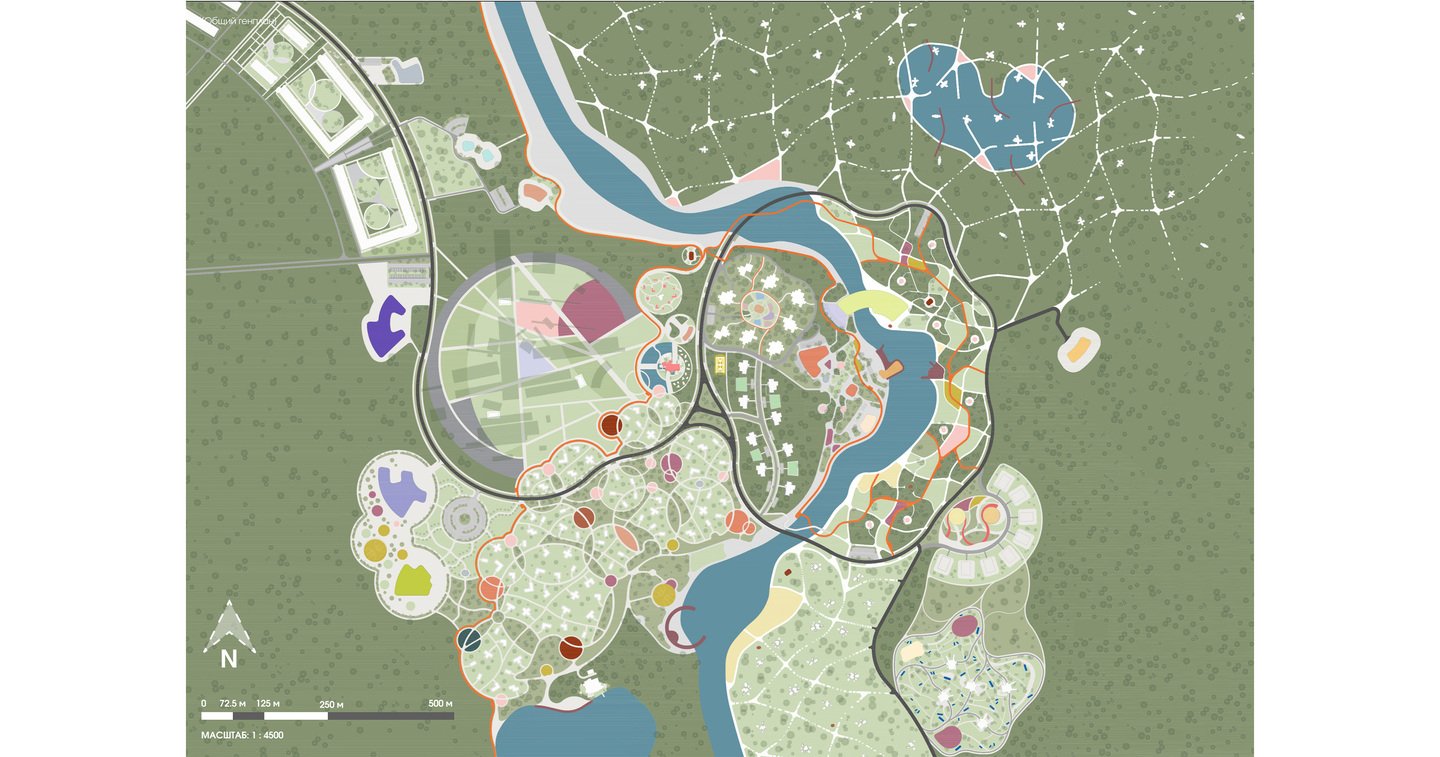
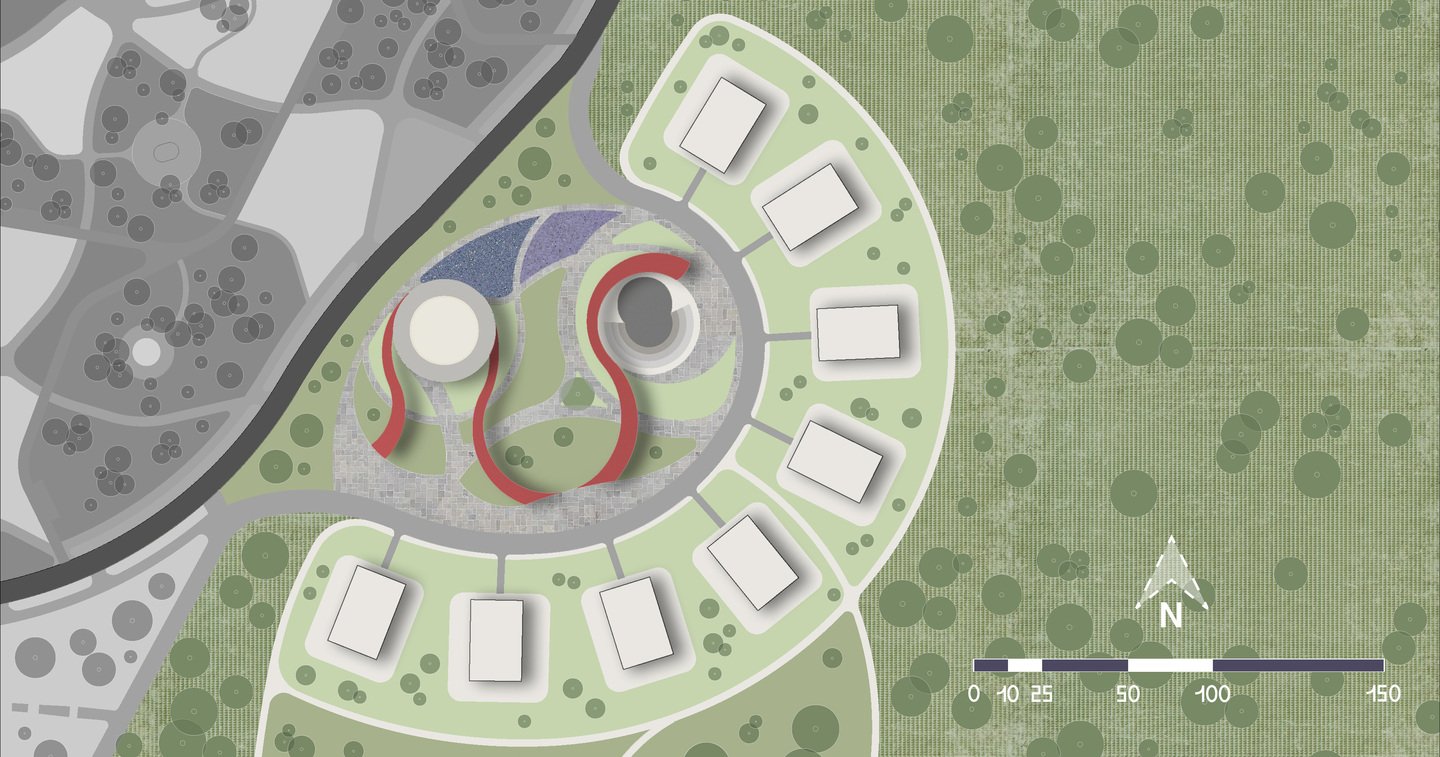
Master plan of the scientists' settlement // master plan of the entire settlement, created collaboratively
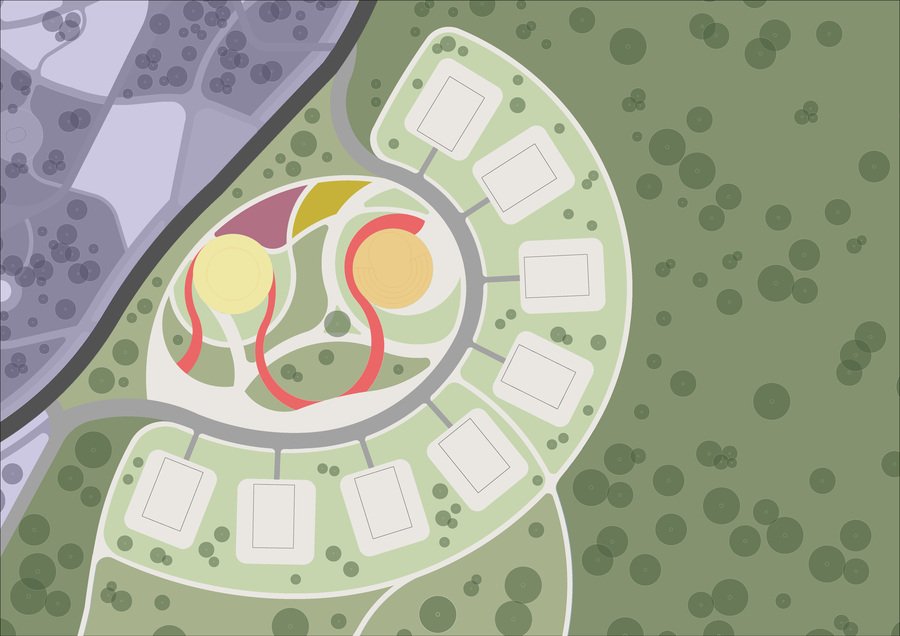
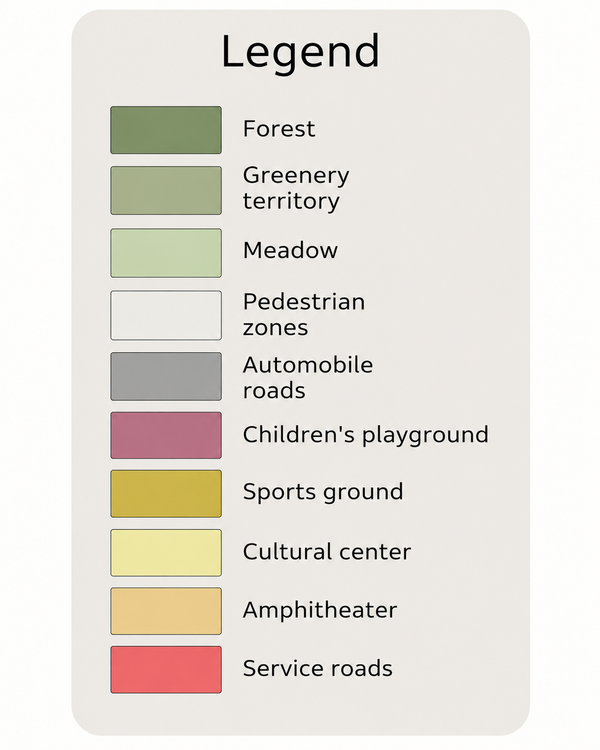
Zoning
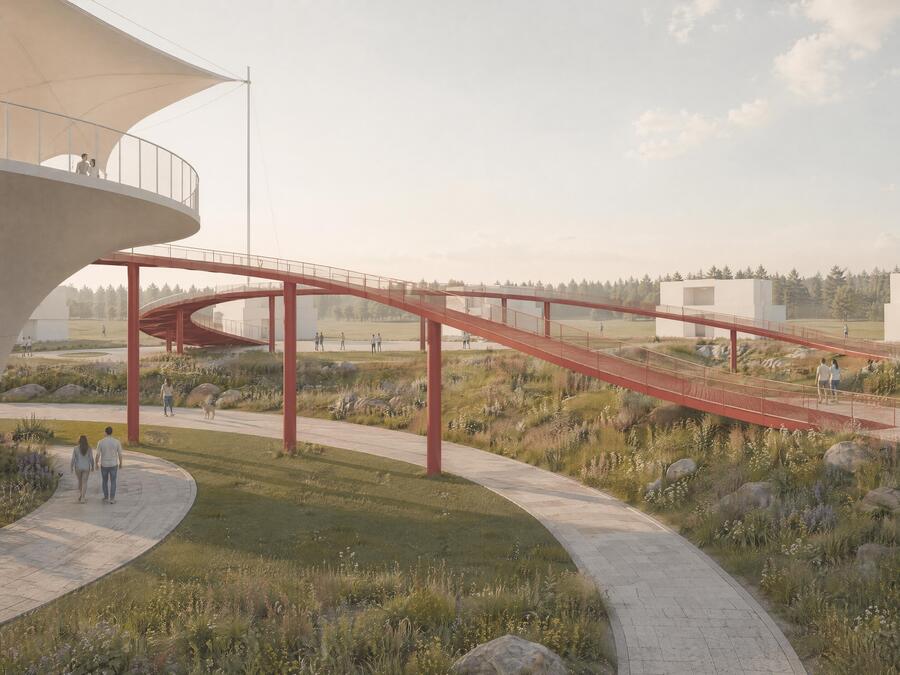
Visualization
Garden in the Polygon with Tesla Towers
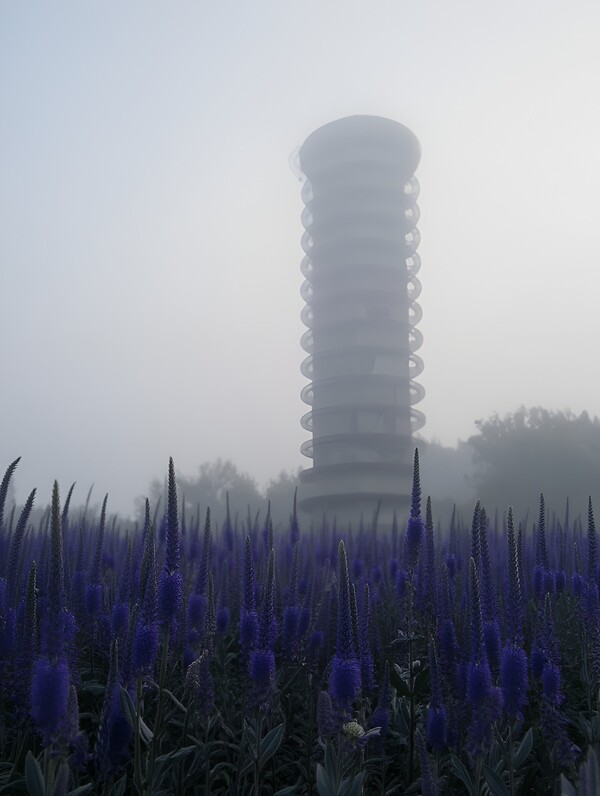
The project proposes a public garden on a former industrial site, characterized by a strong scientific and post-industrial aesthetic. Its design transforms a neglected territory into a contemplative urban space, melding references to its history with an atmosphere of distance and discovery.
Location and Site History
The project is situated on a 12,500 m² site that once housed a high-voltage testing facility, locally known as the Tesla Towers. Constructed in the late 1960s and 1970s, the complex was used to generate artificial lightning and conduct high-voltage experiments.
Since the 1990s, the facility has seen only intermittent use. Some of its structures have fallen into a semi-abandoned state, while others remain preserved and accessible for periodic testing. Today, the site attracts photographers, urban explorers, and tourists, while retaining its distinctive scientific and industrial character.
Garden concept
Location of the projected area
The site combines industrial heritage with an abandoned, inaccessible landscape. The garden transforms this neglected area into a public space and a point of attraction within the city.
Inspired by the atmosphere of «Roadside Picnic and Stalker,» the concept explores post-industrial territories as places of alienation—spaces people usually try to avoid. The project reinterprets this distance and turns it into an opportunity for reflection, discovery, and interaction with the landscape.
Garden Master Plan
Plant Selection