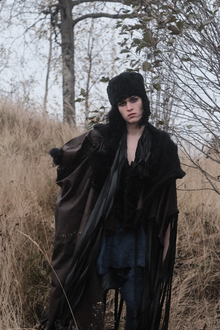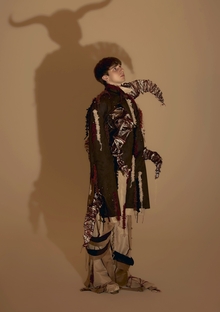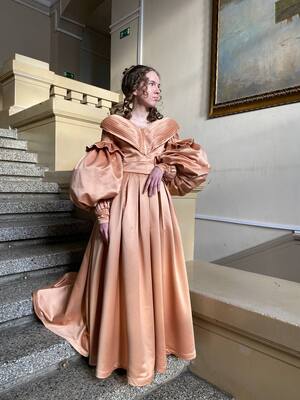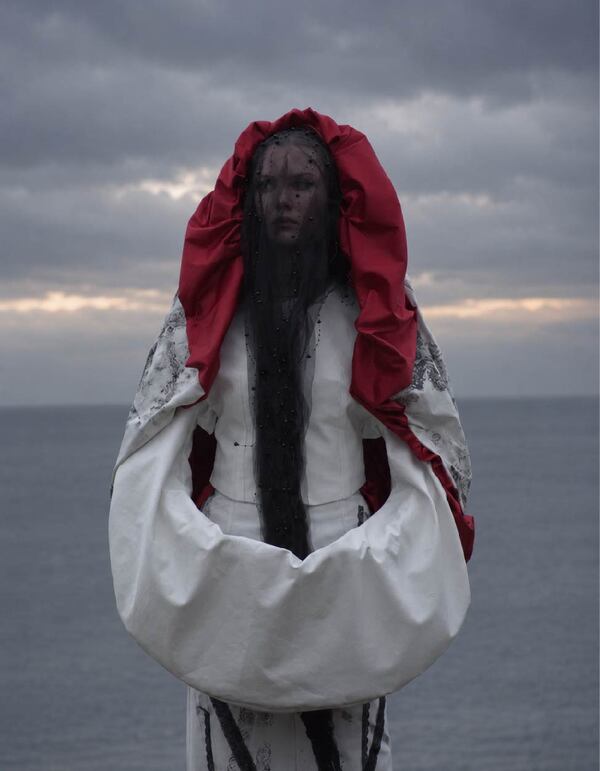
The project focuses on researching the traditional rituals, cultural practices, and visual codes of Slavic cultures as shaped by their historical context. The work examines the symbolism, color, form, materials, and methods of bodily organization within rituals, as well as the possibilities for reinterpreting these elements within contemporary artistic language.
The project examines the Slavic wedding ritual as a space between the death of a former identity and the birth of a new one. The bride undergoes mourning, silence, and depersonalization before regaining her name and status. This liminal state is viewed as a condition of losing a former form, where loss becomes a necessary prerequisite for gaining something new.
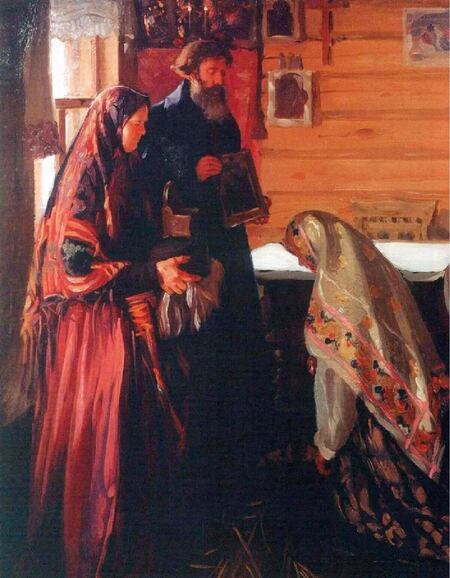
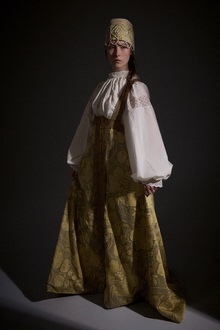
The first part of the Northern wedding was called the «black table.» The bride traveled to the church ceremony dressed in mourning attire, as if she were at a funeral, mourning herself as if she were deceased. She was unable to speak, laugh, or go outside. The very word «bride» was associated with a state of depersonalization, and the groom’s task was to symbolically «find her in the world of the dead» and bring her back to life in a new status. After the engagement, the bride would change into a white shirt with long sleeves that covered her fingers. White was perceived as the color of snow, death, and the shroud; in other areas, a black dress, veil, and mourning head coverings were used. In the Arkhangelsk province, her head was covered with a kukol—a white funeral hood.
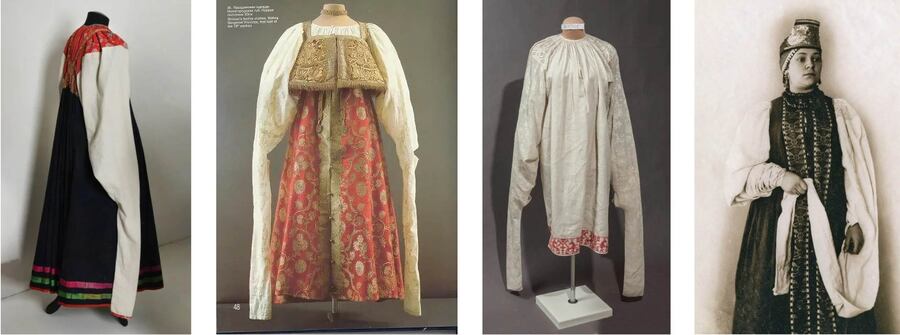
historical northern costume / wedding shirts
The ritual is built upon a paradox: to be born anew, one must first symbolically die. But symbolic does not mean unreal. Loss precedes acquisition—not as a reward for patience, but as a necessary condition for transition.
After the wedding ceremony, the mourning period ended, clothing was changed to festive attire, and red—the symbol of life—appeared. The bride was «reborn» as a wife and could receive a new name.
During pivotal moments, a person doesn’t lose circumstances—they lose their form, their constants, and are left facing the darkness of questions about identity and personal choice. The old does not depart willingly.
The ritual offered no comfort. It provided structure: what to lose, in what order, for how long, and who was nearby. It said, «You are losing, and that is correct. This is not destruction—it is liberation.»
When liberation arrives, silence settles in—a space into which something new may enter. And what fills that space will no longer depend on what was lost, but on what happens to be present in that moment and which path the individual deems true.
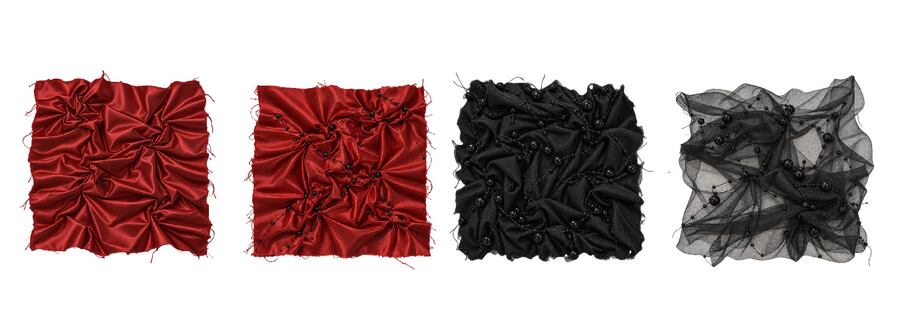
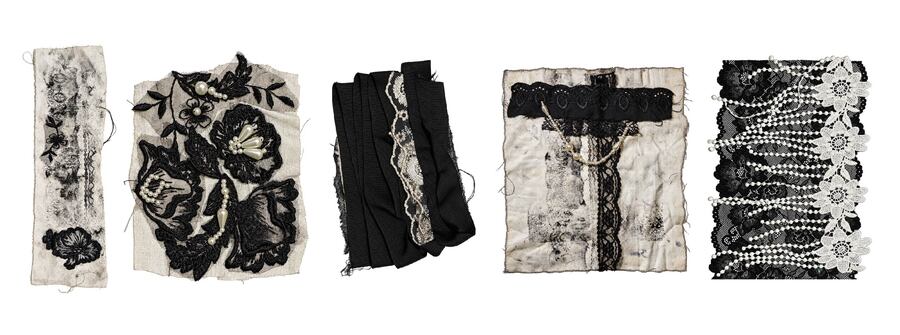
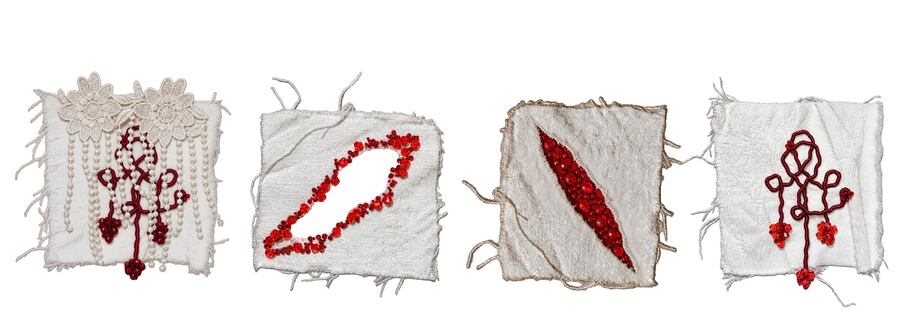
Textures / Textile concepts