Hi!
Have you had another box of puppies dumped at your gate that you now need to find homes for?
Is it time to vaccinate the dogs and stock up on medication, but you’re desperately short on donations?
Are you doing an amazing job running a home shelter (you’re awesome, you know that, right?) and blogging about it, but the algorithms just won’t let you reach a wider audience?
I’d like to offer my help because the very first thing that catches a social media user’s eye is an image!
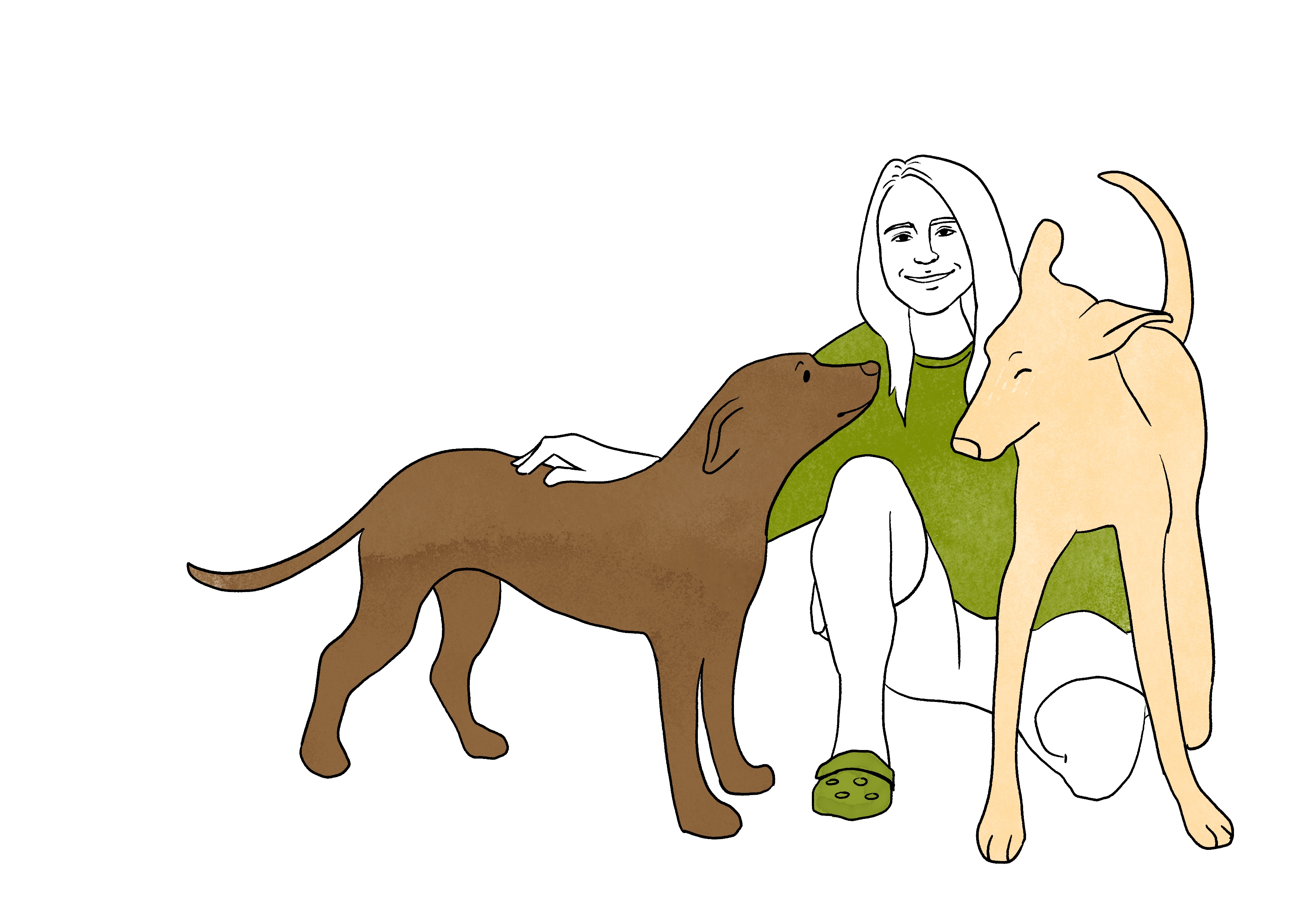
My name is Ira Klimenko. I am an illustrator and (importantly) an animal shelter volunteer with extensive experience, and (even more importantly) I truly love dogs. I’ve created illustrations for my team’s social media and for various merchandise we’ve given away and sold at events.
My experience as someone who understands how charity projects and their surrounding systems operate gives me deep insight. I know what it feels like to walk into a shelter for the first time and be greeted by row after row of occupied kennels and the constant sound of barking. I know how heartbreaking it is to do everything in your power to move a shelter dog from one vet to another, only to know that all that awaits them is an isolation ward instead of a warm blanket on a sofa. I know how wonderful it feels when the people who adopted puppies found at a construction site send you photos of them—all grown up and happy, wearing funny little winter overalls and holding their favorite toy in their mouths.
And I can convey these feelings through illustrations in a way that allows those who have never experienced them to feel them too. So that people want to pause and think.
And then do something.
DOG HOLIDAY CALENDAR
Problem: People are growing weary of the constant negativity on social media. And that’s understandable—that’s how the algorithms function. But we can’t simply ignore dogs in trouble, and we need help from others. How do we raise funds when people scroll past sad stories without even looking?
Idea: Why not brainstorm some positive occasions for fundraising?
Solution: Invent fictional dog holidays and collect donations, for example… to celebrate Ball Day and Naughty Dog Day!I created a series of illustrations: simple enough that you don’t have to spend a long time understanding them, but eye-catching thanks to their poster-like style and humor. On a social media page, they would stand out among standard photo posts and form a separate, recurring feature. What holiday have they come up with today? What fun occasion can I use to send a small donation to the shelter?It’s also worth noting that this style would work really well for merchandise. You could create a series of stickers or postcards—give one with every recurring donation and let people collect the entire calendar of dog holidays!
LIFE WITH A DOG
Problem: Usually, the narrative around owning a dog at home swings wildly between two extremes. Get a dog, and you gain a best friend who offers nothing but unconditional love, the joy of evening greetings, and even cuddles with your slippers! Or, you get a dog, and you’re forced to walk through pouring rain and blizzards at six A.M., buy a new sofa to replace the chewed-up one, and spend three months' salary on vet bills (plus, dogs are stinky)! If you don’t have a dog, you have no frame of reference. If you do, you feel like a terrible owner.
Idea: The truth, as usual, lies somewhere in between. And it’s important to tell the whole story.
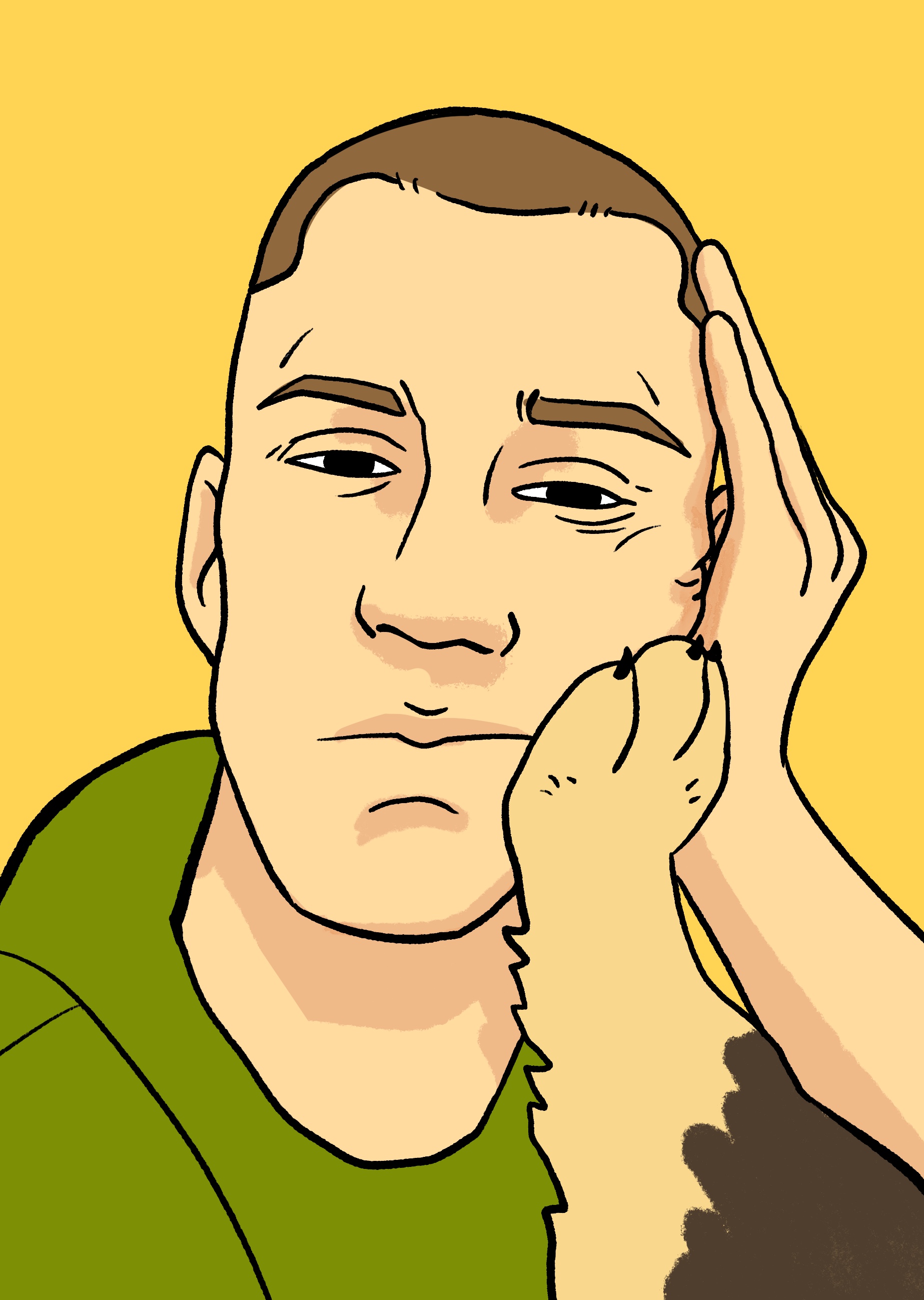
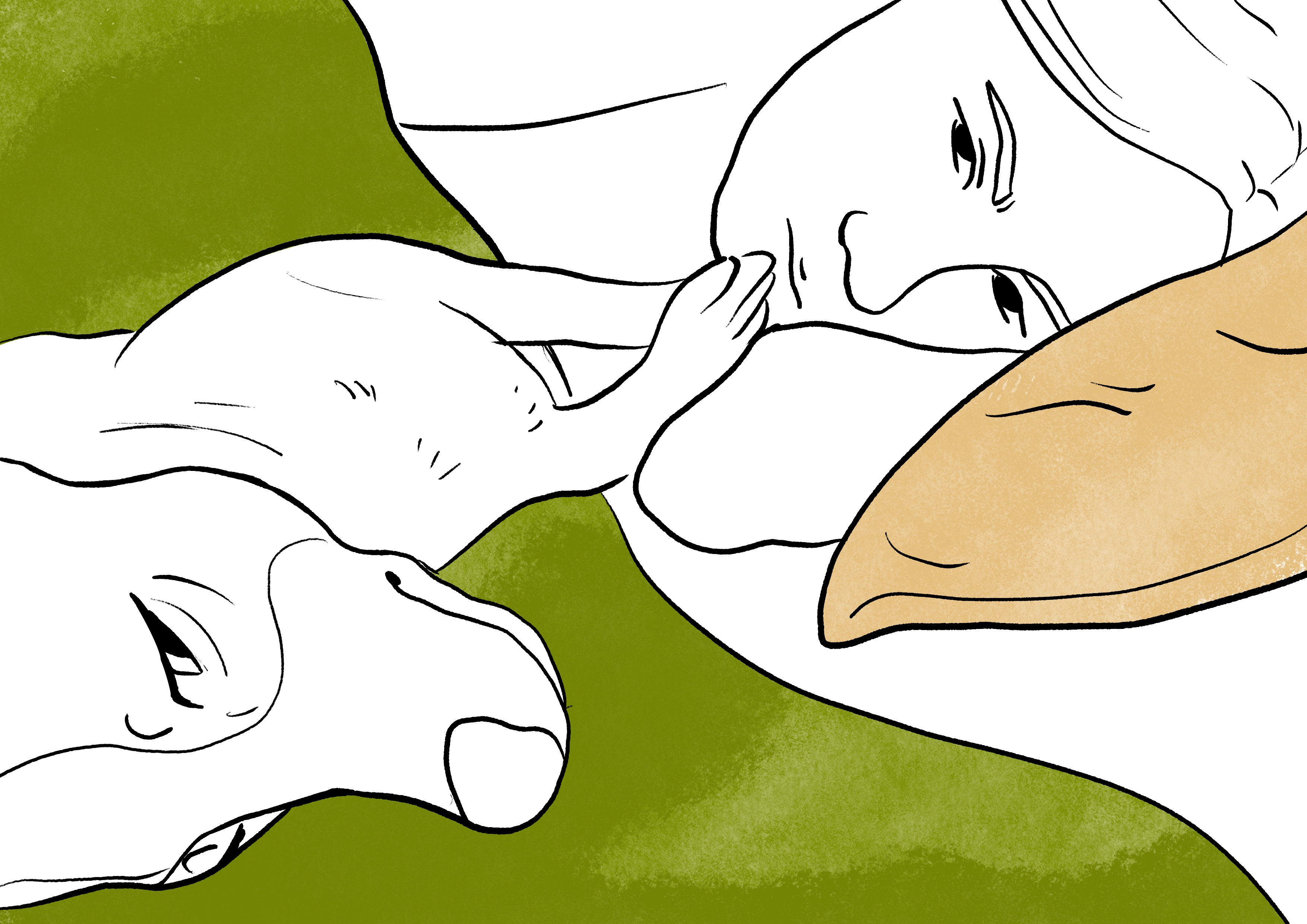
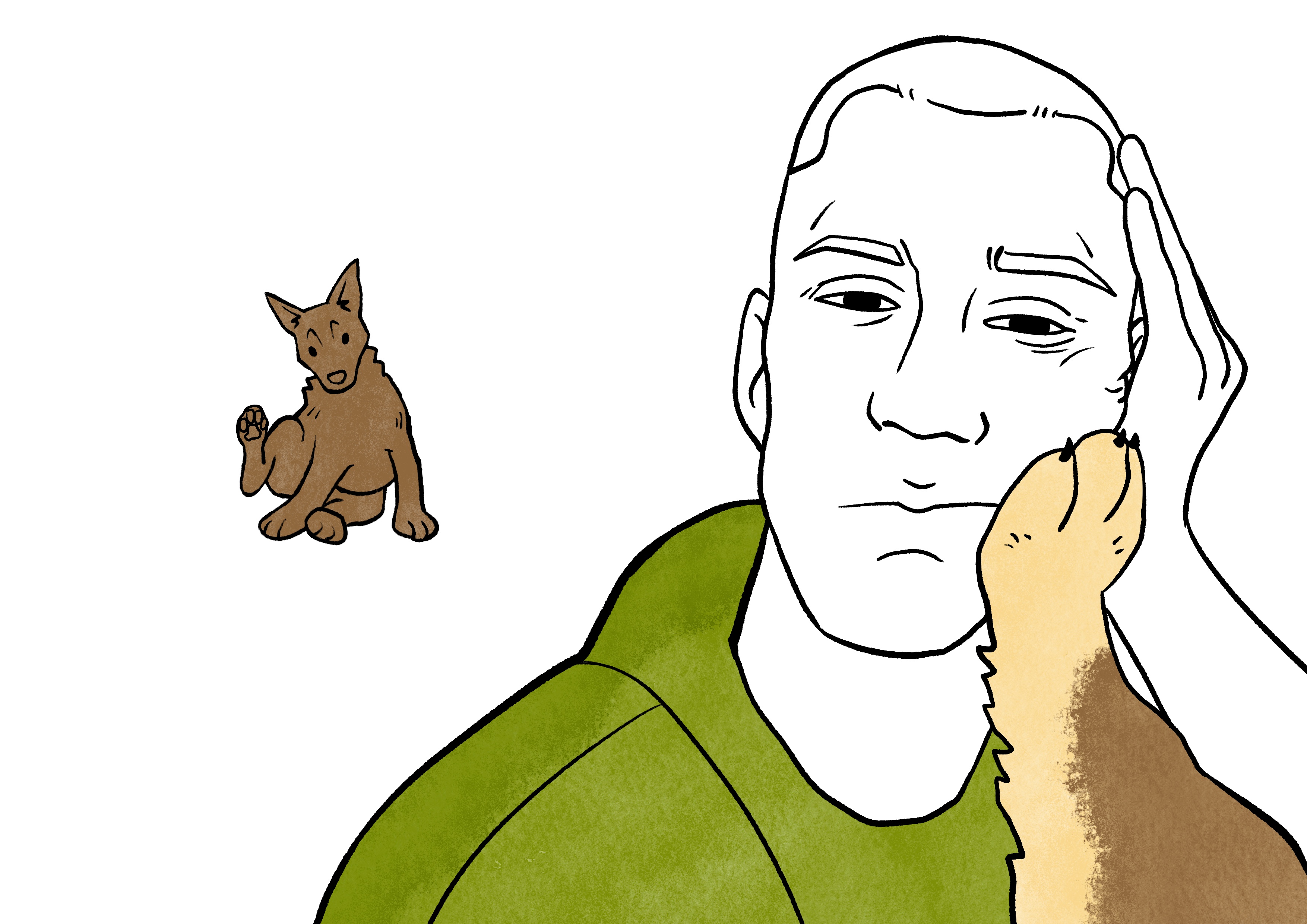
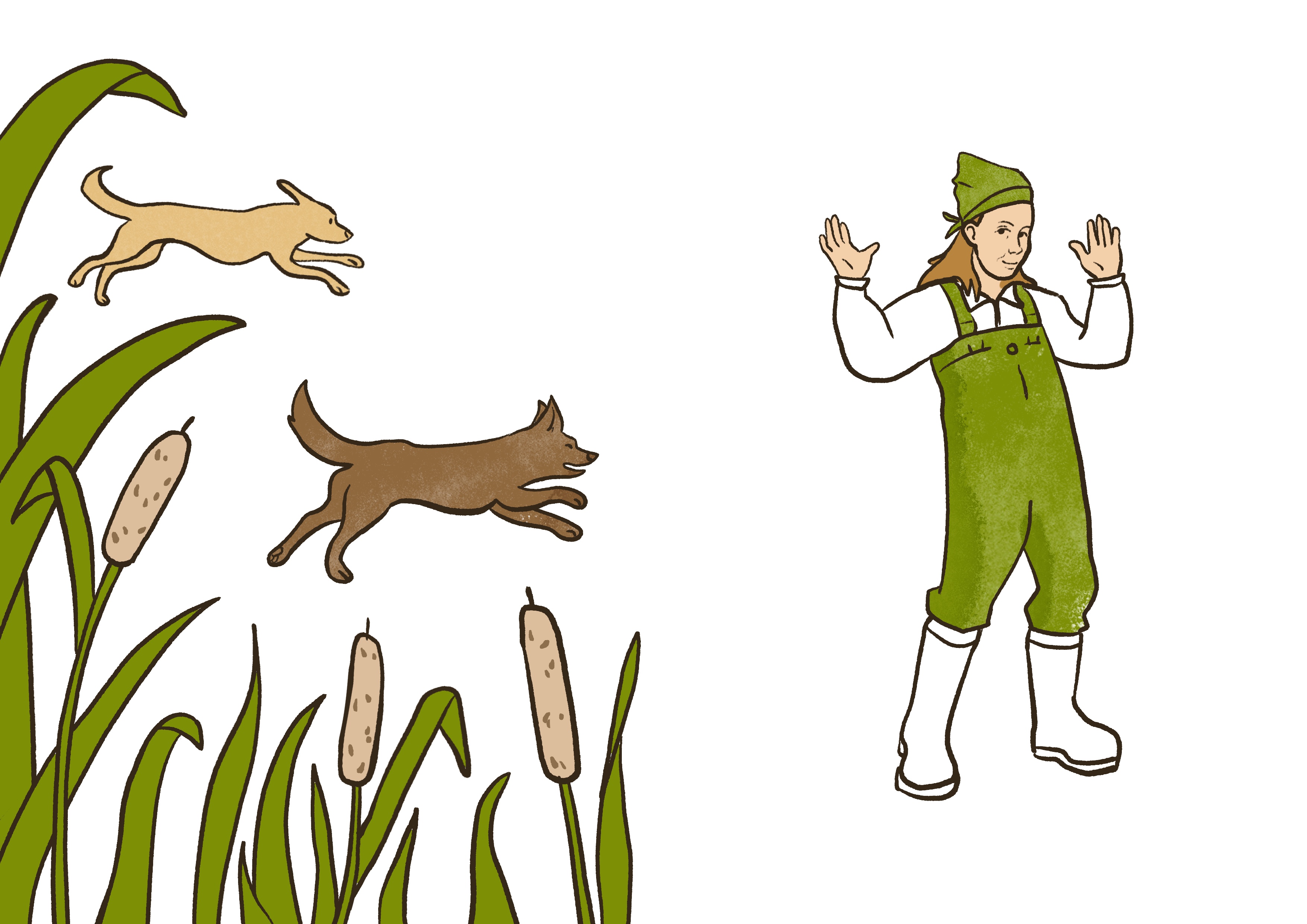
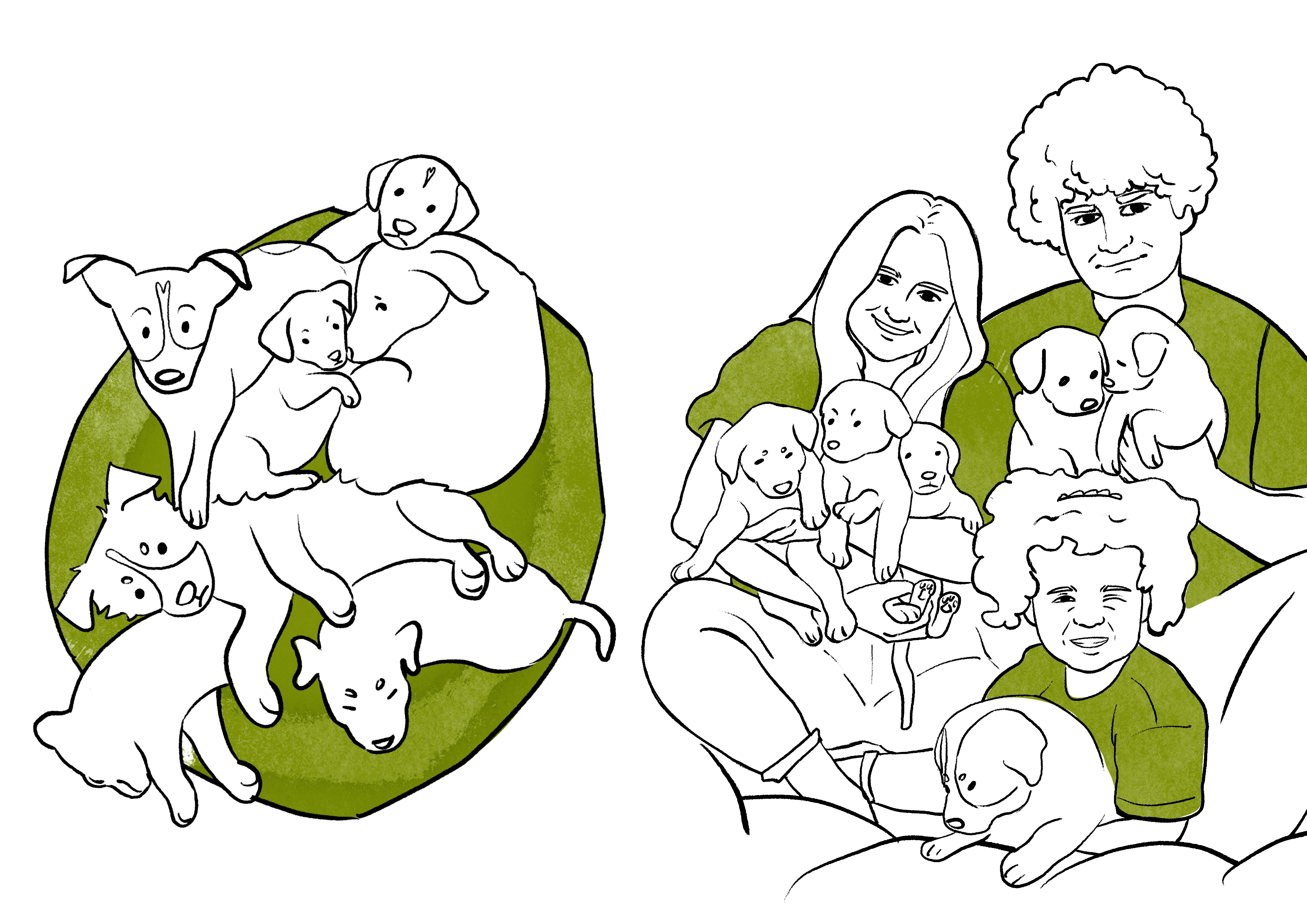
Solution: A zine about dog owners who, despite everything, choose to share their lives with dogs—with paws in their faces, fur in their mouths, and walks through mud and swamps. Because the happiness they experience together is worth it.This is a series of illustrations depicting everyday life with dogs. It covers the necessity of walking in tall rubber boots, waking up after a paw hits your nose—because someone needs to chase a ball in their sleep—and the feeling of exhaustion, yet having a fluffy paw there to support your head as you drift off from lack of sleep.For this series, I used photographs of dog owners I know as references. The visual style here is realistic. It’s important to me to show that these are real people, not fictional illustrations—that this is genuinely how they live day after day. I chose a limited palette of neutral colors. They aren’t loud, but they aren’t gloomy either. They are calm, yet rather cheerful, because it’s moments like these that compose the everyday happiness of life with a dog.
DOG PARK
Problem: Despite growing tolerance for dogs in public spaces, society as a whole only accepts a relatively small segment of the dog community—primarily small breeds. Furthermore, the definition of a dog-free public space varies widely. Dogs are unwelcome even in places necessary for meeting their species-specific needs (and I’m not only referring to elimination; this includes movement, socialization with other dogs, and having access to an enriched environment). We are familiar with the rules for dog owners: clean up after your pet, use leashes and muzzles, and stay off the grass. But for harmonious coexistence, learning how to behave is not solely the responsibility of dog owners—it applies to everyone who shares the urban space with dogs.
Idea: What if we began teaching the principles of this coexistence from an early age?
Solution: Turn it into a fun activity!This project is a series of illustrations for informational leaflets. On the back, there is a list of simple rules: always ask the owner before interacting with a dog; be gentle if you are allowed to pet and play with it; learn how dogs express displeasure and fear, and how they show happiness. On the front, there is an illustration showing that dogs are an important part of the urban environment. But it is also interactive—kids can color in the dogs and draw them funny faces.