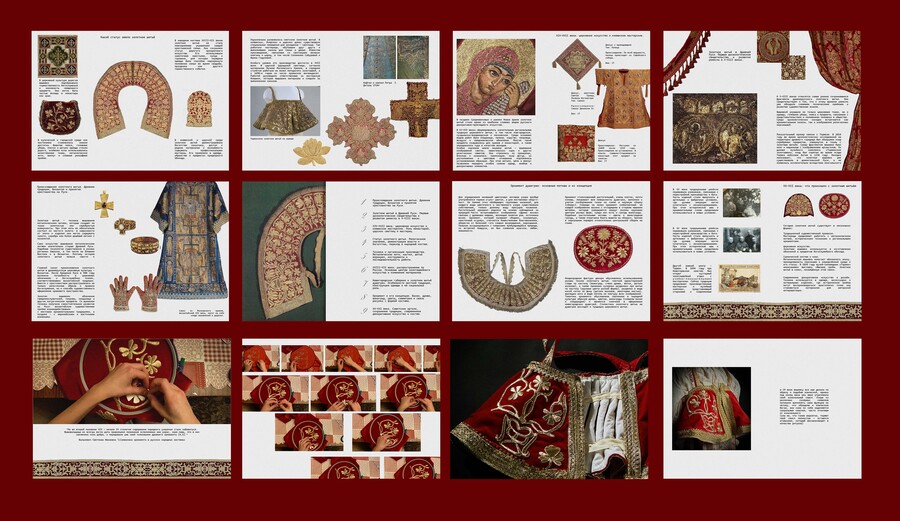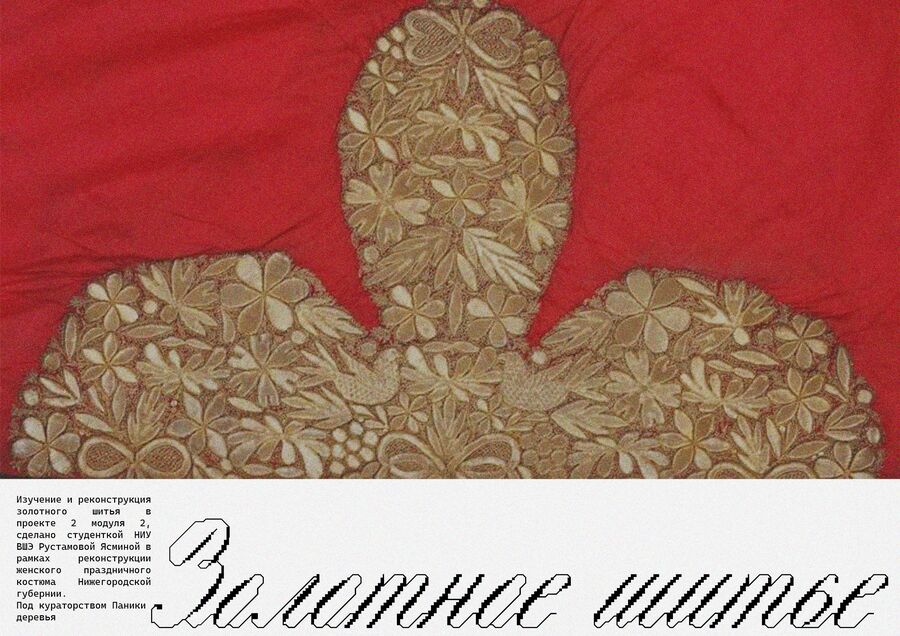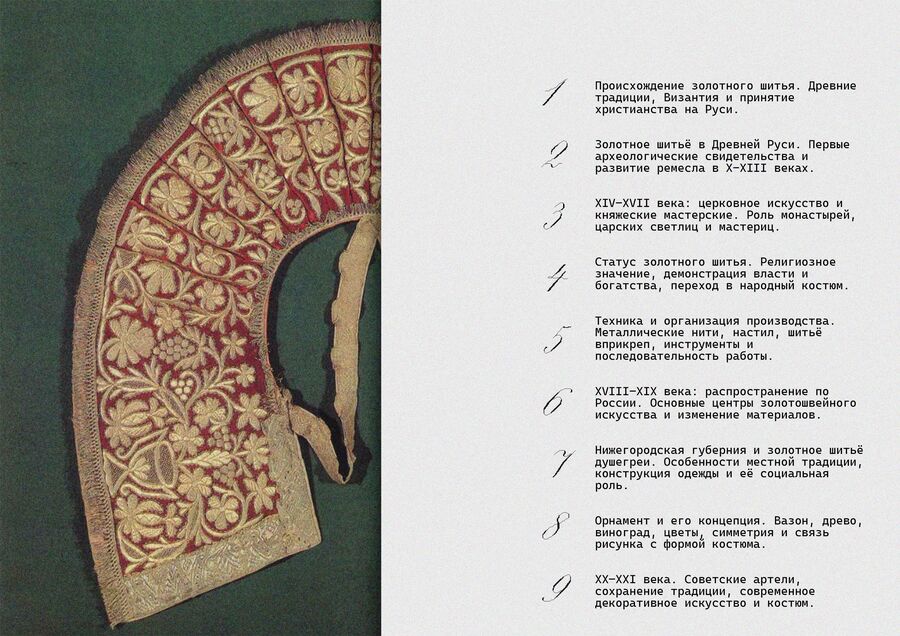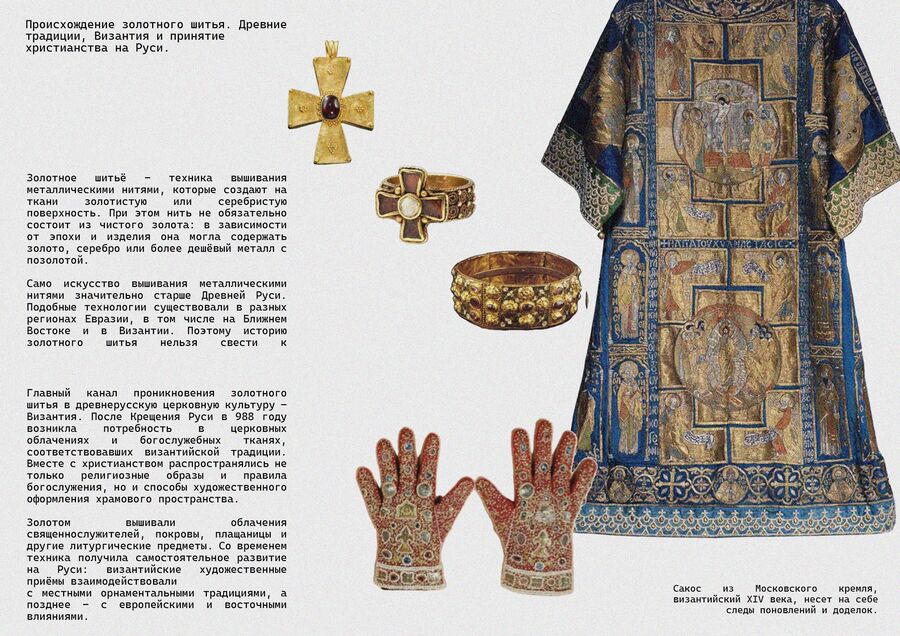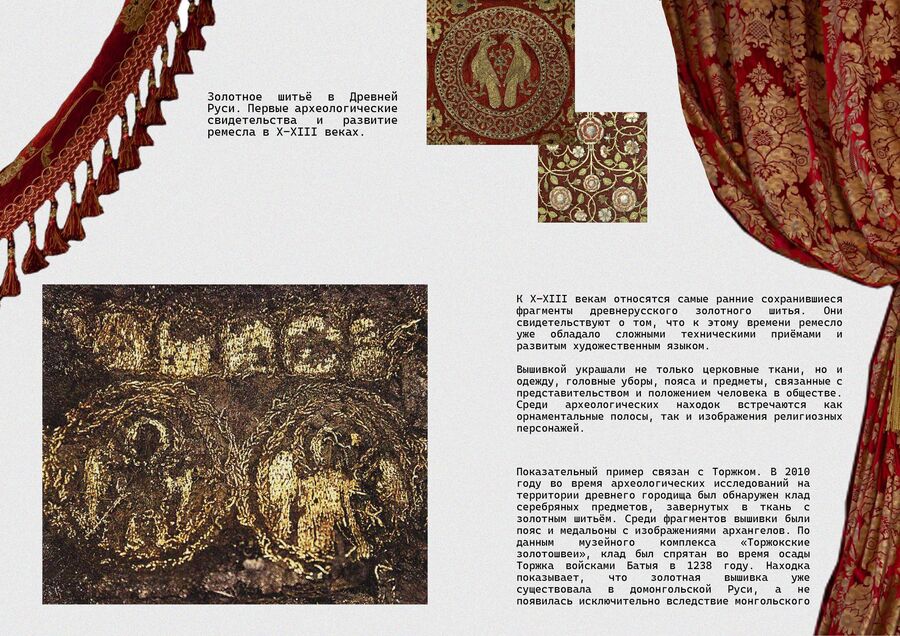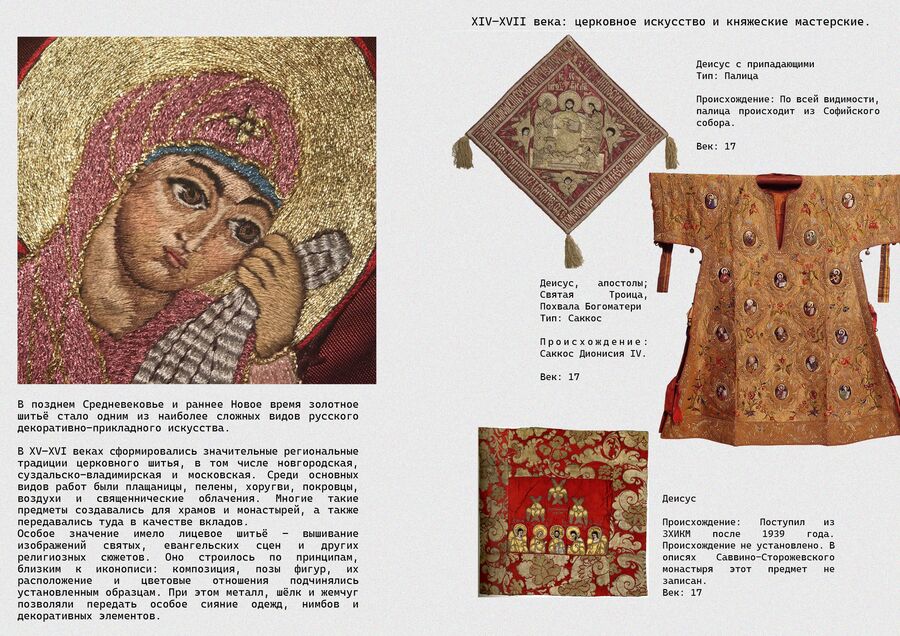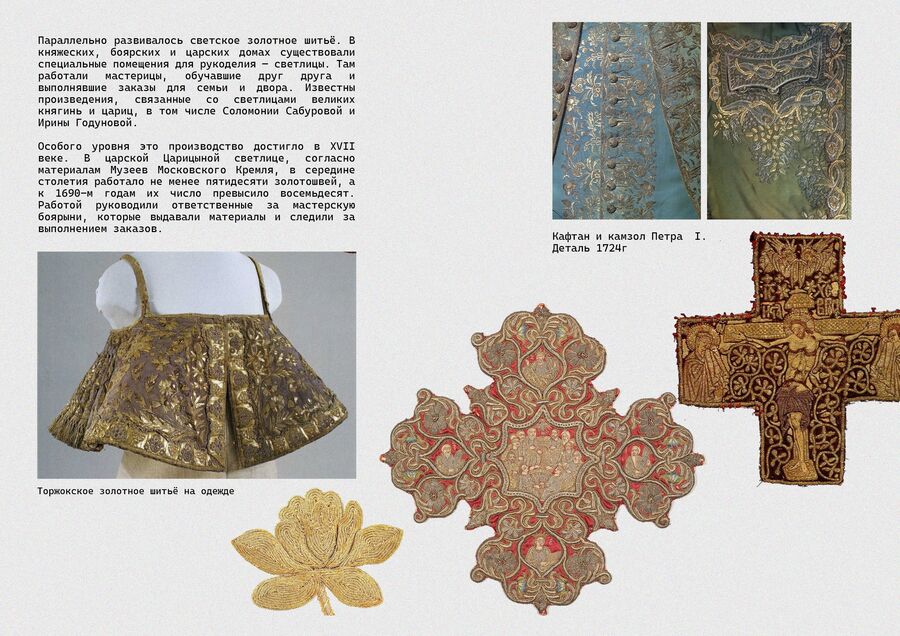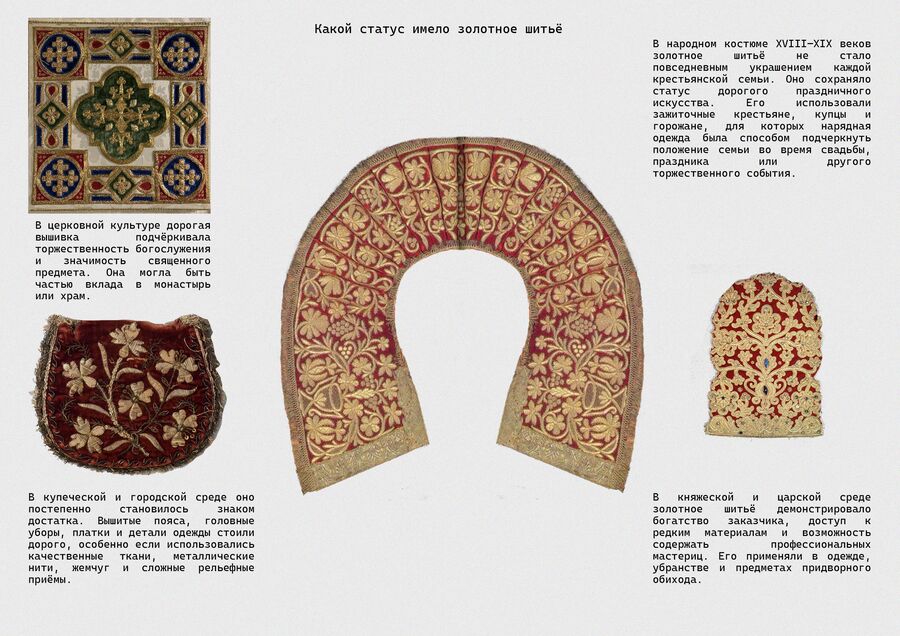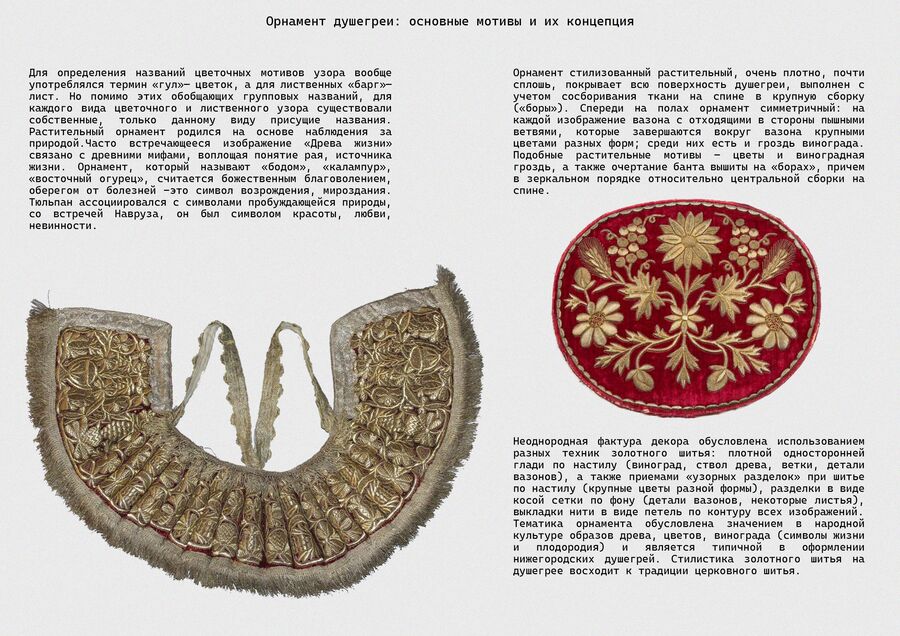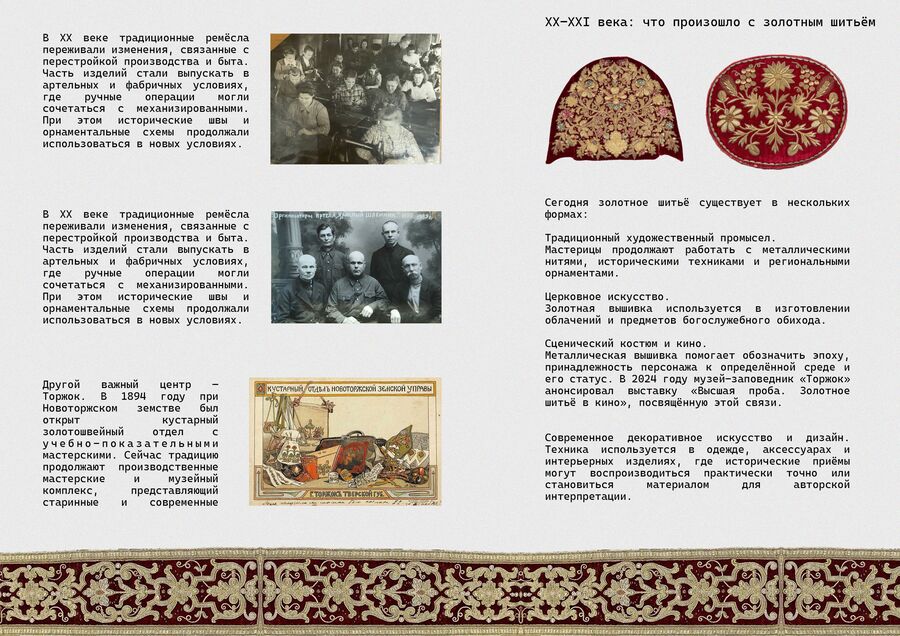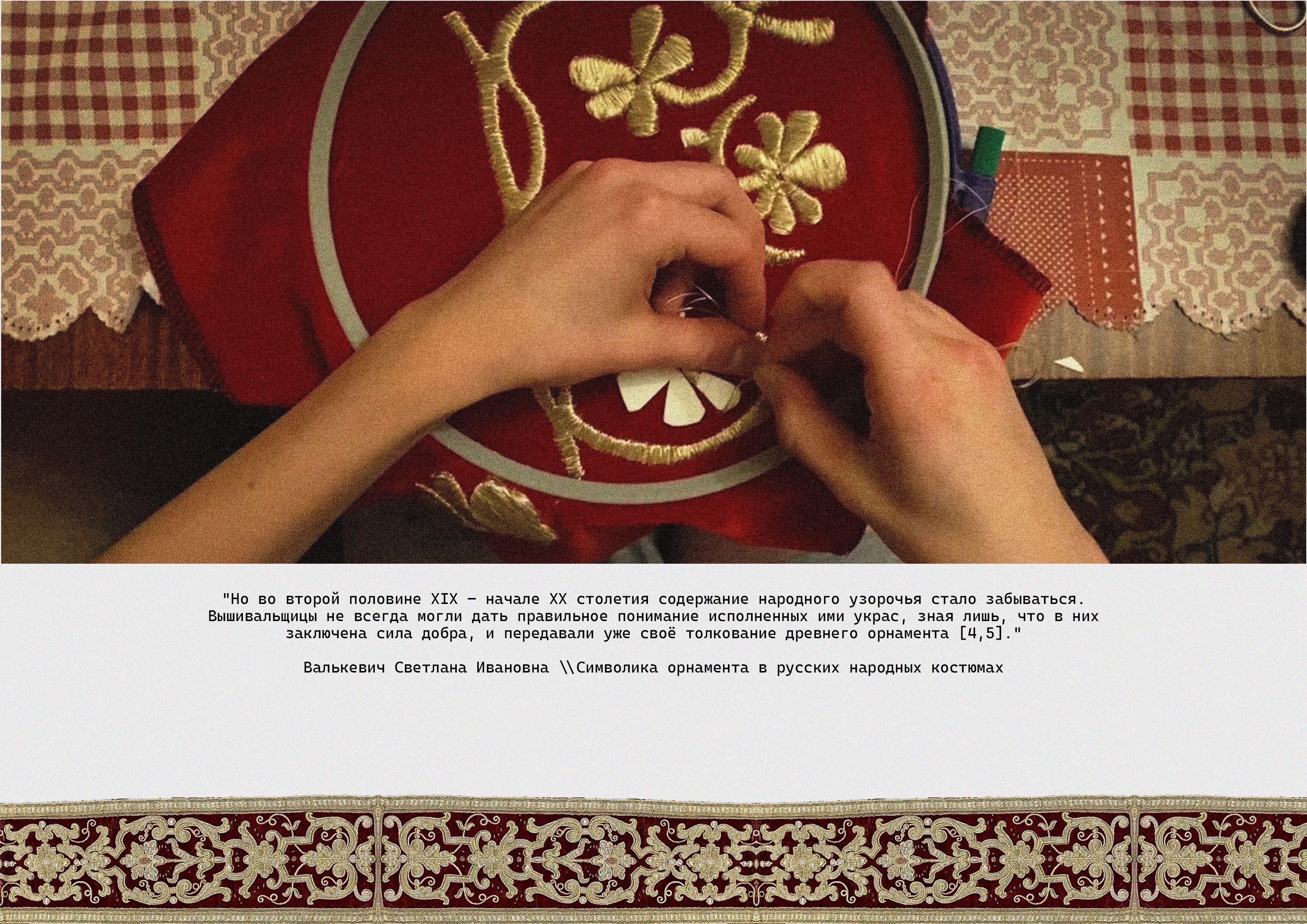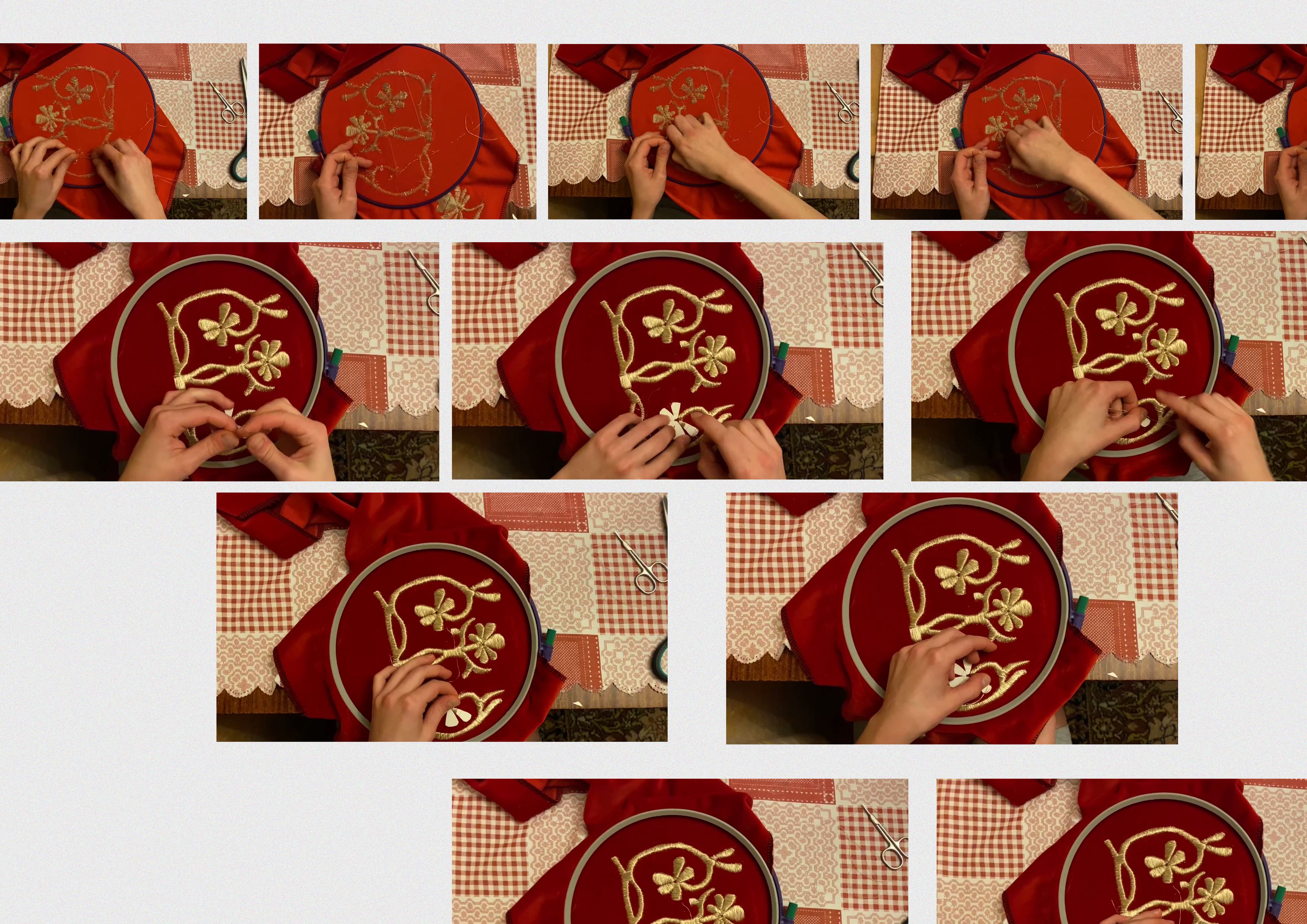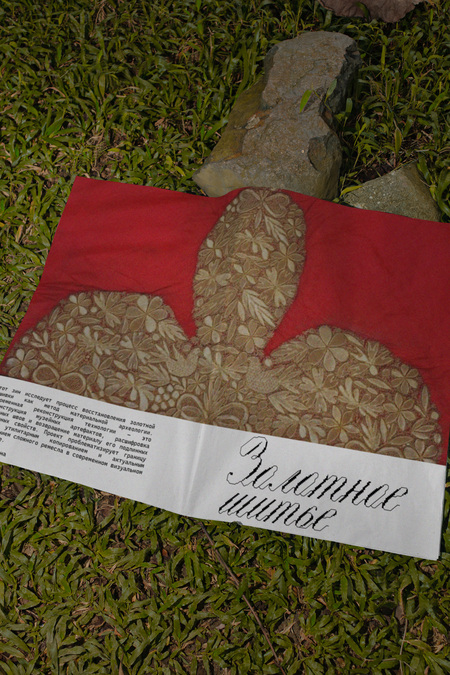
Goldwork is traditionally viewed within the context of decorative and applied arts; however, its historical evolution reveals a deeper issue—the fragility and discontinuity of unwritten technological knowledge. Textile crafts are physically delicate, and the inherent nature of passing on mastery directly from one person to another makes them highly susceptible to social transformations. When technologies democratize, a process vital to culture, a different threat emerges: the loss of semantic literacy, where the simplification of form leads to a loss of understanding regarding the material’s physical language and the tectonics of authentic hand-stitching. This zine investigates the process of restoring gold embroidery as a method of material archaeology. Modern technological reconstruction involves deconstructing museum artifacts, deciphering archival stitches, and returning authentic textural properties to the material. The project interrogates the boundary between utilitarian copying and the relevant interpretation of complex craftsmanship within a contemporary visual context.