Concept
Rationale for Topic Selection In rap metal and nu-metal, the connection to hip-hop is audible even when the vocals drop out. I was intrigued by how closely instruments that are played so differently can sound. By moving the record back and forth, a DJ creates a short pattern that repeats throughout a verse and becomes memorable like a guitar riff. A guitarist can abruptly cut off the string noise during a solo, making it sound like a scratch. Using American bands as examples, I intend to trace how this exchange of techniques has altered the rhythm and structure of heavy songs. Research Question How does the scratch interact with the guitar riff and vocals in American rap metal and nu-metal, and in what instances does the guitar fulfill the same rhythmic function? Research Hypothesis I hypothesize that the scratch sounds as short insertions during frequent strumming, but it might sound longer when the guitar sustains a chord or holds a pause. The guitarist can repeat this pattern by alternating between sliding across muted strings and sharp stops. Research Methodology I will compare eleven compositions by different artists. In each, I will select several segments, mark their time codes, the entrance of the instruments, and the boundaries of the vocal lines. I define a scratch insertion as a pattern made from one or more vinyl movements. I will qualitatively compare the duration of the scratch phrases and the riff density, paying attention to guitar attacks and pauses within the insertions. First, I will compare episodes within a single recording, and then similar passages across different bands. If a technique is difficult to discern by ear, I will consult concert footage. What Will Be Analyzed in the Music I am interested in how the sound begins and ends, how its pitch changes as the record is moved, and what rhythm is formed from the repetitions. I will note whether the accents of the scratch align with the hits of the guitar and drums or if they sound between them. In the verses, I will listen to whether the DJ picks up the rhythm of the last word, responds to the vocalist during a pause between lines, or plays its own pattern over the recitation. Study Structure The introduction will define the period boundaries and explain the selection of recordings.
- From Hip-Hop to the Heavy Scene. I will trace how DJs used the turntable for rhythmic play and which techniques American rock bands adopted. Early hip-hop recordings will provide a baseline for comparison.
- Inside the riff. I will compare verses featuring frequent versus sparse guitar strikes. In short segments, I will analyze the precise moment the turntable emphasizes an established accent, and when it transfers that accent into the pause between beats.
- When the turntable leads. I will compare short transitions between the verse and chorus with extended instrumental solos. I will track how the guitar, bass, and drum parts change when the turntable takes the lead.
- The guitar as a DJ. I will match the vinyl scratch to its guitar imitation. I will compare the sound’s glide pitch, the sharpness of its cutoff, and the rhythm of its pauses to understand how the movement of the record is conveyed through the strings. In the conclusion, I will assess how the duration of the scratching inserts relates to the density of the riff. For cases that contradict the hypothesis, I will investigate other explanations, including vocal pauses and changes in song structure. Information Sources The primary material will consist of album recordings and live performances. I will cross-reference details about individual parts and studio effects with album booklets and musician interviews. For the historical section, I will consult research on hip-hop, DJing, and heavy music.
Introduction
Scratching is a technique of manipulating vinyl records. The DJ moves the record under the needle back and forth by hand. If the record contains a voice, a single syllable can be taken and transformed into a rhythmic pattern. When the record spins quickly, the voice sounds higher, and when played backward, the same syllable can be heard in reverse. In American rap metal and nu metal of the 1990s and early 2000s, this hip-hop technique can be heard alongside a guitar riff. The turntable can emphasize the same accents as the guitar, respond during pauses, or drive its own rhythm over the riff. It is especially interesting to listen to what happens at the end of a vocal line. The voice fades out, and the scratch can pick up the rhythm of the last syllables, connecting one line to the next. During instrumental breaks, roles can switch. The guitar holds a single chord while the pattern you are following is played by the DJ. Sometimes, what you perceive as a scratch is actually played by the guitarist. They extract noise from the strings and cut it off sharply, for example, using a pickup selector switch. In eleven recordings by different artists, I want to track where the turntable supports the riff, when it sets the rhythm itself, and what allows the guitar to take on the same role.
1. From Hip-Hop to Heavy Scenes
By the late 1990s, the DJ behind the turntables had become a familiar fixture in some American rap-metal and nu-metal groups. However, the fundamental concept of playing back recorded sound—rather than merely playing a backing track—formed much earlier. In hip-hop, the record served as a source for rhythm, voice, and percussive accents. When live rock guitars entered the equation, musicians had to redefine these roles: who sustained the recurring patterns, who filled the gaps, and who earned the solo moment. In this chapter, I analyze three seminal recordings from 1981–1993. Grandmaster Flash demonstrates how a DJ constructs rhythm from record fragments. In Run-D.M.C.’s «Rock Box, ” a scratch technique appears alongside a full, live rock guitar. In Helmet’s „Just Another Victim“ and House of Pain’s tracks, the heavy riff is specifically adapted to complement the rap and DJ insertions. These examples allow us to trace not only the historical transition but also the gradual evolution of musical roles. Finally, I will look at the career of DJ Lethal: his integration into Limp Bizkit helps connect the one-off collaborations of the early 1990s with the DJ’s permanent place within a heavy band.
How the Record Became a Musical Instrument
The original logic of early DJing was connected to the break—a segment of a recording where the drums or bass were clearly audible. By using two records, a DJ could return one to the start of a break while the other continued to play. Thus, this short section was transformed into a long accompaniment for dancing and rapping. Unlike normal song playback, the duration and sequence of the segments were now determined by the performer. The rhythm already existed on the vinyl, but a new musical form emerged in the moment of interacting with the turntables.
It is necessary here to distinguish between three closely related actions. Repeating a break extends an existing segment. Sampling transfers a part of one recording into another composition. Scratching changes the playback itself: the hand moves the record forward and backward, and the mixer can open or abruptly cut the sound. Therefore, a word, a drum beat, or a melodic fragment no longer sounds only in its original sequence. It can be stretched, chopped up, made more abrupt, and placed between other rhythmic events. Not every repeat of a sample should be called a scratch—this distinction will be important in subsequent chapters.
For this study, I note two levels of rhythm. The first is the stable pulse, which is heard in the bass, drums, or a repetitive guitar riff. The second is the additional attacks, stops, and movements of sound created by the DJ. A scratch can coincide with the main beat or sound between beats; it can continue a vocal phrase or interrupt it. It is this interaction, not the presence of the turntable itself, that connects early hip-hop with future rap-metal.
Grandmaster Flash — The Adventures of Grandmaster Flash on the Wheels of Steel, 1981
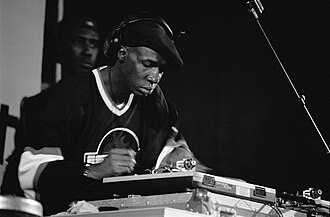
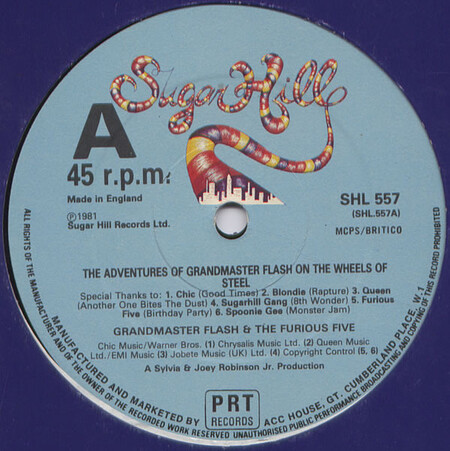
Left: Grandmaster Flash Right: Photo of Grandmaster Flash’s record — «The Adventures of Grandmaster Flash on the Wheels of Steel,» 1981
The Grandmaster Flash recording is constructed as a unified performance, seamlessly blending fragments from various records, including Chic’s «Good Times, ” Queen’s „Another One Bites the Dust, ” Blondie’s „Rapture, ” and vocal snippets from hip-hop compositions. In an interview with Fresh Air, the musician played the recording and, in the process, explained when he switched records, returned to a short phrase, or layered a new sound over the continuing rhythm. This is a rare opportunity to compare the audible result with the DJ’s actual techniques, rather than trying to reconstruct the skill set solely from the recording.
One important element is the transition between Chic and Queen. Flash explains his choice by noting that the bass lines are similar in character and complement each other well. While the bass maintains a familiar pulse, other vocal phrases and short sounds can emerge over it. For the listener, the recognizable material changes, but the sense of overall movement does not disappear. This is a fundamental difference from random splicing: the transition must occur at a point where both segments align temporally. Flash himself calls hitting the pulse precisely one of the main conditions of his technique.
The work with a single vocal phrase is particularly noticeable. A phrase that was uttered once in the original song and held specific lyrical meaning may be repeated several times in succession here. Returning to its beginning creates new rhythmic attacks, and the voice begins to be perceived almost as a percussive instrument. When Flash brings the phrase back to a specific beat, it becomes part of the overall groove. This results in two simultaneous layers: a continuous rhythmic foundation and intermittent material whose duration the performer changes in real time.
For further research, this example provides a model for function distribution. Later, the drummer, bassist, and guitarist can maintain the consistent pattern, while the DJ is responsible for short insertions and pauses. In the 1981 recording, these tasks are executed by different records; in the heavy band—by different instruments. The similarity lies not in timbre, but in the method of musical organization: one layer preserves the passage of time, while the other creates events within it.
Run-D.M.C. — Rock Box, 1984
«Rock Box» is one of the early examples where a hip-hop track merges a drum machine, rapping, scratching, and an actual rock guitar. Guitarist Eddie Martinez recalled receiving a rather sparse track: the beat from the DMX drum machine, bass, a synthesizer motif, and Run-D.M.C.’s vocals. At the request of producer Larry Smith, he strengthened the bass line and recorded several of his own riffs, harmonized guitar parts, and solos.
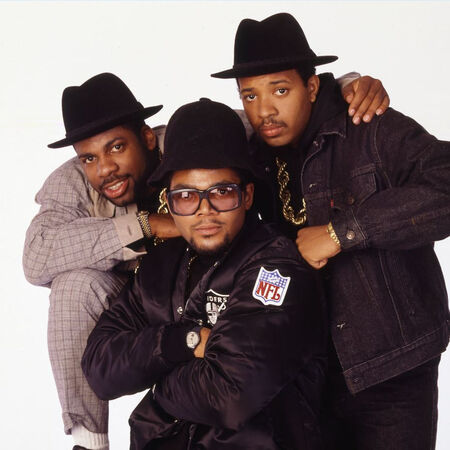
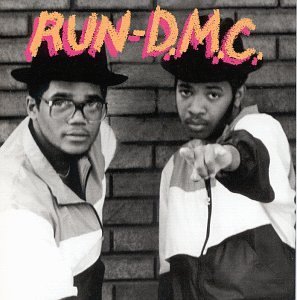
Left: The Run-D.M.C. lineup. Right: The album cover for Run-D.M.C.’s «Rock Box, ” 1984.
It is particularly important here that the guitar meshes with the existing hip-hop pulse. It does not replace the song’s rhythmic foundation; the repeating guitar figures make it heavier and denser, while the sustained notes and solos create a contrast with the short drum hits. Against the relatively steady beat, the guitarist finds room to develop, and the rappers continue to deliver their verses within the same rhythmic framework. This results in a multi-layered arrangement where rap and rock do not alternate in whole sections but sound simultaneously. Jam Master Jay features a separate scratching episode. Musicologist Patrick Rivers points to the DJ’s four-bar solo around 03:01, occurring after the rappers introduce him in the lyrics. This illustrates a pivotal shift in focus: the voice literally hands the attention over to the turntable, yet the overall pulse is maintained. Here, the scratch does not so much compete with the guitar in a rich riff as it is given limited time for its own statement. In «Rock Box, ” Jam Master Jay’s scratching is integrated within the vocal composition for a limited duration. Unlike Grandmaster Flash, who builds the musical form through transitions between records, the DJ’s work here must coexist with the rap, the drum machine, and the guitar parts. This brief appearance shows that the turntable’s role is defined not only by the set of available techniques but also by the structure of the song: the rap requires a continuous pulse, the guitar needs space for riffs and solos, and the scratch is placed briefly at the center of attention.
Helmet & House of Pain — Just Another Victim, 1993
For a transition into rap metal, «Just Another Victim» from the Judgment Night soundtrack is particularly telling. Here, Helmet, with their harsh, staccato guitar figures, comes alongside House of Pain, with its rapping and DJ elements. Helmet guitarist and vocalist Page Hamilton recalled bringing his own riff to the session; the musicians quickly assembled their part of the composition, and then the material was passed to House of Pain. According to him, the riff was slowed down for the second part, after which DJ Lethal added DJ elements. For analysis, not only the list of participants but also the method of joining the two halves is important. In the Helmet section, the riff is based on a clear, cohesive rhythmic movement and constantly focuses on the guitar. When the same material is slowed down for House of Pain, there is more space between the significant accents. The rap changes the nature of the movement over the riff, and the DJ gets room for additional sound insertions. This editing demonstrates that the density of the arrangement can be altered not by changing the instrument, but by changing the tempo and the frequency of attacks within a single guitar pattern. When comparing these two parts, one should separately track the boundaries of the vocal phrases. In the first half, harsh stops and guitar accents define the shape of the musical movement. In the second, short sound stabs and the rap can create their own accents between the less frequent guitar hits. I see this as an example of the potential connection between free rhythmic space and DJ activity. However, to reach a definitive conclusion, it is necessary to map out the measures and check not only the number of guitar hits but also where the vocals occur.
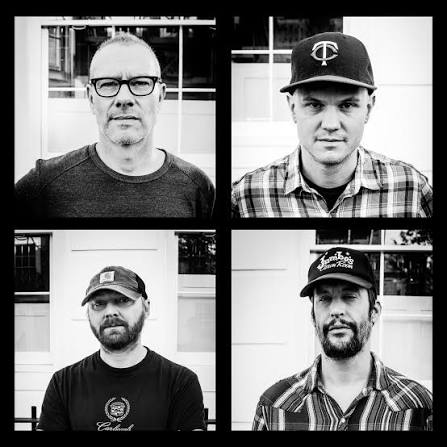
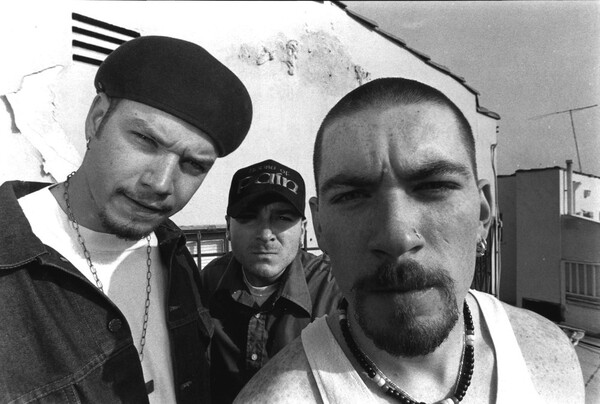
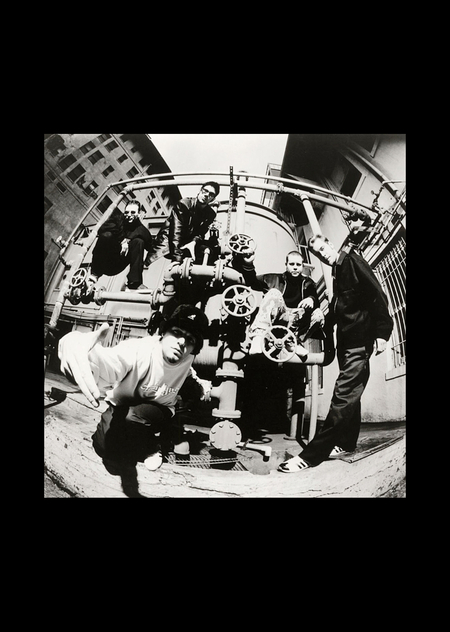
Left: Helmet roster Right: House of Pain roster
In other rap-rock collaborations, the juxtaposition of rap and heavy guitars often took center stage. In «Just Another Victim, ” DJ Lethal participates in the joint work—his track was specifically added for this new composition. Later, the musician would carry the experience of House of Pain into Limp Bizkit. Therefore, the 1993 recording becomes a direct bridge between one-off collaborative projects of rock and rap artists and the permanent presence of turntablism within a heavy band.
From joint tracks to a permanent DJ spot in the group
In the 1990s, the fusion of rap, guitars, and turntablism ceased to be confined to individual singles or soundtracks. In an interview with Musician magazine in April 1998, Fred Durst recounted that Limp Bizkit was looking for a second guitarist when they began working with DJ Lethal, who had previously worked in House of Pain. Lethal proposed not only using the familiar scratch technique but also running the sounds from the turntables and sampler through a wah-wah, filters, and a guitar amplifier. Durst likened his role to that of a second guitarist.
DJ Lethal, concert photos
This comparison does not mean that the turntable started sounding exactly like a guitar. Rather, it describes the DJ’s role within the ensemble: the DJ participates in building the arrangement alongside the other instrumentalists. They might amplify an existing riff’s accent, respond to the vocalist with a short phrase, create their own rhythmic pattern, or receive a dedicated solo spot. Each option has its own duration and level of prominence. Now, the DJ is constantly integrated into the group and can shift function from one section of the song to another. The chosen recordings show a clear succession of evolving roles. In 1981, Grandmaster Flash maintains the rhythm by manipulating multiple records while layering short vocal attacks over it. In 1984, Run-D.M.C. merged this mode of thinking with live guitar: the riff reinforces the core pulse, while the scratch receives its own brief segment. In 1993, Helmet and House of Pain didn’t just place rap next to guitar accompaniment; they altered the riff’s tempo and incorporated a DJ part. When DJ Lethal later joined Limp Bizkit, he already possessed experience in this type of collaborative work.
Matching Examples and Chapter One Conclusions
The three pieces examined illustrate three different ways of organizing sound. In «Grandmaster Flash,» the bassline from one record sustains the musical movement while another provides short vocal snippets. In «Rock Box,» a heavy guitar riff appears alongside the rap and drum machine, yet Jam Master Jay still maintains a distinct scratch feature limited to a few bars. In «Just Another Victim,» two parts of the composition are linked by guitar material whose tempo and density change for House of Pain; DJ Lethal adds his own layer specifically to this new arrangement. Thus, the role of the DJ gradually evolves: from managing pre-recorded tracks to playing within an ensemble. For the hypothesis linking scratching to the density of guitar strikes, there is currently no basis to draw a universal conclusion. Historical examples show that at least three factors are crucial: the frequency and duration of the guitar sounds, the pauses in the rap, and the function of a specific section of the song. One DJ gesture might sound between vocal lines, another over a continuous beat, and a third inside a separate solo. Therefore, comparing only the total duration of the scratch without considering the musical form would be insufficient. These observations then form the basis for a more precise comparison: first, short DJ accents with guitar riffs within the song; next, instances where the turntable comes to the fore; and finally, guitar imitations of DJ gestures. The historical section demonstrates how all three possibilities emerged and why the question of «guitar or turntable?» relates not only to sound but also to the distribution of musical roles.