
Introduction
Many people think of design as a matter of visual appearance — something about how objects look, what style they follow, or how original they appear. But in today’s cultural environment, design does much more than that. At its core, design is a way of communicating. It creates meaning, influences how people understand things, and shapes the connections between those who make objects, those who use them, and the wider social world.
Communication theory helps us step away from purely intuitive or decorative ideas about design. Instead, it lets us see design as a deliberate, culturally grounded activity where meanings are constructed rather than simply found.
A sociocultural view of communication rejects the idea of simple message transmission. Communication is not a pipe through which information flows from one person to another. It is a living exchange where meaning gets built through interaction, shared cultural references, and agreed-upon social rules. From this angle, design never just «delivers» content. It enters into an ongoing cultural conversation. Visual language, fonts, user interfaces, and storytelling all act as symbolic systems. Different people interpret these systems differently, depending on their background, what they value, and the media they are used to.
One of the hardest problems for design today is that audiences are no longer uniform. Digital media encourage people to use several screens at once, to consume content quickly, and to pay attention only to what interests them. Audiences are not passive sponges. They actively pick and choose what to engage with, they reinterpret messages in their own way, and sometimes they simply ignore or reject them. The Uses and Gratifications theory helps make sense of this behaviour. It describes audiences as people with specific goals: they turn to media to satisfy certain needs — to build their identity, to connect with others, or to find pleasure and escape. For designers, this insight is crucial. Communication strategies cannot rely on universal visual formulas that supposedly work for everyone. They must respond to what different audiences actually want.
Another relevant concept for interpreting design as a social practice is dialogic communication. In contrast to one-directional, persuasive models of communication, dialogic approaches prioritise mutual exchange, responsiveness, and long-term relationship cultivation. Brands and cultural initiatives that overlook this dimension often end up with communication that is technically refined but socially hollow. Design choices — whether concerning visual organisation, linguistic register, or interactive features — can either enable genuine exchange or block it. They determine whether people feel treated as conversation partners or merely as onlookers.
When designers acknowledge their work as a culturally embedded communicative act, they assume responsibility not only for the visual qualities of their output but for how that output shapes human interactions and collective understandings.
Semiotics further supports this understanding by framing design as a network of signs. Hues, material qualities, spatial configurations, and visual analogies all carry culturally situated meanings that remain fluid rather than fixed. A design decision that conveys safety, novelty, or prestige in one cultural setting may trigger completely different associations in another. Communication theory supplies tools for anticipating such interpretive divergences and for practising design with cultural attentiveness rather than mere stylistic instinct.
Finally, adopting a sociocultural perspective brings ethical considerations to the forefront. Communication never operates in a vacuum of values. It inevitably privileges certain ideals, behavioural norms, and authority structures while sidelining others.
In this project, we treat design as a sociocultural communication system rather than a collection of visual artefacts. Communication theory acts as our methodological anchor — shaping how we analyse meaning construction, audience targeting, and dialogic facilitation. This perspective directly underpins the imaginary brand developed in the subsequent sections and clarifies why general and professional audiences demand distinct communication tactics.
Communication Channels
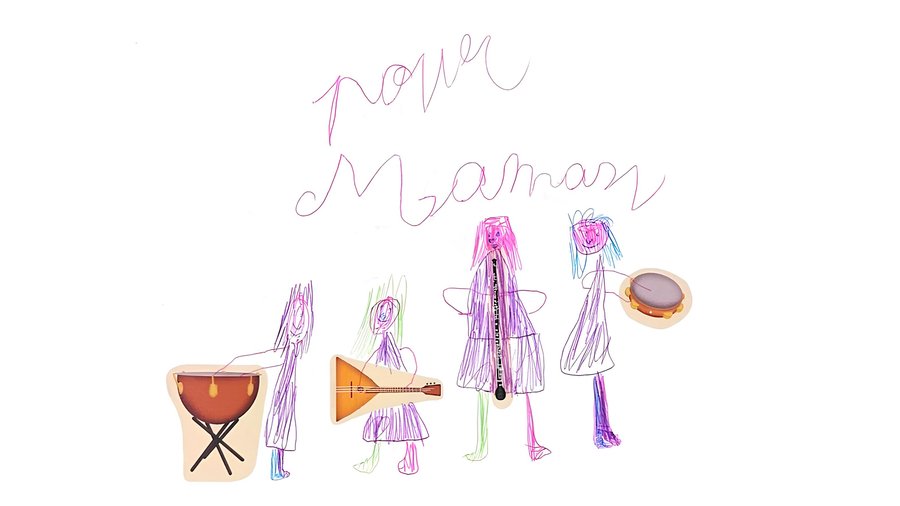
Hugs.blankets is a family-run brand specialising in personalised blankets and textile products embroidered with children’s drawings, handwritten wishes, and family messages. The brand was founded by the Antonov family, who began by creating a keepsake blanket for their own son, Fedya.
Unlike conventional textile manufacturers, Hugs.blankets does not position itself within the fabric or home goods category. Instead, it operates at the intersection of children’s products, family values, emotional design, memory keeping, and customisation. The brand’s core offering is not a blanket but a materialised memory — a tangible object that preserves a child’s drawing or a family’s message in stitched form.
Customers submit their child’s artwork or write a personal wish. The brand then embroiders this content onto a blanket made from natural cotton with a soft filler. The final product functions as a family heirloom: something to be kept, passed down, and physically held as a reminder of childhood.
A brand can possess the most sophisticated semiotic system and the most dialogic product logic in the world, but without carefully chosen communication channels, these qualities remain invisible. Hugs.blankets understands this. Rather than dispersing its efforts across every available platform, the brand has constructed a focused, two-channel ecosystem: Social media functions as its emotional storefront, while the official website serves as its narrative anchor. This section examines how each channel operates, what each does well, and where each falls short.
Based on the brand’s communicative logic — centred on family storytelling, visual authenticity, and user co-creation — two platforms emerge as strategically relevant.
Key Strengths of Social Media use
High semiotic coherence — Every post reinforces the brand’s core signs: children, warmth, handmade quality, family, memory.
Peripheral route persuasion — The emotional impact of seeing a child hugging a personalised blanket outweighs any rational argument about materials or sizing.
Authenticity signals — Unpolished, real-life moments (a messy desk, a working machine, a child’s messy drawing) function as evidence of genuineness.
- Instagram — продукт компании Meta, которая признана экстремистской организацией на территории РФ
Public Relations Approach
Personal storytelling as earned media — The brand’s origin story (parents creating a blanket for their son Fedya) is inherently newsworthy for family, parenting, and lifestyle media.
User-generated content as social proof — Customer photos and testimonials serve as organic endorsements, reducing the need for paid influencers.
Transparency as trust-building — Disclosing production time, materials, and the family’s real names and faces builds perceived honesty.
The official Hugs.blankets website serves a different but complementary function. Unlike social media, which prioritises emotional immediacy and visual storytelling, the website must balance narrative warmth with functional clarity.
Functions of the Website:
Central route readiness — For motivated customers (those ready to purchase), the website provides rational information: dimensions, materials, care instructions, and pricing. This satisfies the need for functional reassurance before committing to a purchase.
Narrative integration — Unlike typical e-commerce sites that separate «story» from «shop,» Hugs.blankets weaves the family narrative throughout the product pages. The brand promise is repeated visually and verbally across the journey.
Clear customisation pathway — Users understand exactly how to submit drawings and wishes, reducing uncertainty and friction.
Hugs.blankets has constructed a focused, coherent communication ecosystem centred on social media and the brand website. Social media functions as the brand’s emotional storefront, where peripheral cues — family imagery, children’s drawings, production time disclosures — build desire and trust. The website serves as the rational anchor, providing the functional information necessary to convert emotional interest into a purchase.
Theoretical Frameworks
The following section demonstrates how Hugs.blankets operationalises key communication theories. Each theory manifests in specific, observable brand behaviours. This theoretical coherence explains why the brand succeeds not as a textile manufacturer but as a memory-keeping service dressed as a blanket. Every colour, every font, every disclosure of production time, and every invitation for customer participation is theoretically informed. The brand’s competitive advantage lies not in fabric technology but in its sophisticated, multi-theoretical understanding of what it truly sells: not warmth, but the feeling that childhood can be held.
Rather than applying these theories as an external analytical framework, the brand internalises them through its product logic, narrative structure, visual language, and channel strategy.
Semiotic Theory
Hugs.blankets builds its communication around a system of culturally charged signs. A child’s drawing signifies authenticity and the absence of adult filtering; embroidery (as opposed to digital printing) symbolises handcraft, care, and durability; handwritten fonts create a sense of domesticity and informality. Particularly significant is the strategy of «imperfect perfection» — the brand deliberately preserves crooked lines and uneven letters in children’s drawings, turning imperfection into proof of authenticity. Even a technical detail — the embroidery machine’s working time of six hours and forty minutes — becomes a sign of labour intensity and uniqueness. In this way, the brand thinks semiotically: every visual and textual element is chosen not only for aesthetic reasons but primarily for what it means.
Dialogic Communication Theory
Dialogic communication is built on mutuality, empathy, propinquity, risk, and commitment. Hugs.blankets demonstrates a level of dialogicity rare among commercial brands because the user becomes not merely a consumer but a co-author of the product. Parents submit their children’s drawings; relatives contribute handwritten wishes. Without this audience input, the product cannot exist. This goes far beyond typical UGC, which is usually confined to comments or reviews — here, user-generated content is stitched directly into the physical object. However, it is important to distinguish between dialogicity in production (which is very high) and dialogicity in social media communication. If the brand posts content but rarely responds to comments, conducts polls, or initiates discussions, then dialogue remains symbolic — beautifully realised at the product level but not fully completed at the level of everyday interaction.