Introduction
«Good design requires good communication, especially from machine to person, indicating what actions are possible, what is happening, and what is about to happen.» — Don Norman, The Design of Everyday Things
Design and contemporary art are not just about aesthetics or objects – a poster, a product, or an art installation is fundamentally about communicating ideas, emotions, and values to an audience. Communication theory provides a framework for understanding this process. While it does not add a “new” dimension to design, it offers essential principles and insights that help creators develop and convey the intent behind their work more effectively to their intended audience. In other words, by understanding how communication works, designers can better ensure that what they mean to express is actually understood as intended.
Communication theory as a field is rich and interdisciplinary, spanning face-to-face dialogue to mass media and cultural discourse. As communication scholar Robert T. Craig observes, “Communication theory is enormously rich in the range of ideas that fall within its nominal scope, and new theoretical work on communication has recently been flourishing”. This richness means there are many different lenses through which communication can be understood. Drawing on these theories allows designers to ground their creative decisions in proven concepts about how messaging works. In a classic sender–receiver model, designers "encode" ideas into visuals and audiences "decode" them; if the encoding is unclear, the message may be lost. Knowing such fundamentals encourages clarity and intentionality in design.
Communication theory highlights factors that can greatly influence a design’s impact. Marshall McLuhan famously argued that “the medium is the message”, suggesting that the choice of medium or format (e.g. digital vs. print) can shape how the content is perceived. Persuasion theories – such as Petty and Cacioppo’s Elaboration Likelihood Model – explain that audience members can be influenced through rational arguments or emotional appeals, a concept highly relevant to advertising and social campaigns. By applying such theories, designers learn to create visuals that not only look appealing but also connect with how people think and feel.
Treating design as communication means recognizing that every element in a design carries meaning. Communication theory provides the vocabulary and concepts to analyze and refine that messaging. It equips designers with a deeper understanding of their role as communicators (rather than mere decorators), and encourages them to consider not only what a design looks like, but how it speaks to others. By leveraging theoretical insights into messaging, perception, and context, designers can elevate their work beyond stylistic flair, achieving greater clarity, impact, and meaningful audience engagement.
Presentation for a General Audience
A Place to Sew, Learn, and Belong
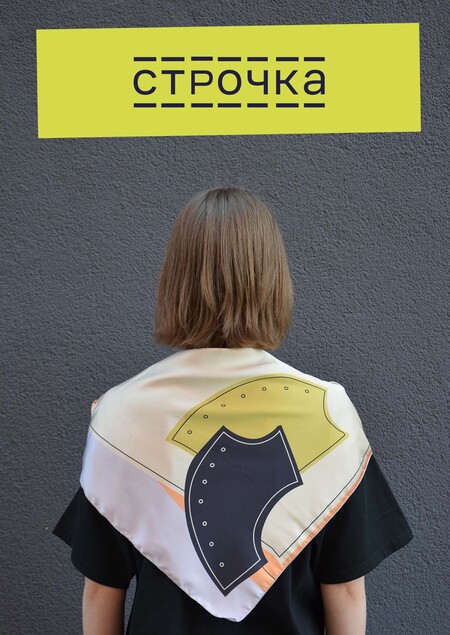
Strochka is an open sewing workshop — a calm, friendly space where anyone can learn to sew, rent equipment, or start creating from scratch. No loud machines or factory rush. Just daylight, fabric, and people who care.
You don’t need experience. Just curiosity.
Have you never touched a sewing machine? That’s perfect. At Strochka, we’ll show you how. Take a class. Ask a mentor. Watch. Try. Unpick. Try again. That’s how things are made here — slowly, thoughtfully, together.
Make with your hands. Think with your hands.
We believe that making is a form of thinking. In a world of screens and speed, sewing reconnects us with slowness, tactility, and care. One stitch at a time, you’ll start to notice how much your hands already know.
Workshops. Lectures. Conversations.
Strochka is more than a workspace. It’s a space for exchange — of ideas, knowledge, and support. Join a workshop, attend a talk, or just come for a quiet afternoon and see who’s there.
Rules you can follow. Or break.
We teach sewing rules — and when it’s worth bending them. You’ll learn structure and pattern, but also intuition and improvisation. Sometimes the best work happens when the seam goes off track.
You bring the idea. We bring the space.
Everyone arrives at Strochka with something: a need, a sketch, a wish, a question. We create the space for those things to take shape — not just in fabric, but in friendship, confidence, and shared making.
Presentation of the Brand for a Professional Audience
Full version and short version of the logo
An open sewing studio built as a community system
Strochka is an open sewing workshop that combines three roles in one space: — Education (from first stitch to advanced construction) — Access (equipment rental + supervised workstations) — Community (talks, peer support, knowledge exchange)
The studio is intentionally positioned as an alternative to “factory logic”: calm pace, clear rules, and human-scale making.
Who strochka is for (stakeholders + publics)
We address several professional groups with distinct needs: — Design educators / schools — a practice-based extension of curriculum (classes, labs, workshops) — Independent designers / small labels — prototyping, sampling, micro-production support — Cultural institutions — public programs (lectures, open workshops, exhibitions around craft) — Sustainability / repair initiatives — community repair formats and skill-based literacy — Brands / partners — collaborations, sponsored equipment, scholarships, co-produced events
The same space works for each group because it is organized around "shared meaning + shared practice" and sustained through ongoing interaction.