1. Reflection on the course material. Narrative visual strategy
The course reframed our understanding of communication: from simply sharing information to building meaning. A designer creates a visual world using symbols, which the viewer then interprets through their own personal and cultural background. Therefore, a poster or packaging is more than just an image — it is a purposeful message. This requires a thoughtful approach to every visual element used.
As a result, we begin to see design as a deliberate process of constructing meaning. When we design communication, we are constantly making a choice: what image of the world to show, which values to present as the norm, and what rhetorical means (including logos/ethos/pathos and digital rhetoric) to use in persuading the audience.
The social and cultural context is equally vital. Design always communicates to a specific group with its own customs and expectations. Critical perspectives, such as those from the Frankfurt School, remind us that brands and visual content are never neutral. They promote particular viewpoints and lifestyles, actively shaping social norms and values.
Ultimately, design is a conscious process of creating meaning. Each decision — the story being told, the values being highlighted, and the methods used to engage the audience’s emotions, trust, and logic — serves to persuade. This approach is directly applied in building a brand’s identity, where communication happens not only through words but through symbols, shapes, and colors.
2. ACASĂ brand presentation for a general audience
«ACASĂ» — family winery: a place that unites generations, traditions, warmth, and a love of winemaking
Who we are?
«ACASĂ» — a small family Moldovan winery. The brand of this family winery reflects all the values of a true Moldovan family from this region — warmth, family spirit, promotion of Moldovan winemaking traditions, and the creation of unique high-quality wines that embody the character and culture of Moldova.

brand logo «ACASĂ» — a family winery
Who the brand is for
For travelers (30-55 years): — Lovers of cultural leisure activities; — Prefer good, exclusive wines; — Have an average or above-average income; — Value coziness and comfort.
For young people (23–30 years): — Prefer spending evenings in a romantic atmosphere; — Enjoy traveling around their country in search of new experiences; — Have an average or above-average income.я
Young families with children: — Prefer spending their weekends in a quiet, cozy, and safe atmosphere close to home; — Value family traditions and the opportunity for shared family time; — Look for places surrounded by nature, beautiful views, and a calm pace of life; — Appreciate locations where children can breathe fresh air, enjoy nature freely, and admire the beautiful landscapes of their country; — Have an average or above-average income; — Choose places they want to return to with the whole family.
From the perspective of communication theory, the target audience was defined as a set of distinct communication contexts in which brand meanings are created and interpreted. The audience is viewed as an active participant in the communication process, interpreting messages through personal values, experiences, and motivations.
The identified segments differ in their patterns of perception, communication expectations, and emotional engagement with the brand. This allows us to adapt the language, tone, and content of messages for each segment while maintaining a coherent brand narrative.
Key brand message
ACASĂ is a place where wine traditions meet family comfort, creating an unforgettable experience for every guest.
From a communication theory perspective, the ACASĂ brand creates a semantic field in which messages about wines, events, and atmosphere are interpreted by the audience through cultural codes, values, and life experiences. The audience is not a passive recipient: they actively perceive and decode messages, creating their own emotional and cognitive connections with the brand.
The brand’s key message performs the following functions:
Focuses brand identity: ACASĂ unites Moldovan wine traditions and family values, conveying simplicity, depth, and warmth.
Creates an emotional connection: Associations with home, comfort, and safety enhance trust and a desire to return, forming a long-term emotional bond through the symbolism of vineyards, family photographs, and landscapes.
Ensures cognitive and cultural recognition: The use of local cultural codes makes the narrative universal and authentic, distinguishing the brand from competitors with generic entertainment programs and tastings.
Core Values
High-quality wine builds trust and brand expertise.
Century-old traditions convey cultural heritage and authenticity.
A welcoming atmosphere—comfort, simplicity, and warmth—creates an emotional connection.
Values set the context for perception, foster an emotional connection with the audience, and allow messages to be tailored to different segments while maintaining a coherent brand narrative.
3. Brand presentation for professional audience (designers)
Branding platform and positioning.
Category: Wines from a family winery with an emphasis on authenticity and hospitality.
Positioning: ACASĂ is the «wine house» of Moldova. We create a place where the depth of Moldovan wines and the warmth of family traditions become a personal experience. This is not just a tasting, but a return to authenticity: the taste of the land, the comfort of home, and the simplicity of the soul.
According to Craig’s theory, we approach our brand communication through the following theories: — semiotic, — sociocultural, — critical — rhetorical and digital rhetoric.
Visual strategy (semiotics and visual rhetoric)
Logo:
Reflects the view of grape fields stretching into the distance, like the winery’s history, which is rooted in the past.
The logo of «ACASĂ»
Color palette:
— Graphite — elegance and sophistication. — Beige — warmth, naturalness, and comfort.
Graphics and illustrations:
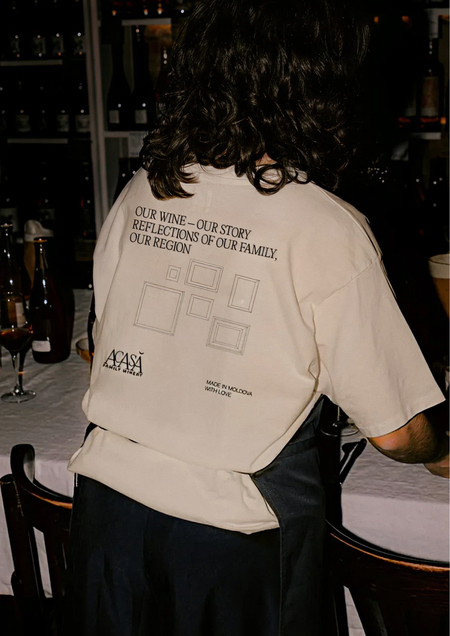
— Photographs of Moldovan fields: Prove the wine’s natural origins and its authenticity. — Photographs of happy families: Symbolize tradition and family, the passing of generations. — Photographs with a nod to the past demonstrate respect for tradition and heritage, conveying depth. — Images of photo frames and a wall of family photos tell the story of a family winery.
Sociocultural and critical layer.
Sociocultural aspect: The ACASĂ brand supports and legitimizes two important contemporary practices:
— «Slow» cultural tourism: Traveling not for quick, superficial impressions, but for a deep immersion in the culture of a destination through its flavors and stories. — Conscious consumption: Choosing a product with a history versus mass-market products. Creating a «home» ritual (a romantic evening, a get-together with friends) around wine purchased in a special place.
Critical aspect:
We recognize the risk of turning a family tradition into a standardized «tourist package,» where the focus is on entertainment, not substance. Our strategy minimizes this risk by: — Refusing aggressive commercial messages («cheap!», «discount!») as the basis for communication. — Shifting the emphasis from entertainment to immersion (not just «tasting,» but «learning about the history of our winery»).
Verbal Strategy and Rhetoric
We build communication based on three components: — Logos (rational): Specific facts: grape variety, region, harvest year. — Ethos (trust): Emphasizing family status, adherence to traditions, and intergenerational connections. Consistent, honest, and transparent visual and verbal language. The history of the place and family as the foundation of trust. — Pathos (emotion): A story about a «wine house» to which you want to return. A dream of a secluded evening with a view of the hills, of romance, of discovering the «taste of Moldova.» Emotions of comfort, discovery, and belonging to something authentic.
4. How we arrived at the strategy
Craig’s theory became the framework for creating the ACASĂ strategy. Here’s how four traditions directly shaped the presentations:
The sociocultural and critical traditions formed the core. Instead of «we make wine,» we asked: «What practices do we employ?» and «How do we avoid becoming a commercial attraction?» Result: positioning as a «wine house» (a slow tourism practice) and a clear rejection of linguistic discounts (a critical defense of authenticity).
The semiotic tradition transformed visuals into signs. We chose not «beautiful,» but original. The resulting code for each element was: graphite = sunshine, beige = coziness, photos of fields = proof of origin. The rhetorical tradition created persuasion. All communication is divided into logos (facts for designers), pathos (the emotions of «home» for guests), and ethos (trust through family). A key message fulfills all three functions.
The theory redefined the target audience. The audience isn’t statistics, but rather different communication contexts. The approach to family (security) and couples (romance) is different, but the striking brand («wine house») is unique. Result: The presentation text is a document in which each point is a direct examination of the application of a specific theoretical lens.