
Introduction

Brand overview
USHATAVA is a Russian fashion house founded in Yekaterinburg in 2015 by Alisa Ushakova and Nino Shamatava. The brand name is derived from the founders’ surnames, and in its own language the company defines itself as an experimental fashion house focused on practical yet memorable design, functional wardrobe thinking, and expressive silhouette. In earlier official brand-history materials, Ushatava also framed itself not merely as a clothing label, but as a lifestyle and a way of thinking.
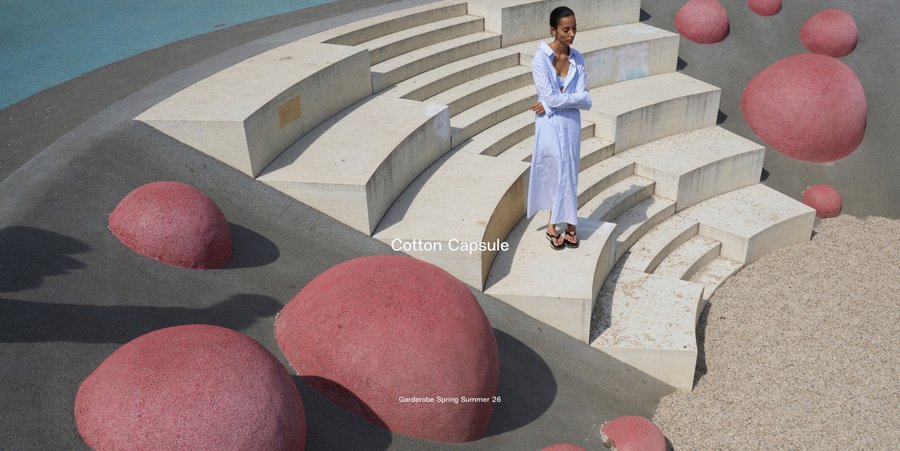
Promotional image for the Garderobe Spring/Summer 2026 capsule on the official USHATAVA website
Core positioning
USHATAVA can be positioned as a middle-up contemporary designer fashion brand. It is more concept-driven than mainstream ready-to-wear, but still focused on wearability and the idea of a functional wardrobe.
The brand builds an image of restrained, intelligent, and design-led fashion. It does not rely on flashy decoration; instead, it emphasizes practical design, expressive silhouettes, and quiet self-expression.
USHATAVA’s pricing also supports this positioning. The brand is clearly above the mass-market segment and can be described as accessible premium, where customers pay not only for clothing, but also for design value and brand identity.
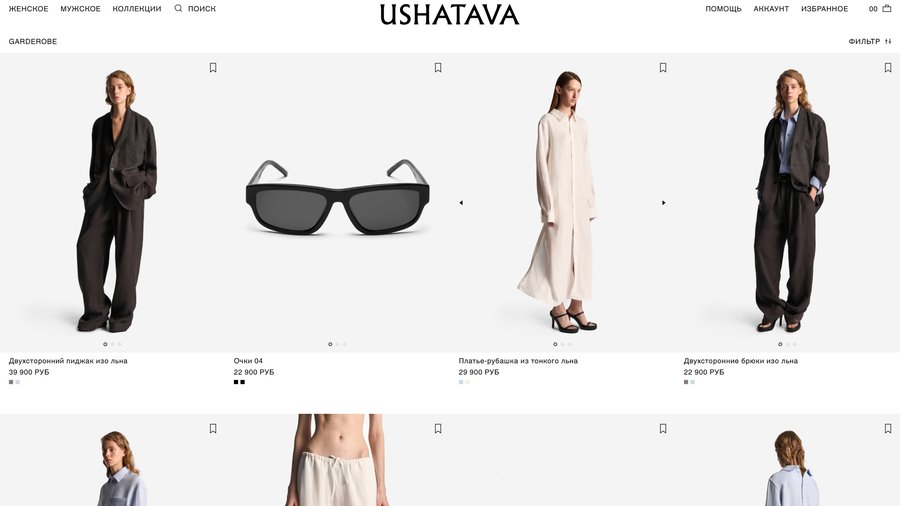
Garderobe collection page on the official USHATAVA website
Target audience
USHATAVA defines its audience mainly through lifestyle and values rather than age. The brand appeals to people who see clothing as a way to express identity, taste, and individuality, not only as a practical necessity.
The core target audience can be described as urban adults, approximately 25–40 years old, with above-average income and an interest in contemporary fashion, design, styling, and visual culture. These consumers are usually professionally active and live in large cities, where clothing becomes part of self-presentation.
Communication channels
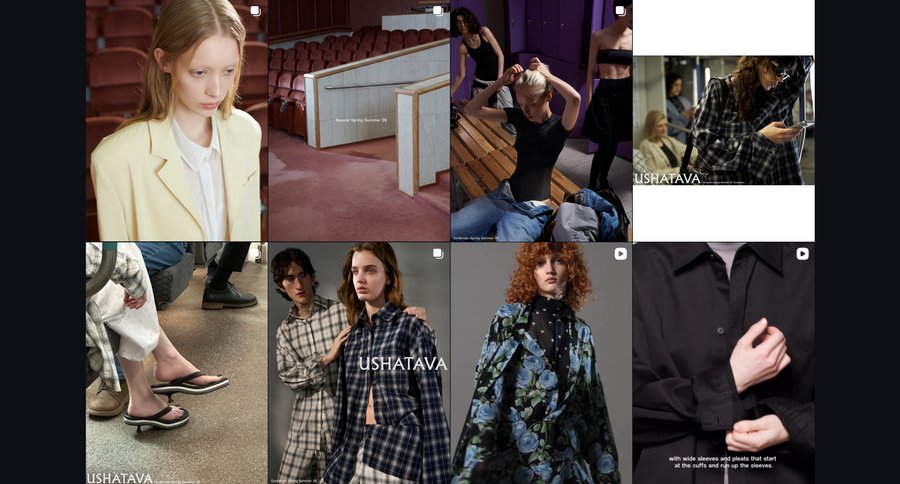
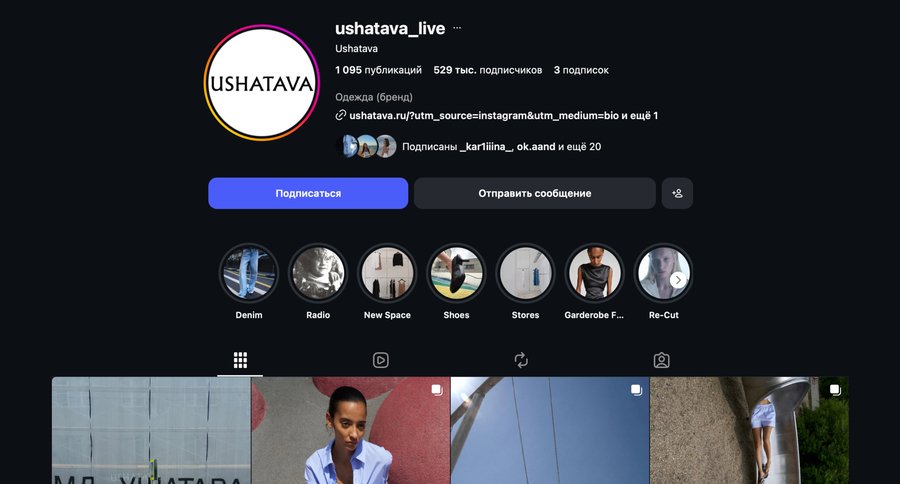
USHATAVA’s official social media account
USHATAVA maintains its public presence through several key channels: the official website, Instagram*, Telegram, YouTube, offline boutiques, and selective media coverage.
Social media is the central part of the brand’s communication strategy. Instagram* works as the main visual platform, where USHATAVA publishes campaigns, fashion shoots, reels, runway content, and product announcements. It helps the brand build a strong aesthetic image and present itself not only as a clothing label, but as a fashion house.
*Instagram is owned by Meta Platforms Inc., which is recognized as an extremist organization and banned in the Russian Federation.
Examples of posts from USHATAVA’s official Telegram channel
Telegram serves as a more direct communication channel. The brand uses it for product updates, sale announcements, styling ideas, backstage content, boutique news, and links to new collections. Compared to Instagram*, Telegram feels more personal and creates closer contact with the audience.
The official website functions as the main commercial and informational platform. It presents the brand’s collections, product categories, boutiques, delivery options, and online shopping opportunities. The website also supports the brand’s premium image through clean visuals, structured navigation, and consistent design.
Video from USHATAVA’s official YouTube channel: “4 Something. USHATAVA Special SS25”
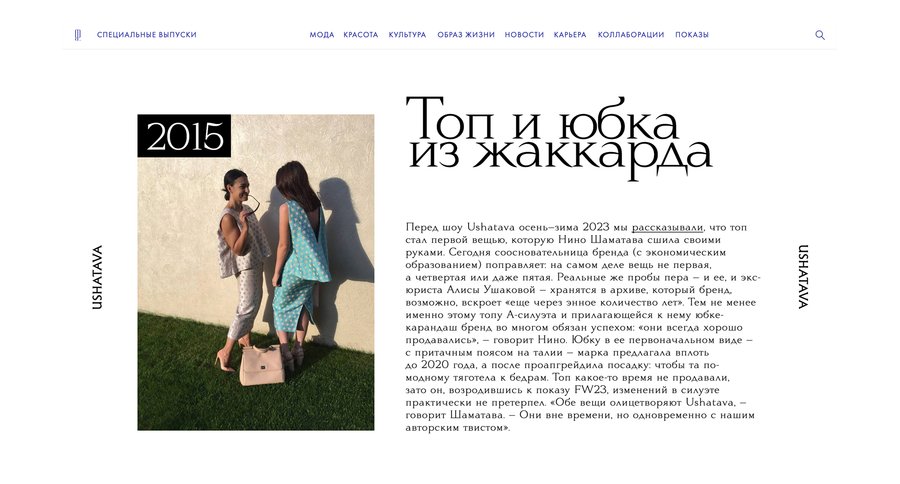
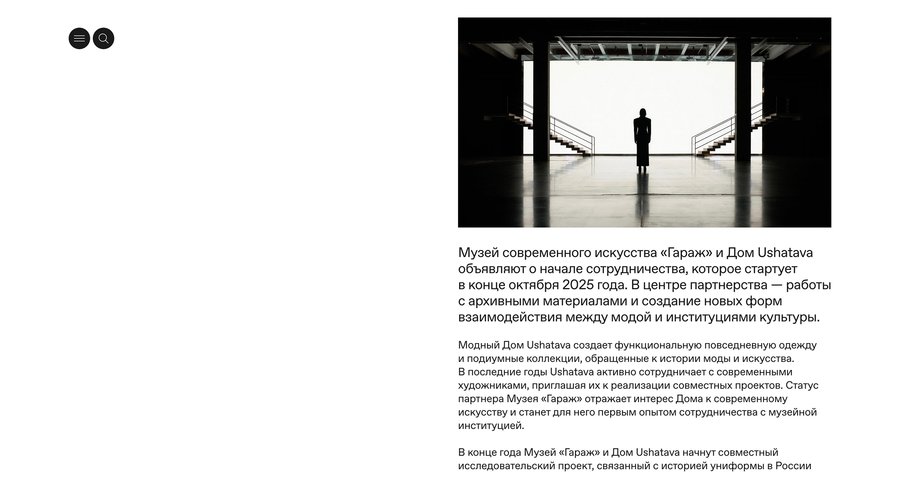
Articles about USHATAVA published by Garage Museum and The Blueprint
YouTube is used less frequently, but it plays an important role as an archive for runway shows, backstage films, and long-form brand storytelling. This strengthens the cultural and conceptual side of USHATAVA’s identity.
USHATAVA also uses PR through fashion media, interviews, cultural collaborations, and ambassador campaigns. Features in Forbes, The Blueprint, RBC Style, collaborations with Garage Museum, MAMT, and Beat Film Festival help position the brand as a culturally significant fashion house rather than just a retail brand.
Overall, USHATAVA’s communication strategy combines visual branding, direct audience contact, e-commerce, and cultural PR. This allows the brand to promote products while also building a more intellectual and premium image around itself.
Theoretical framework
Theory 1: Elaboration Likelihood Model
According to the Elaboration Likelihood Model, audiences can be persuaded through either the central route, based on rational evaluation of information, or the peripheral route, based on emotional, visual, and symbolic cues.
Key Communication Features:
- Minimalist visual design
- Artistic fashion photography
- Neutral color palette
- Focus on lifestyle rather than product characteristics
- Cinematic and emotionally driven content
In USHATAVA’s case, communication mainly works through the peripheral route. The brand does not focus primarily on detailed product characteristics, prices, or functional advantages. Instead, it creates an aesthetic and emotional impression through photography, styling, atmosphere, and visual consistency.
Examples of posts from USHATAVA’s social media account
Social media post featuring the Garderobe Spring/Summer 2026 capsule
In the brand’s advertising campaigns and social media publications, clothing is presented as part of a specific worldview and aesthetic rather than simply as a wardrobe item. The brand positions itself through the idea of a functional yet expressive wardrobe, emphasizing personal style, individuality, and contemporary aesthetics.
Ushatava × Takashi Homma Campaign, Japan, 2024
Theory 2: Uses and Gratifications Theory
According to Uses and Gratifications Theory, audiences actively choose media content to satisfy their needs. This theory is useful for analyzing USHATAVA because the brand’s audience does not consume its content only to receive product information. Followers also use the brand’s media as a source of inspiration, self-expression, aesthetic orientation, and emotional connection.
USHATAVA’s communication fulfills several key audience needs. Its social media provides styling ideas, artistic visuals, fashion-oriented content, and updates about collections and new launches. At the same time, the brand supports self-identity by promoting the image of a modern, independent, and design-conscious individual.
Examples of posts from USHATAVA’s official Telegram channel
Example of post from USHATAVA’s social media account
It also supports self-identity, as USHATAVA promotes the image of a modern, independent individual who values minimalism, creativity, and personal expression. In addition, the brand creates a sense of belonging by building a community around shared values and aesthetic principles, encouraging followers to feel connected to the brand’s culture. Finally, USHATAVA satisfies the need for information by regularly sharing updates about collections, new launches, and the brand’s philosophy through its website and social media channels.
Analysis: Visual Persuasion and Product Communication
According to the Elaboration Likelihood Model, persuasion works through two routes: the peripheral route, based on visual and emotional cues, and the central route, based on arguments and product information.
USHATAVA uses both. In campaigns, social media, and collection pages, the brand builds desire through restrained colors, clean composition, artistic photography, and expressive silhouettes. This supports its positioning as an experimental fashion house focused on practical but memorable design.
Product catalogue page on the official USHATAVA website
The official website then supports the central route: product pages include price, description, measurements, composition, care instructions, delivery details, and availability. Thus, visual communication creates desire, while the website helps the customer make a rational purchase decision.