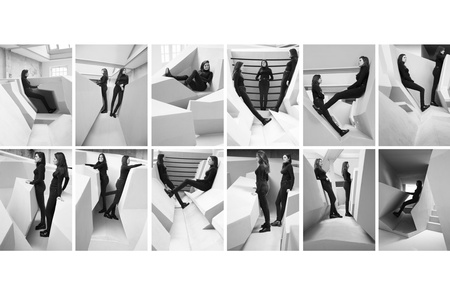
Concept
In American films from the 1920s and 1930s, the city rarely functions merely as a setting. Buildings, streets, workplaces, windows, and stairwells help convey a person’s circumstances even before it becomes clear what will happen to them. This is especially noticeable in films where a single individual must stand out among a vast crowd.
Why does cinema sometimes portray the city as a space of possibility, and other times—as a system where the individual has almost no agency?
Filmography
- «The Crowd» / Dir. King Vidor. USA, 1928.
- «The Speed» / Dir. Ted Wilde. USA, 1928.
- «New Times» / Dir. Charlie Chaplin. USA, 1936.
- «City Lights» / Dir. Charlie Chaplin. USA, 1931.
- «Street Scene» / Dir. King Vidor. USA, 1931.
- «Dead End» / Dir. William Wyler. USA, 1937.
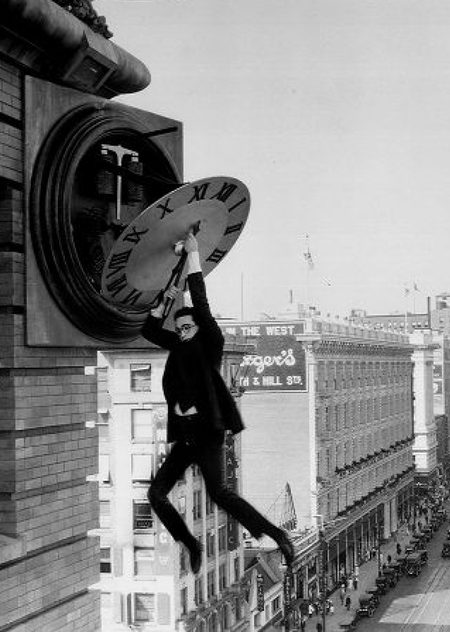
- «Finally Safe!» / Dir. Fred Neumeier, Sam Taylor. USA, 1923.
Bibliography
1.
approach
Image sources
1.
https://cinepara.iinaa.net/Image3/safetylast%21/Safety_Last-23.jpg (Accessed 11/18)