Apple iPod Shuffle 2nd
History of Creation
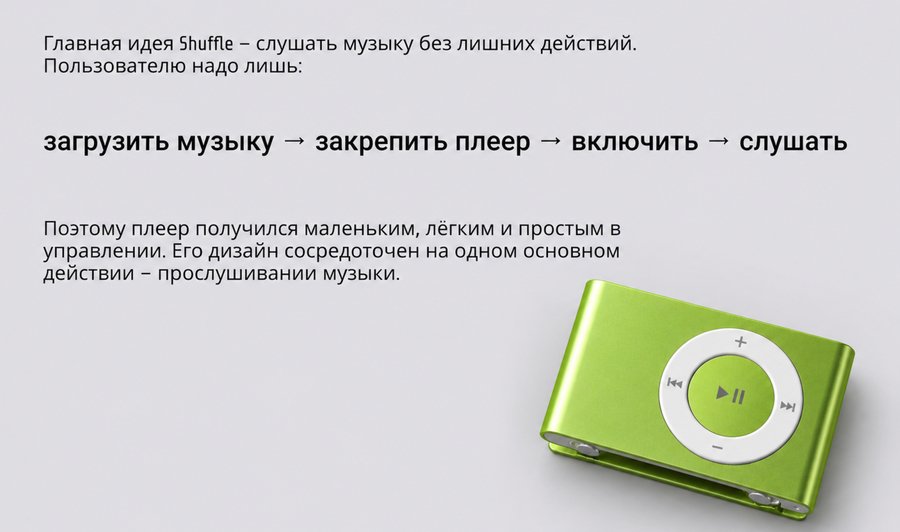
In the mid-2000s, most MP3 players featured screens, menus, and numerous buttons. Apple decided to take a different approach, creating a simple player that could be used without constantly viewing the screen.
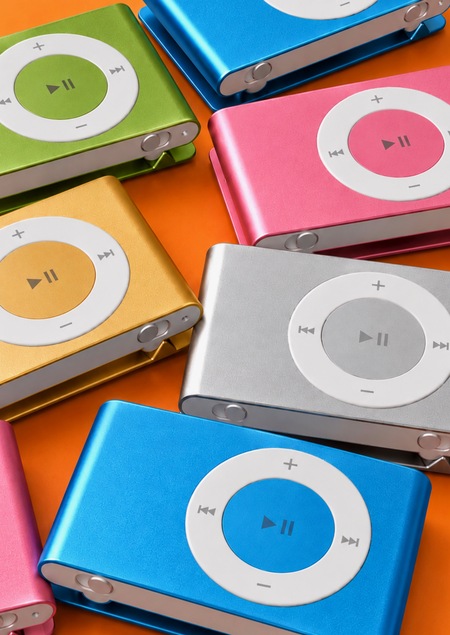
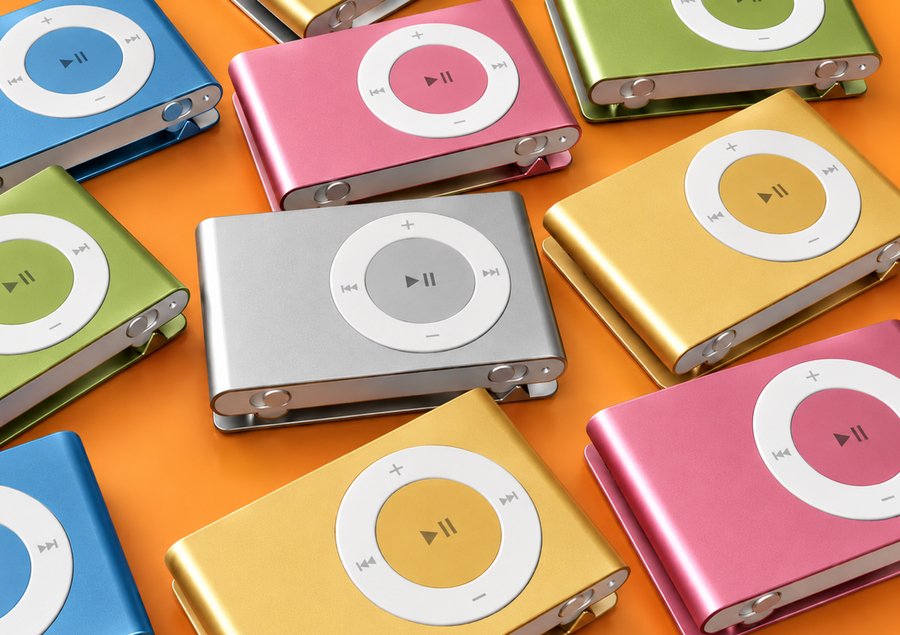
The second generation of the iPod Shuffle was released in 2006. It became even smaller, and its casing was made of metal. It also came equipped with an integrated clip, allowing the player to be attached to clothing or a bag.
Core Concept
Brand DNA Analysis
The iPod Shuffle design showcases key elements of the Apple aesthetic.
— Simplicity — Usability — Technological sophistication — Minimalism — Cohesive design
Overall, the Shuffle effectively exemplifies the Apple approach: to make something simple, intuitive, and instantly recognizable.
User Journey
Form and Casing Structure
The Music Video as a Primary Element
Why is there no screen?
Another significant design decision in Shuffle was the omission of a screen. Typically, a screen is necessary for music selection and menu navigation, but Apple decided to forego it.
This made the player smaller and easier to use. The lack of a screen wasn’t a drawback; rather, it was integral to Apple’s design philosophy—to create the most compact and user-friendly device possible.
Material and Construction
The casing is made of aluminum. This material is lightweight, durable, aesthetically pleasing, and conveys a sense of quality.The aluminum also emphasizes the minimalist form of the casing.
Size and transformation into an accessory
The Shuffle weighs approximately 15 grams and has very compact dimensions. Because of this, it is practically unnoticeable when worn on clothing, and the clip allows you to secure the device so that it doesn’t interfere with movement. Unlike a standard player that needs to be held in your hand, the Shuffle can simply be attached to you. Therefore, the device sits somewhere between electronics and an accessory. Its design is intended not just for use, but also for wearability.
Shuffle amidst other players
Design Recognition and Influence
Shuffle is easily recognizable due to a combination of several elements: a metal casing + small size + built-in clip + no screen + minimal details. Its recognizability is created precisely by its design and how it is used.
Conclusion
iPod Shuffle 2nd Generation demonstrates how a device’s functions can influence its appearance. Apple removed the screen and complex menu, made the body smaller, and added an integrated clip. The result was a compact player that is easy to carry and can be used practically without looking at it.The main design feature of the Shuffle is that everything is streamlined and cohesive. The body shape, material, controls, and clip all work toward one idea—to make music listening as intuitive as possible and to simplify device use.
Renders