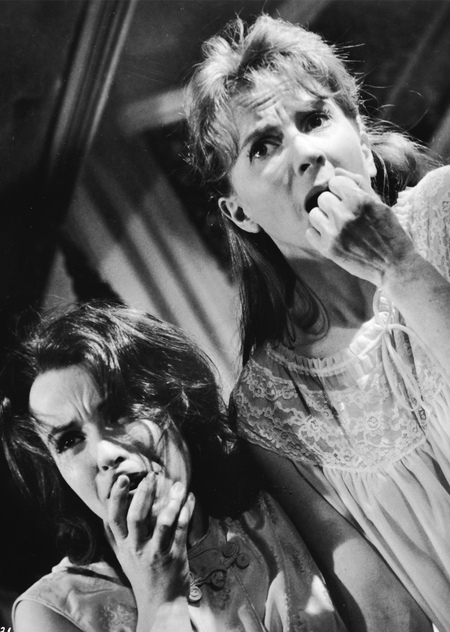
The Haunting (1963) by Robert Wise is the first and most literal adaptation of Shirley Jackson novel «The Haunting of Hill House» (1959). It’s a slow burn considered a masterpiece of horror cinema. Interestingly enough, there is no ghost in that ghost story. There is some entity though and it only manifests itself through the work of Director of Photography. That’s how visual narrative works! BEWARE OF SPOILERS!
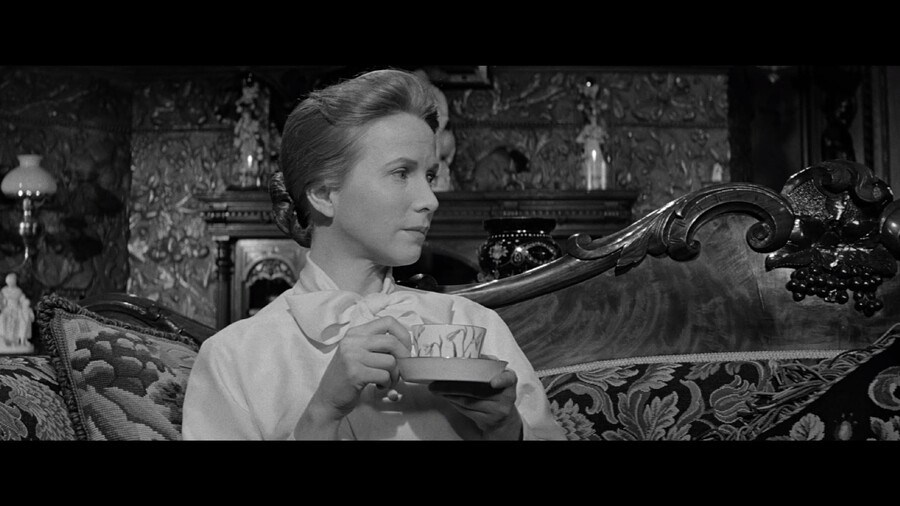
It’s a story of four people with the main protagonist being Eleanor Lance. She is a disturbed woman who has nothing of her own, no home, no belongings, no one to love her.
She is invited to participate in an experiment conducted by Dr Markway in what he thought to be a haunted house. He chose her because she had an encounter with paranormal before (but basically forgot about it).
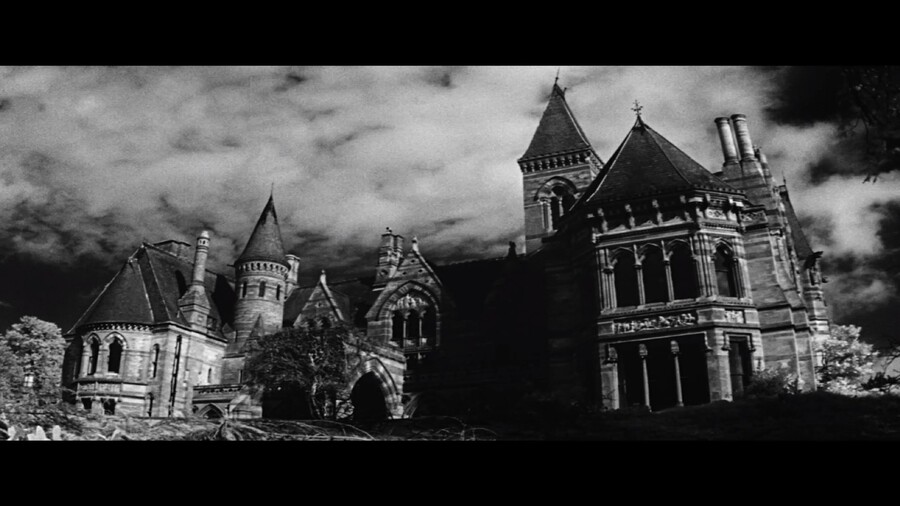
Hill house is 90 years old and it’s been bad since it was built. It killed the wife of its creator even before she reached the house.
The First Death
Like I said before the whole haunting motif in this movie is created by camera work. Let’s see what it tells us in the scene of the first death in the story.
What do we see here? To my mind we see three different POVs: objective POV, the entity’s POV and the victim’s POV and then the entity’s POV again. Let’s deconstruct the scene.
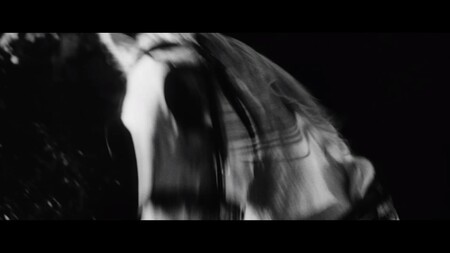
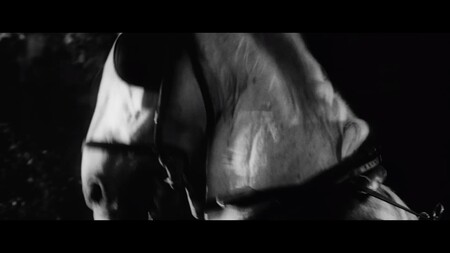
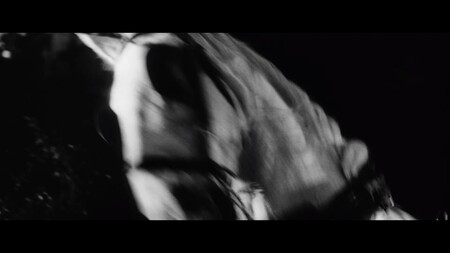
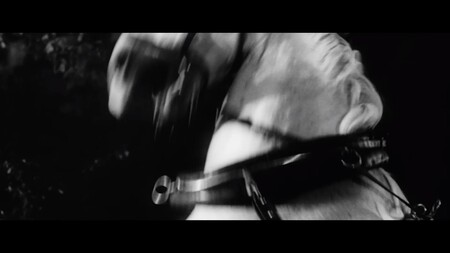
This strange angle looks like someone stands close to the horses and spooks them. But no human could stay this close, so clearly that was the entity. Since there is no ghost I will call this paranormal unliving thing the entity.
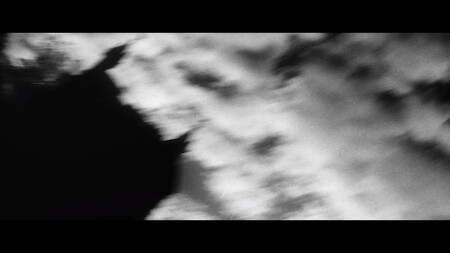
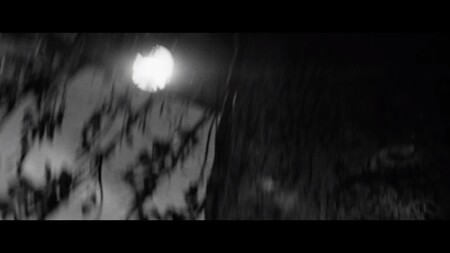
The next set of blurred images is the victim’s POV, what she saw in the last seconds of her life, and the final image is the tree trunk (below).
Then we see a very strange angle on the broken carriage and the victim’s hand falling down into frame. That’s the entity’s POV again (below).
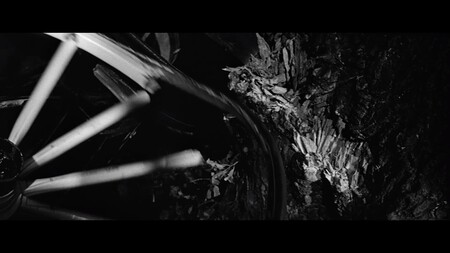
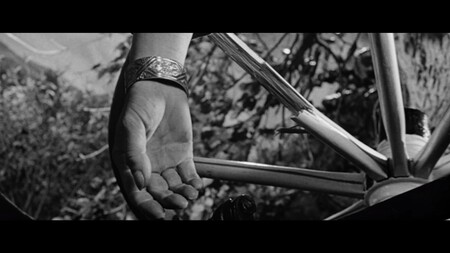
That means, all victim’s deaths are framed with the entity’s gaze before and after the event (and in the process as we’ll see later). But this visual structure is repeated in all the deaths and unsuccessful attempts to kill Eleanor. Let’s see.
The Second Death
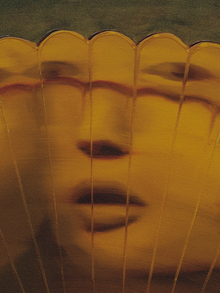
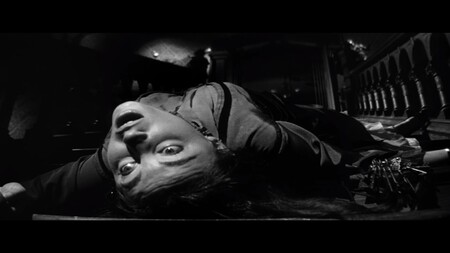
Let us deconstruct it too. First we have some objective view of the woman walking along the corridor and stopping when the door opens. Then we see her up close from above, with the image distorted as if it was some eye or (subjective) camera view.
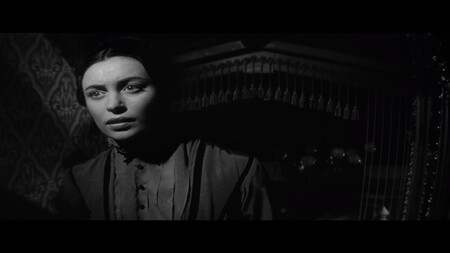
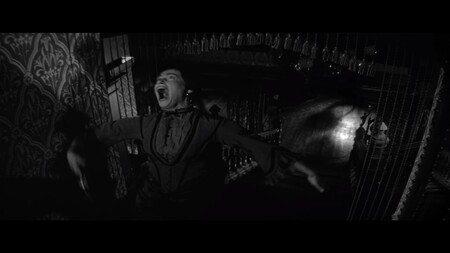
Then we again see the entity’s POV: hands trying to stop the fall and the woman falling. We see it from aside. As if someone is standing near and sees the event happening. We also see blurred images of the stairs and the ceiling turning from the victim’s POV.
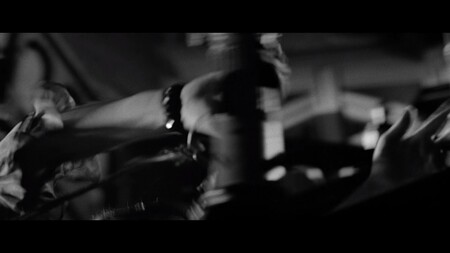
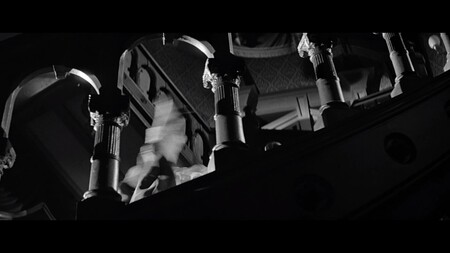
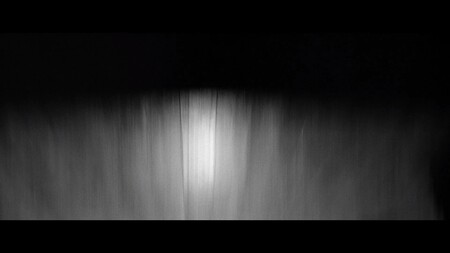
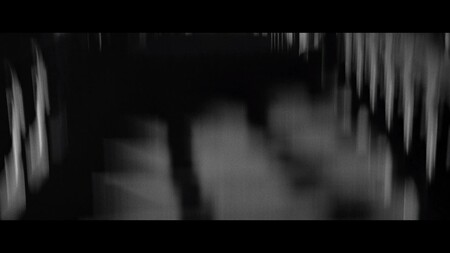
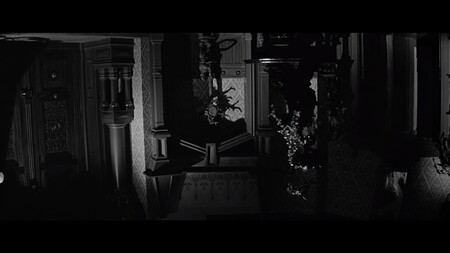
And then we see her final view (the opposite wall upside down) and we also see the entity’s POV at the victim. It`s distortion is the same as the image of the victim before the fall.
The Third Death
The third death has a bit different structure but there is a reason for that.